
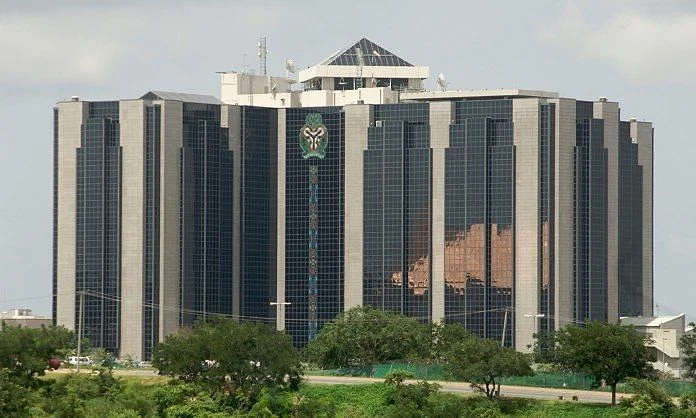
FG, CBN SIGN MOU TO STRENGTHEN FISCAL, MONETARY POLICY COORDINATION
Read Time:6 Minute, 41 Second
By Aishat Momoh. O.

The Federal Government and the Central Bank of Nigeria have signed a Memorandum of Understanding to strengthen coordination between fiscal and monetary policies in a bid to control inflation, improve government borrowing and liquidity management, and protect private-sector access to credit.
The agreement was signed by the Federal Ministry of Finance and the CBN and provides for regular consultations, information sharing and joint assessment of economic policies.
Speaking at the signing ceremony, the Minister of Finance and Coordinating Minister of the Economy, Taiwo Oyedele, said the framework would institutionalise coordination between fiscal and monetary authorities rather than leaving it dependent on the individuals occupying public offices.
“Today matters not because we are signing a document, but because of what it represents. Our determination to institutionalise coordination between fiscal and monetary policy,” Oyedele said.
He explained that although the two institutions have distinct responsibilities, their policies operate within the same economy and therefore require greater coordination.
“Government borrowing affects liquidity and interest rates. Monetary policy affects the government’s financing cost. Tariffs and exchange rates affect prices and revenue. Spending affects demand,” he said.
According to the minister, the framework would promote stronger information sharing, common macroeconomic assumptions, more consistent economic forecasts and clearer mechanisms for resolving differences between fiscal and monetary authorities.
He stressed, however, that the arrangement would not compromise the operational independence of the CBN.
“So this is independence with coordination. The operational independence of the central bank remains sacrosanct. Coordination must never become fiscal dominance,” Oyedele said.
He said the CBN would retain full independence in pursuing price and financial system stability, while the Federal Government would strengthen fiscal governance, accountability and cash management.
Oyedele said the government’s objective was to bring inflation sustainably into single digits, stressing that achieving the target would require a coordinated, whole-of-government approach.
“Inflation is, as a process, a whole-of-government agenda. Our objective is to bring inflation sustainably into single digits and keep it there. And that cannot be monetary policy’s job alone,” he said.
He said fiscal policy would contribute through disciplined government spending, improved cash and liquidity management and more efficient financing arrangements that would reduce the risk of crowding out private businesses from accessing credit.
The minister also identified food supply, imported costs, energy and logistics as structural factors contributing to inflation, saying they could not be addressed through interest-rate policy alone.
He said the government would focus on measures including strengthening food reserves, improving access to better seeds, increasing farm yields, expanding irrigation, building climate resilience and improving roads for transporting agricultural produce to markets.
Oyedele also called for greater cooperation with state governments, particularly in removing unnecessary road levies and improving access roads to farms.
On fuel prices, he said the government was seeking price stability without returning to discretionary fuel subsidies.
According to him, tax exemptions in the oil sector and improved foreign exchange stability had helped moderate prices, warning that reversing existing policies could put additional pressure on prices and affordability.
The minister also stressed the importance of reliable economic data in policymaking, saying poor or outdated information could undermine economic management.
He said the Ministry of Finance was working with the National Bureau of Statistics to provide additional economic indicators, including the Producer Price Index, alongside consumer prices, employment and productivity data.
Oyedele said such information would help policymakers identify inflationary pressures before they were transmitted to consumers.
He added that economic performance should also be measured by the number of sustainable jobs created rather than GDP growth alone.
Under the new framework, the fiscal and monetary authorities will share information on government cash positions, financing plans, credit growth and foreign exchange flows.
“Better coordination starts with a common evidence base,” Oyedele said.
The CBN Governor, Olayemi Cardoso, said the MoU would transform the long-standing collaboration between the two institutions into a more formal and structured arrangement.
Cardoso said the CBN and the Ministry of Finance had worked together over the years on inflation, debt sustainability, budget financing, exchange-rate stability, economic reforms and responses to domestic and global shocks.
“What distinguishes today’s event is the formal institutionalisation of that collaboration,” he said.
He said the agreement would cover government cash management, debt issuance planning, liquidity forecasting, macroeconomic analysis and regular policy consultations.
According to Cardoso, predictable engagement between the institutions would improve decision-making, reduce uncertainty and strengthen Nigeria’s ability to respond to emerging economic challenges.
He said the framework was particularly important as the CBN moves towards an inflation-targeting framework, noting that the effectiveness of monetary policy also depended on a supportive fiscal environment.
“The success of inflation targeting is known to rest not only on the effectiveness of monetary policy but also on the existence of a supportive fiscal environment,” Cardoso said.
The CBN governor said the framework would enable both institutions to align their actions, minimise policy conflicts and pursue common economic objectives.
CBN Deputy Governor Sani Abdullahi said closer coordination had become increasingly important because the same external shocks could affect fiscal and monetary policy simultaneously.
He cited disruptions to energy and shipping routes in the Middle East, which could increase oil prices and boost Nigeria’s export earnings, government revenue and foreign exchange inflows, while simultaneously raising energy, freight and insurance costs.
He said such developments could also affect domestic prices, interest rates, capital flows and financing conditions.
“This is why coordination matters,” Abdullahi said.
He said the agreement would require timely information sharing, joint technical analysis, scenario planning and stress testing on issues of common interest.
Abdullahi said the framework would also support government cash management, liquidity forecasting, domestic financing operations and the assessment of changing economic conditions.
He stressed the need for Nigeria to prepare for different oil-price and production scenarios, given uncertainties surrounding the duration of external disruptions and future crude prices.
The deputy governor said the institutions should assess in advance how different oil-price and production outcomes could affect government revenue and foreign exchange inflows.
He, however, said the success of the MoU would depend on implementation rather than the signing ceremony.
“The value of this agreement will be determined by its implementation. Its success will not be measured by judicial ceremony alone, but by what happens after today,” he said.
The Permanent Secretary, Federal Ministry of Finance, Raymond Omachi, said the agreement would provide a transparent framework for aligning fiscal choices with monetary strategies.
He said one of its objectives was to balance inflation control with economic growth, ensuring that government spending did not unnecessarily increase inflationary pressure while monetary tightening did not unduly weaken growth and employment.
Omachi said the framework would also improve coordination of government borrowing and money-market liquidity management, thereby reducing the risk of public-sector borrowing limiting credit available to private businesses.
He added that the agreement would cover exchange-rate and revenue stability, including foreign exchange management, trade balances and Nigeria’s capacity to withstand economic shocks.
The permanent secretary said the framework would also formalise regular policy dialogue and data sharing between technical officials of the Ministry and the CBN.
He said the initiative was aimed at creating a more predictable investment environment, strengthening public confidence and building a more resilient economic foundation.
Oyedele said the broader objective was to ensure that fiscal and monetary policies did not work at cross-purposes.
“Nigeria has one economy. Fiscal policy cannot succeed without price stability. Monetary policy cannot deliver price stability if fiscal policy pulls in the opposite direction,” he said.
He added that the two institutions would coordinate without compromising independence, share information while maintaining accountability and resolve differences through evidence and in the national interest.
According to the minister, the long-term test of the arrangement would be whether Nigeria’s economic management could withstand future shocks without relying on individual personalities to maintain coordination.
“The greatest success will be measured when coordination no longer depends on who holds these offices,” Oyedele said.


Happy
0 %

Sad
0 %

Excited
0 %

Sleepy
0 %

Angry
0 %

Surprise
0 %
 0
0
 0
0