
HOUSE OF REPS SEEKS REVIEW OF ARMY RULE ON EARLY RETIREMENT OF SSCC, DSSC OFFICERS
Read Time:2 Minute, 23 Second
By; Sunmola Ganiyat
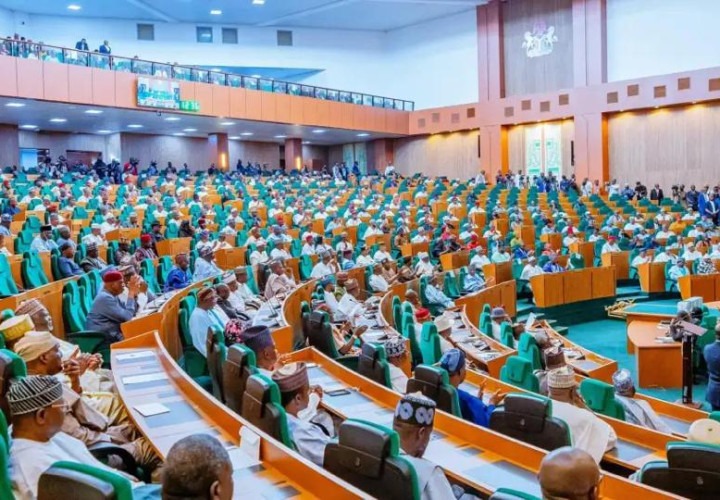
The House of Representatives has moved to halt the Nigerian Army’s policy of automatically merging years served as enlisted personnel with years served as commissioned officers, warning that the practice is leading to premature retirement of experienced personnel and contributing to manpower shortages.
The resolution followed a motion of urgent public importance sponsored by Adamawa lawmaker, Zakaria Nyampa, who called for a review of the policy affecting officers commissioned through the Short Service Combatant Commission (SSCC), Direct Short Service Commission (DSSC), and Direct Regular Commission (DRC).
While presenting the motion, Nyampa explained that the Nigerian Army currently aggregates service years spent as soldiers with years served as officers after commissioning, including time spent in university education or awaiting commissioning.
He argued that this practice contradicts the Harmonised Terms and Conditions of Service (2017 Revised), which defines an officer’s service as continuous service from the date of commission to retirement.
The lawmaker also cited provisions of the Labour Act, arguing that the policy violates principles of fairness and legitimate expectation in employment.
Nyampa further warned that the policy has far-reaching implications for military structure and personnel management, including reduced morale, early exit of experienced officers, manpower gaps, higher recruitment costs, and loss of institutional memory.
He described the system as discriminatory and inconsistent with international military best practices.
Following deliberation, the House urged the Nigerian Army Council to discontinue the automatic merger of service years and make such adjustments optional, only applicable where officers voluntarily request it for pension computation.
Lawmakers also called on the Armed Forces Council to harmonise service rules across the Army, Navy, and Air Force to ensure fairness and uniformity in regulations.
The House further directed the Chief of Army Staff to carry out sensitisation exercises and issue clear transitional guidelines to avoid confusion in implementing any revised policy.
It also urged legal and administrative reviews to prevent potential litigation arising from retroactive application of the policy.
The House mandated its Committee on Army to conduct oversight on the issue, particularly concerning the welfare, rights, and career progression of affected officers, and report back within four weeks.
The controversy centres on how military service years are calculated for personnel who began service as soldiers before later being commissioned as officers through programmes such as SSCC, DSSC, or DRC.
Under the current system, pre-commissioning years are added to officers’ total service length, a practice critics say leads to earlier retirement compared to direct-entry officers.
While some argue that such years should count for pension and gratuity purposes, others insist they should not determine retirement timelines, saying the policy disadvantages commissioned officers and contradicts existing service regulations.
The issue has continued to generate concern within military circles, with warnings that the policy could result in the early exit of skilled officers amid ongoing security challenges in the country.


Happy
0 %

Sad
0 %

Excited
0 %

Sleepy
0 %

Angry
0 %

Surprise
0 %
 0
0
 0
0