
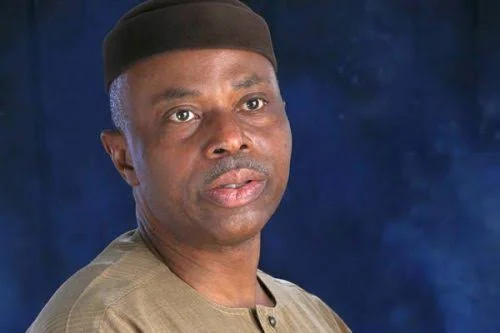
MIMIKO ADVOCATES POWER DEVOLUTION AS SOLUTION TO NIGERIA’S GOVERNANCE CHALLENGES
Read Time:1 Minute, 39 Second
By; Sunmola Ganiyat
Former Ondo State Governor, Olusegun Mimiko, has renewed calls for the devolution of power, describing it as a practical solution to Nigeria’s persistent governance challenges.
Speaking on Tuesday at the Pastors’ Seed Event of the 74th Annual Convention of the Redeemed Christian Church of God (RCCG), themed “Mountain Movers,” Mimiko urged the country to adopt what he described as the biblical “Jethro Principle” to improve governance, accountability and service delivery.
The former governor and ex-Minister of Housing and Urban Development explained that the principle, drawn from the biblical account of Moses and his father-in-law Jethro, emphasises delegating authority to capable leaders to ensure effective administration.
According to him, governance becomes more efficient when authority and resources are devolved to lower levels of government, allowing local leaders to address community-specific challenges while the central government focuses on national issues.
Mimiko argued that merit, competence and capacity should guide leadership appointments, stressing that true federalism can only thrive when decision-making is brought closer to the people.
He acknowledged ongoing efforts by President Bola Tinubu’s administration to decentralise areas such as policing, resource management and decision-making, but maintained that broader structural reforms are needed to tackle Nigeria’s governance problems.
The former governor blamed the concentration of power at the centre for many of the country’s challenges, including insecurity, corruption, poverty, poor leadership and ethnic tensions.
He said a highly centralised system is ill-suited to managing a diverse country like Nigeria, calling for greater subsidiarity that empowers state and local authorities to respond effectively to issues within their jurisdictions.
Mimiko also encouraged Christians and adherents of other faiths to participate actively in politics, describing governance as a vital platform for shaping the nation’s future and promoting the common good.
He noted that government policies directly affect citizens’ welfare in areas such as security, education, employment and religious freedom, urging Nigerians to combine prayer with active civic engagement in the pursuit of national development.


Happy
0 %

Sad
0 %

Excited
0 %

Sleepy
0 %

Angry
0 %

Surprise
0 %
 0
0
 0
0