
NIGERIA CANNOT BUILD A TRILLION-DOLLAR ECONOMY ON WEAK DATA, ABBAS SAYS
Read Time:2 Minute, 38 Second
By:Tajudeen Aminat
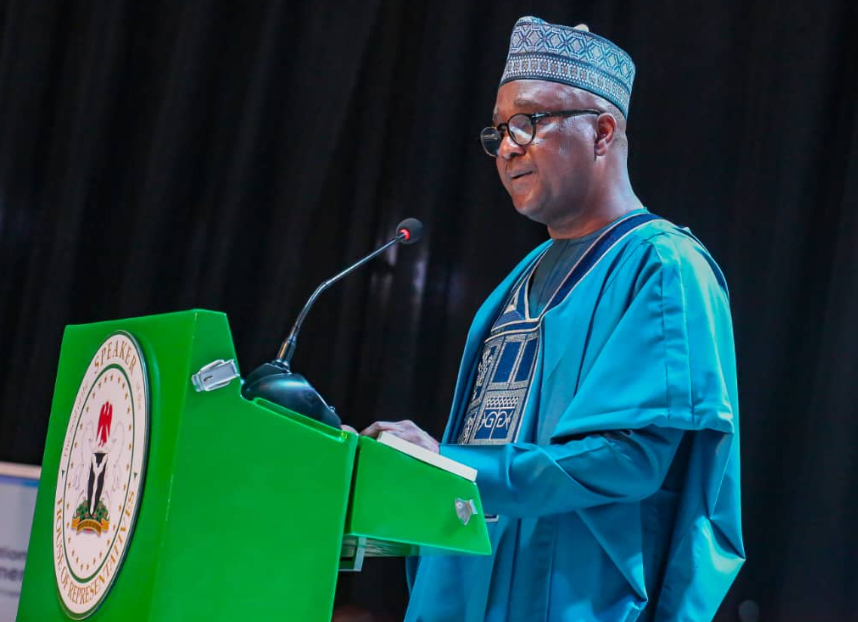
Speaker of the House of Representatives, Tajudeen Abbas, has said Nigeria’s ambition of becoming a $1 trillion economy cannot be realised without a modern, credible, and technology-driven statistical system.
Abbas made the remark on Monday during a public hearing on the Statistics Bill, 2025, as the National Assembly commenced consultations on legislation aimed at overhauling the country’s statistical framework.
The proposed bill seeks to repeal the Statistics Act of 2007 and replace it with a more robust legal framework designed to strengthen the National Bureau of Statistics, improve data governance, ensure sustainable funding, and align Nigeria’s statistical system with emerging technological realities.
Represented by House Leader, Julius Ihonvbere, Abbas described the existing law as outdated, arguing that advances in technology and the growing reliance on data-driven decision-making have exposed significant gaps in the current framework.
He stressed that reliable and timely data is essential for effective governance, economic planning, infrastructure development, and resource allocation, warning that policy decisions made without accurate statistics could undermine national development goals.
According to the Speaker, the proposed legislation is not merely an amendment but a comprehensive reform designed to reposition Nigeria’s statistical institutions for the demands of the digital era.
He noted that when the current law was enacted nearly two decades ago, technologies such as artificial intelligence, big data analytics, cloud computing, and digital platforms were not central to governance and economic planning. Today, however, governments, businesses, and development organisations depend heavily on real-time data to make informed decisions.
Abbas further stated that a stronger statistical system would help eliminate duplication in data collection across government agencies, reduce waste of public resources, improve efficiency, and boost confidence in official statistics among investors and development partners.
He added that the Statistics Bill, 2025, is expected to create a more integrated and responsive data ecosystem capable of producing high-quality, transparent, and globally credible statistics needed to support Nigeria’s economic aspirations.
The Speaker also called on stakeholders from government agencies, academia, civil society, the private sector, and development organisations to actively participate in refining the bill, describing public engagement as crucial to building a legal framework capable of addressing both current and future data governance challenges.
Meanwhile, the National Bureau of Statistics has endorsed the proposed legislation, describing it as a vital reform that would modernise Nigeria’s data governance architecture and strengthen evidence-based policymaking.
Speaking at the hearing, Adeyemi Adeniran, Statistician-General of the Federation and Chief Executive Officer of the NBS, said the country’s statistical system must evolve to keep pace with rapid changes in technology and data production.
He explained that the bill seeks to strengthen the National Statistical System by improving the coordination, production, and use of official statistics while promoting innovation, accountability, professional standards, and data reliability.
According to Adeniran, the proposed legislation contains provisions aimed at improving statistical governance, data management, institutional development, funding mechanisms, confidentiality safeguards, and stakeholder collaboration.
He expressed confidence that the bill, if passed, would significantly enhance Nigeria’s capacity to generate accurate, timely, and credible data required for effective governance, economic growth, and sustainable national development.


Happy
0 %

Sad
0 %

Excited
0 %

Sleepy
0 %

Angry
0 %

Surprise
0 %
 0
0
 0
0