
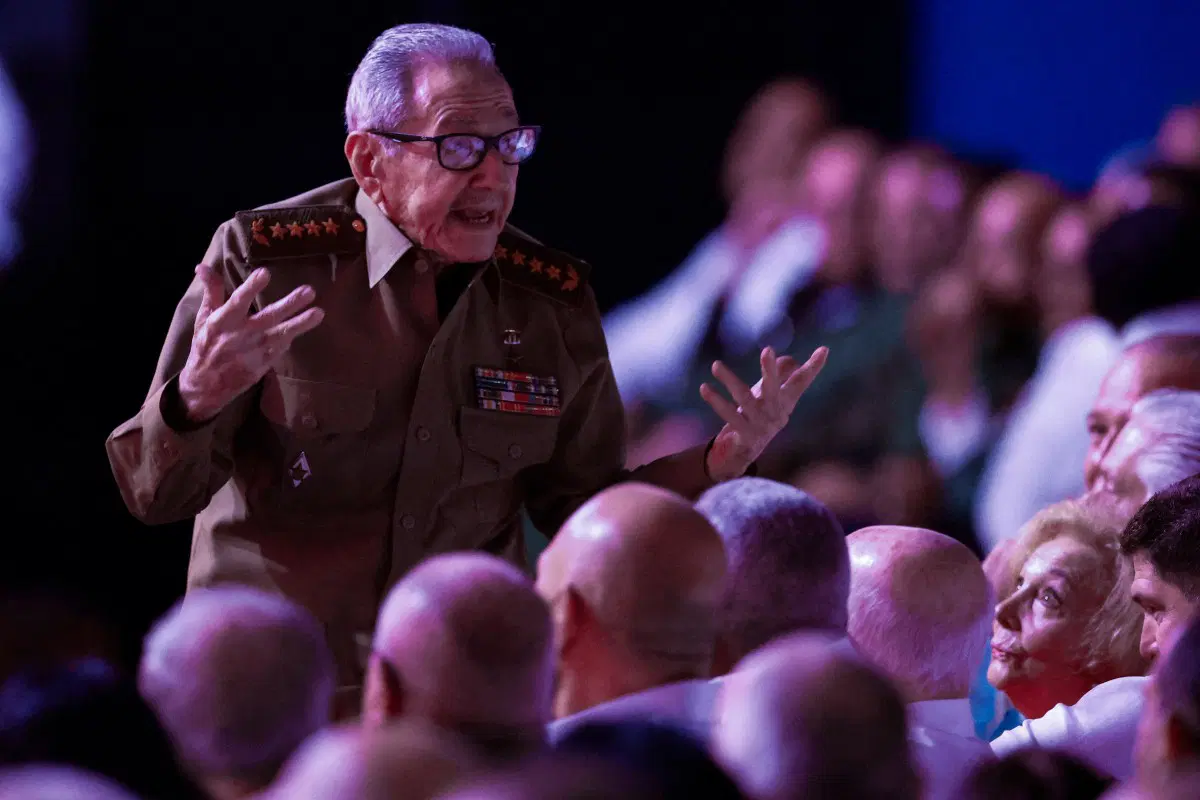
US-FLORIDA PURSUES RAUL CASTRO OVER DEADLY 1996 AIRCRAFT INCIDENT
Read Time:1 Minute, 37 Second
By: Fasasi Hammad
Florida’s top prosecutor has announced an arrest warrant for former Cuban President Raul Castro over state murder charges linked to the 1996 shooting down of two civilian aircraft.
Castro, 95, is wanted in connection with the February 24, 1996 incident involving two planes operated by Brothers to the Rescue, an organisation that assisted Cubans fleeing to the United States by sea.
Florida Attorney General James Uthmeier said Castro ordered the killing of four Floridians, vowing that the state would continue pursuing accountability over the incident.
“Raul Castro ordered the murder of four Floridians in cold blood, and Florida will never stop pursuing accountability for that communist conspiracy,” Uthmeier said in a statement.
Castro, the brother of late Cuban revolutionary leader Fidel Castro, was indicted on federal charges relating to the incident in May.
The latest move comes as US President Donald Trump’s administration intensifies economic, political and legal pressure on Cuba’s communist government.
US Attorney Jason A. Reding Quinones backed Florida’s action, saying authorities were committed to exploring all lawful avenues to pursue accountability, including parallel federal and state prosecutions.
He said the federal authorities stood with Florida in seeking justice for the four Americans killed in the Brothers to the Rescue aircraft shootdown nearly three decades ago.
Meanwhile, Cuban Foreign Minister Bruno Rodriguez condemned the development in a statement on X, describing it as the latest unsuccessful manoeuvre by anti-Cuban politicians in South Florida.
Rodriguez said the move reflected what he called political decay and moral collapse.
Trump had previously cited a US indictment to justify military action in January that resulted in the removal of Venezuela’s then-president, Nicolas Maduro, a close ally of the Cuban government.
Cuban President Miguel Diaz-Canel has also rejected the federal indictment against Castro, describing it as lacking a legal basis and alleging that it was intended to justify possible US military aggression against Cuba.


Happy
0 %

Sad
0 %

Excited
0 %

Sleepy
0 %

Angry
0 %

Surprise
0 %
 0
 0