
FEMI FALANA CONDEMNS PAY RISE PROPOSAL FOR POLITICIANS AMID HARDSHIP
Read Time:1 Minute, 51 Second
BY OWOLABI OLUWADARA
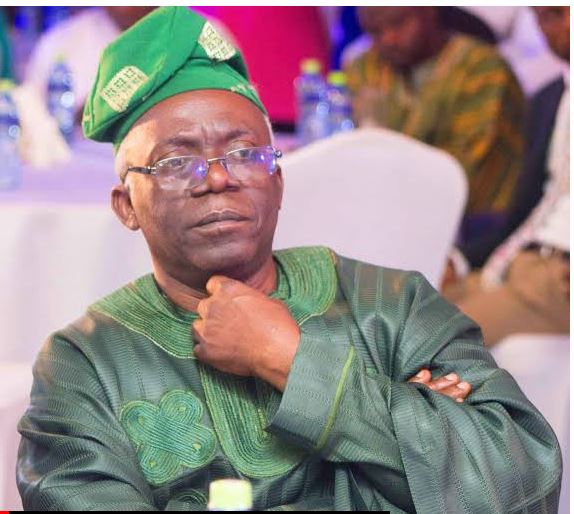
Human rights proponent, Femi Falana, has criticized the proposal to augment the remuneration of political officeholders, labeling it as “extremely insensitive” in light of Nigeria’s prevailing economic difficulties.
In an interview on Channels Television’s Sunrise Daily on Tuesday, Falana condemned the Revenue Mobilisation Allocation and Fiscal Commission for what he described as misguided priorities, asserting that the agency had disregarded the everyday challenges faced by millions of Nigerians.
“The RMAFC appears to have ignored the severe living conditions within the nation and the daily adversities experienced by ordinary citizens,” he stated.
Falana cited recent statistics from the National Bureau of Statistics (NBS), which indicate that over 133 million Nigerians are living in multidimensional poverty, questioning the justification for any salary increase for public officials.
READ MORE:
“At this juncture, suggesting enhanced compensation for political officeholders is not only tone-deaf but also unjust to the majority grappling with significant economic strain,” he remarked.
The Revenue Mobilisation Allocation and Fiscal Commission (RMAFC) intends to reassess the salaries of political officeholders, characterizing the existing pay framework as “insufficient and antiquated. ”
During a press conference in Abuja on 18th August, 2025, Chairman Mohammed Shehu disclosed that the President currently receives ₦1.5 million monthly, while ministers earn below ₦1 million, figures that have remained unchanged since 2008. He contended that these sums are no longer plausible given the responsibilities associated with these positions and the higher compensations of agency heads.
However, the Nigeria Labour Congress (NLC) has opposed the initiative, citing increasing inequality and the concealed benefits politicians already receive.
Shehu clarified that the RMAFC is responsible solely for determining the salaries of political, judicial, and legislative officers—not civil servants.
Additionally, the commission has initiated a review of Nigeria’s revenue-sharing formula, which has been static since 1992.
The existing formula allocates 52.68% to the federal government, 26.72% to states, and 20.60% to local governments. Prior attempts to amend the formula were unsuccessful due to political opposition. The new review, according to Shehu, seeks to reflect current socio-economic conditions and mitigate excessive reliance on the federal government.


Happy
0 %

Sad
0 %

Excited
0 %

Sleepy
0 %

Angry
0 %

Surprise
0 %
 0
0
 0
0