
BACK TO SCHOOL: KEY INFORMATION PARENTS NEED FOR 2025/2026 ACADEMIC SESSION
Read Time:4 Minute, 26 Second
BY OWOLABI OLUWADARA
As public and private educational institutions throughout Lagos, Ogun, Kwara states, and different regions across the nation recommence on September 15, 2025, for the inaugural term of the 2025/2026 academic year, parents are actively purchasing uniforms, settling fees, and preparing their children for a fresh academic session.
However, beyond textbooks and tuition fees, educational stakeholders are imploring families to pay closer attention to the circumstances under which their children will be learning.
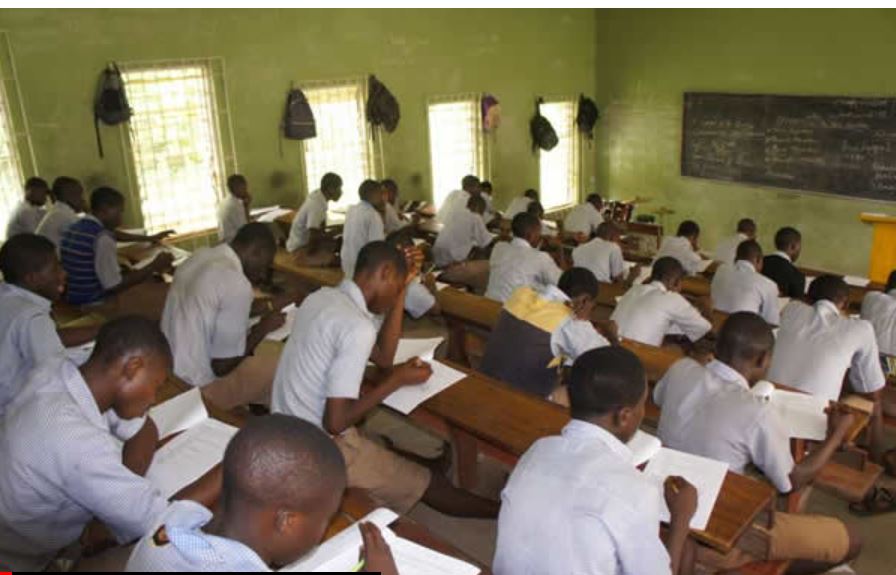
From deteriorating roofs to insecure perimeters, numerous classrooms throughout Nigeria continue to struggle to satisfy fundamental safety and educational standards.
These stakeholders are encouraging parents to transcend the enthusiasm surrounding the school reopening and focus on three pivotal issues that directly impact their children’s safety and education: the condition of classrooms, the security of school premises, and the challenge of overcrowded classes.
Experts contend that the reopening should not merely revolve around calendar dates, but rather on preparedness: Are the classrooms secure? Are the educators adequately equipped? Are the children genuinely safeguarded?
On Monday, Punch Online engaged with three educational stakeholders who shared pertinent concerns and recommendations for parents as schools reopen.
Infrastructure Deterioration Impedes Education
For the Head of School at Offspring Ilm School in Ilorin, Mrs. Lateefat Alli-Oluwafuyi, one of the most significant barriers to effective education is the physical environment of numerous Nigerian schools. She lamented that countless institutions continue to operate with damaged walls, leaky roofs, broken furniture, and minimal or nonexistent sanitation facilities.
“A child seated on the floor or beneath a leaking roof already feels neglected by the system before even opening a book,” she remarked to Punch Online.
READ MORE:
“Learning should occur in an environment that promotes dignity and comfort. Unfortunately, the prevailing conditions in many schools undermine children’s confidence and deter attendance,” she added.
She asserted that inadequate infrastructure directly contributes to poor academic performance and increased dropout rates, as students are less inclined to remain in environments that are unsafe and lack dignity.
Oluwafuyi urged governments and private school proprietors to prioritize urgent renovations, while also calling on parents to advocate for accountability from local educational authorities.
Safety Must Be Essential
In his comments, the principal of O. LAMURS School of Basic Ethics and Ethnic Studies, Alhaji Muhammad Adeyemi, underscored that safety remains one of the most pressing concerns as institutions resume.
He cautioned that in an era marked by abductions for ransom and ritual purposes, schools cannot afford to overlook safety measures. “Many schools lack perimeter fencing, guards, and any system to verify who picks up children at dismissal. This is perilous,” he noted.
“Parents should send a clear message: no one should take their child home without their explicit consent. If an alternative guardian will be involved, schools must document this and enforce it rigorously,” he added.
He also raised alarms regarding the journey to school, highlighting that some students depend on tricycle operators, motorcycle taxi riders, or even unmonitored school bus drivers.
Some of these operators, she remarked, partake in reckless or negligent actions, such as operating vehicles while under the influence of alcohol or drugs.
“Parents must scrutinize transportation arrangements meticulously. Do not simply presume that a school bus is secure or that a familiar motorcycle taxi operator can be relied upon. Vet drivers, pose inquiries, and insist on responsibility,” she counseled.
Overcrowding is a Quiet Crisis
The Founder of Inventive Tutors, Osogbo, Mr. Kabir Isa, underscored the issue of overcrowding, characterizing it as a quiet crisis that undermines education throughout Nigeria.
He pointed out that certain classrooms, particularly in public institutions, accommodate between 80 and 100 students simultaneously, rendering effective instruction nearly unattainable.
“When you crowd 90 children into a space designed for 30, you are not educating — you are merely storing them.
“Instructors are unable to provide individualized attention, students struggle to concentrate, and the overall standard of education deteriorates. Moreover, the health hazards associated with this situation cannot be disregarded,” he noted.
While acknowledging that schools in Osun will officially resume on September 22, he urged authorities to seize this opportunity to tackle overcrowding, even if it necessitates dividing sessions or implementing staggered schedules.
He contended that reducing class sizes should be prioritized as a pressing issue.
“Parents must inquire about the number of students in their child’s classroom. If a classroom is overcrowded, they should advocate for alternatives.
“Overcrowding impairs learning as significantly as inadequate infrastructure or insecurity,” he cautioned.
As Nigerian children acclimate to a new academic year, experts emphasize that safety, dignity, and quality must remain paramount in resumption strategies.
For parents, the message is clear: do not concentrate solely on fees and supplies — consider where your child is seated, how they travel to school, and whether they are safe.
Until educational institutions become genuinely secure and supportive, the enthusiasm for a new term will continue to be overshadowed by persistent challenges, they collectively asserted.
Key Points for Parents
Examine your child’s school environment: leaking roofs, damaged desks, and insufficient sanitation hinder learning.
Verify safety protocols: ensure schools maintain records of who can collect your child.
Assess transportation options meticulously — do not assume that buses or trusted riders are secure.
Inquire about class sizes; overcrowded classrooms restrict effective teaching.
Demand accountability.


Happy
0 %

Sad
0 %

Excited
0 %

Sleepy
0 %

Angry
0 %

Surprise
0 %
 0
0
 0
0