
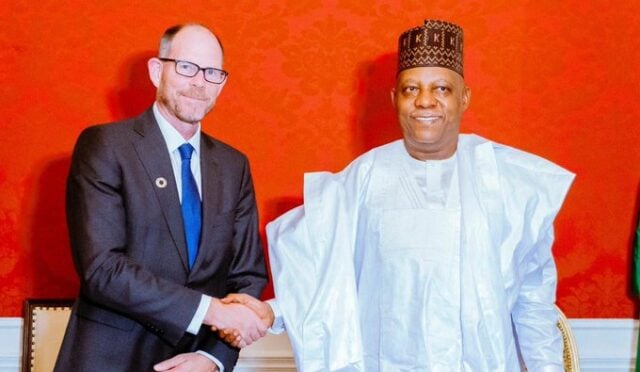
FIXING POVERTY, MALARIA IN NIGERIA’LL TAKE YEARS – GATES CEO
Read Time:3 Minute, 0 Second
By Sunmisola Shodayo
Mark Suzman, the Chief Executive Officer of the Bill & Melinda Gates Foundation, has remarked that tackling poverty and malaria in Nigeria will require enduring efforts over several years, notwithstanding the recent advancements made by the Nigerian government in the healthcare domain.
In an interview with TheCable in New York on Tuesday, prior to the Foundation’s annual Goalkeepers event, Suzman recognized the substantial challenges faced by Nigeria but praised the nation’s current leadership for taking decisive actions to enhance public health.
He stated, “Nigeria’s size means it always, by numbers, makes a material difference to both global and certainly Africa-wide statistics.”
His comments come during a period when the current Nigerian administration, led by President Bola Tinubu, has expressed a commitment to enhance healthcare funding and access.
“In the global statistics, there are more very poor people in Nigeria than in any other country on the planet right now, people living on less than $2 a day. And as you say, whether it’s malaria incidents, whether it’s the number of unvaccinated children, there are significant challenges in Nigeria, but at the same time, Nigeria has also made very important progress in several key areas,” he said.
READ ALSO:
“The current government, especially in the area of health, Minister Pate has been a longstanding strong partner of the Foundation. And again, I want to stress that we work in alignment with the national priorities set by the government of Nigeria, but he has prioritised areas like vaccination, like a malaria campaign.
“We work with countries across South Asia and sub-Saharan Africa [on] how they can increase their domestic resource mobilisation, and then within those domestic resources, maximise the investments in what we call the human capital investments of health and education.
“Yeah, I would agree that I think we have a strong partnership with the government of Nigeria. And I think Nigeria is taking some strong steps in that direction, but the size of the disease burden and the poverty burden means that this is going to be a multiyear effort,” he underscored.
In response to a query regarding how decreasing malaria incidence correlates with increased GDP, Suzman elaborated, “
Sometimes the economic case for the benefits of health is more difficult to make or understand for politicians, because the real results, that economic boost you get, is a long-term economic boost. “It’s not as if you do a malaria prevention now and you immediately get a pickup in GDP.
“What you do is, if you have children growing up without being subject to malaria or dying of malaria, if you get children growing up with adequate nutrition and they’re fully vaccinated and healthy, you’re growing a robust, strong workforce of the future.
“The real returns will come when those children reach adulthood. But unfortunately, political electoral cycles don’t necessarily work very well with 20-year payoffs.”
Suzman further described that the foundation collaborates with countries in Africa and Asia to enhance domestic resources aimed at fostering human capital development.
Regarding Nigeria in particular, the foundation’s Chief Executive Officer stated, “Nigeria is also a good example of a country that’s been facing significant challenges in terms of just the overall fiscal pressures it faces.”
“It’s been diversifying its national revenue. It is now raising more non-oil-related tax revenues, but it’s still very challenging to do that. And so, that’s a broader area of discussion.”


Happy
0 %

Sad
0 %

Excited
0 %

Sleepy
0 %

Angry
0 %

Surprise
0 %
 0
0
 0
0