
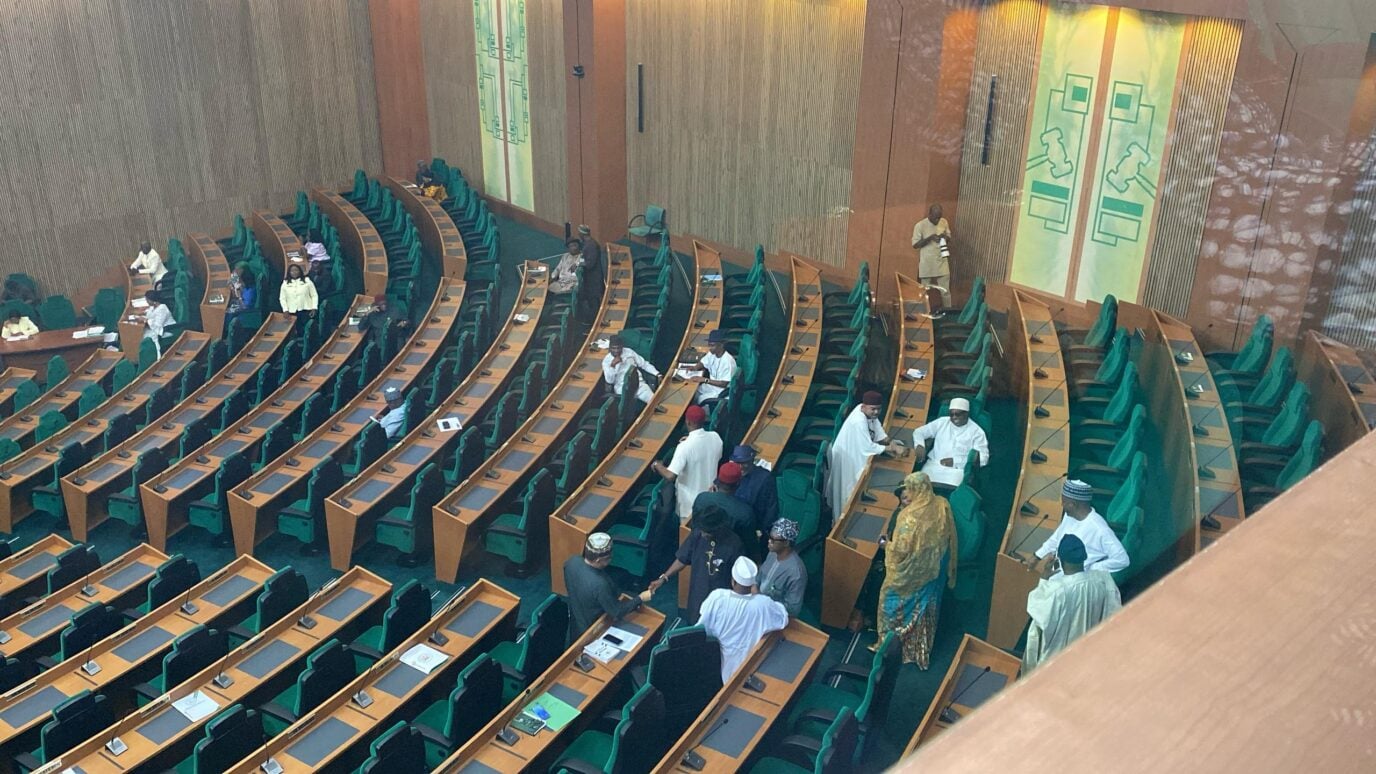
REPS IN ROWDY SESSION OVER MOTION TO RESCIND PASSAGE OF ELECTORAL ACT
Read Time:1 Minute, 58 Second
The meeting in the House of Representatives got loud on Tuesday because lawmakers were arguing about a motion to undo the approval of the Electoral Act Amendment bill.
During the main session, Francis Waive, who is the chairman of the House of Representatives committee on rules and business, proposed a motion to have the House take back its decision on the bill, which was passed on December 23, 2025.
When Tajudeen Abbas, speaker of the house, put the motion to a voice vote, the “nays” were louder than the “ayes”, but he ruled that the ayes had it.
The ruling triggered protests from lawmakers, who began hollering in objection. Abbas subsequently called for an executive session, but the proposal was also rejected.
Despite the resistance, the speaker moved the house into an executive session.
In December, when the green chamber passed the electoral act, they included a plan that requires election results to be sent to the Independent National Electoral Commission’s result viewing portal in real time.
The approved clause states that the “presiding officer shall electronically transmit the results from each polling unit to the IReV portal in real time, and such transmission shall be done after the prescribed form EC8A has been signed and stamped by the presiding officer and/or countersigned by the candidates or polling unit agents, where available at the polling unit”.
READ MORE…
TINUBU’S LEADERSHIP REDEFINES THE PROMISE OF DEMOCRATIC DIVIDENDS — WIKE
At the start of this month, the Senate approved an amendment to the Electoral Act but refused to support a plan for sending election results electronically in real time. This decision led to protests and demands for lawmakers to rethink their choice.
On Tuesday, the Senate changed its mind and agreed to send election results electronically to IReV.
However, they added a rule that if the technology doesn’t work, election workers can use a manual method as a backup.
Because there were differences between the Senate and the House of Representatives, both groups formed a special committee to work out a final version of the bill that both sides can agree on.
There are other sections of the proposed legislation where the senate and the house differ.
Civil society organisations (CSOs) have asked the national assembly to adopt the version on the transmission of results passed by the house.
HOTJIST NEWS


Happy
0 %

Sad
0 %

Excited
0 %

Sleepy
0 %

Angry
0 %

Surprise
0 %
 0
0
 0
0