
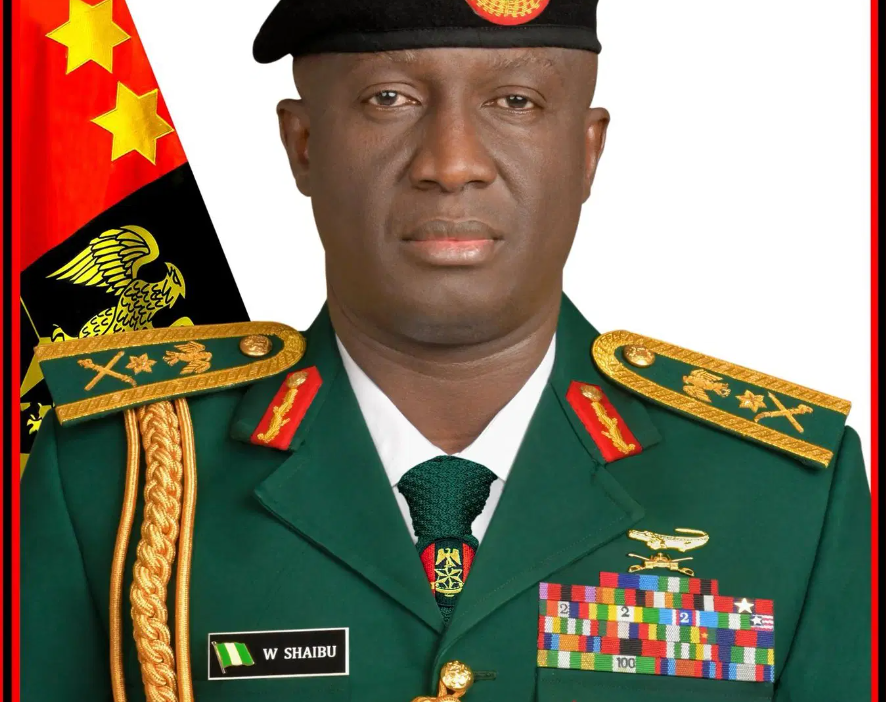
COAS UNVEILS INNOVATIVE COMMAND FRAMEWORK TO ADDRESS EMERGING THREATS
Read Time:4 Minute, 5 Second
By: Fasasi Hammad
For a generation of Nigerians, the gentle lullaby of childhood has been replaced by the harsh, terrifying crack of gunfire—a sound that empties villages in the North-East, haunts highways in the North-West, and heightens separatist tensions in the South-East. It is the relentless rhythm of a nation on edge.
Yet on Wednesday, February 25, 2026, within the orderly grounds of the Armed Forces Command and Staff College, Jaji, Kaduna, a different signal rang out. Not the detonation of a bomb, but a clarion call for a fundamental shift in how Nigeria wages its wars.
The architect of this new approach is the Chief of Army Staff, Lieutenant General Waidi Shaibu. Speaking to the country’s brightest military minds, he unveiled a vision that goes beyond new weapons—it’s a new identity for the Nigerian Army. His “Command Philosophy” aims to shape a force that is “highly professional, agile, combat-effective and resilient.” Beneath the polished boots, starched camouflage, and ceremonial pageantry lies a candid truth: old strategies are failing, and with them, too many of the nation’s hopes.
This is not a tale of parades and pomp. It is the story of a force confronting a kaleidoscope of threats and acknowledging that the old monochrome approach can no longer suffice.
Shaibu was blunt about the stakes. “The intelligence brief… affirms that our operating environment is increasingly becoming more complex,” he told a silent auditorium. That term—‘complex’—hides the brutal reality of Nigeria’s modern security landscape.
Complexity is counted in hollowed-out communities in the North-West, where farmers cultivate land under the constant threat of bandit attacks. It is measured in overstretched resources, strained by insurgencies that evolve faster than they can be contained. And it is now evident in the invisible battlefields of cyberspace, where a new generation of threats bypasses traditional checkpoints.
Shaibu’s message was clear: the soldier at a roadblock, the archetype of Nigerian security, is no longer sufficient. “This evolving threat spectrum necessitates that we enhance our capabilities in intelligence, surveillance, target acquisition and reconnaissance, as well as in cyber operations,” he said. The front line now exists in the hum of drones, the encrypted signals of satellites, and the dark web lairs of cyber-mercenaries.
How does an army stretched across a nation reinvent itself? For Shaibu, the answer is PROSE—a five-letter framework that defines his tenure: Professional Excellence, Robust Administration, Operational Readiness, Strategic Cooperation, and Exemplary Leadership.
At its core lies a “Soldier-First Culture.” In a country where troops are often treated as expendable, this is more than a policy—it is a pledge. Shaibu emphasized that “effective leadership must be anchored in character, courage, and genuine concern for personnel.” Victory, he added, must extend beyond battlefield achievements to include public trust, stronger civil-military relations, and strict adherence to the rule of law.
This is not a cosmetic adjustment. In Lagos, days before Jaji, Shaibu promised a “radical but informed” overhaul of training and operations. Outdated drills for bygone enemies are being replaced with preparation tailored for modern threats.
Army training will now prioritize Special Forces, mission-specific readiness, and an expanded Army Aviation program. Speed, intelligence, and technology are the new currencies of military power. Lagging behind, Shaibu warned, is surrendering the advantage to adversaries who wield the future in their hands.
The philosophy is bold, and the Nigerian Army is already acting. In the North-West, troops of the 8 Division eliminated the notorious bandit leader Gwaska Dan Marni under Operation FANSAN YAMMA, dismantling his network at dawn. Lieutenant Colonel Olaniyi Osoba confirmed that over 100 armed bandits had gathered to plan attacks on communities and military supply lines. The operation resulted in numerous neutralizations, arrests, and the recovery of weapons and vehicles—though some soldiers made the ultimate sacrifice.
In the South-East, the Joint Task Force (JTF) responded to an ambush on February 20, 2026, in Anambra State’s 9th Mile area, where suspected IPOB/ESN operatives attacked commuters. Troops rescued five kidnapped victims unharmed, recovered their vehicle, and ensured the assailants could not regroup, restoring public confidence along a critical transport corridor.
For Nigerians, the proof of the Army’s transformation will be safer streets, reclaimed farmland, and renewed security. Shaibu has pledged loyalty to President Bola Ahmed Tinubu while calling for adequate support to modernize the Army.
At Jaji, as Senior Course 48 participants absorbed the new doctrine, the weight of responsibility was clear. Shaibu envisions an Army that is not just a force of arms but of intellect—a defender of the people, a guardian of public trust.
In a nation where gunfire has become the soundtrack of daily life, PROSE represents a compelling story of foresight over firepower—a strategic reinvention that, if fully implemented, could transform Nigeria’s security narrative into one of hope and stability.


Happy
0 %

Sad
0 %

Excited
0 %

Sleepy
0 %

Angry
0 %

Surprise
0 %
 0
0
 0
0