
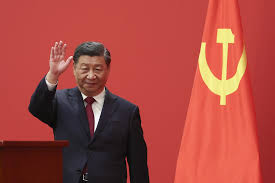
CHINA BLAMES US, ISRAEL FOR STRAIT OF HORMUZ BLOCKAGE
Read Time:1 Minute, 47 Second
By: Fasasi Hammad
China on Thursday blamed the United States and Israel for the blockage of the Strait of Hormuz, calling their military strikes on Iran the “root cause” of the disruption. This followed US President Donald Trump’s call for affected countries to take control of the strategic waterway.
Trump urged nations that rely on oil shipments through the Hormuz Strait to “take care of that passage” and use it for themselves, after Tehran effectively closed it in retaliation for US-Israeli strikes on Iran.
As a major importer of oil passing through the strait, China’s Foreign Ministry in Beijing criticized the military actions. Ministry spokeswoman Mao Ning said at a press briefing, “The root cause of interruptions to navigation through the Strait of Hormuz is the United States and Israel’s illegal military operations against Iran.”
READ MORE…
COURT DIRECTS APPEARANCE OF BANK EXECUTIVES IN HIGH-STAKES CONTEMPT SUIT
Facing declining approval ratings over the conflict, Trump has attempted to assure that the war is nearing its end. However, he warned in a televised address that another “two to three weeks” of intense strikes could “bring Iran back to the Stone Ages,” and if no agreement is reached, Washington could target Iran’s electricity-generating facilities.
Responding to Trump’s threats, Mao emphasized that “military means cannot fundamentally solve the problem, and escalation of conflicts is not in the interests of either side.”
China, the main buyer of Iranian oil, has been directly affected as the strait’s closure has caused global oil prices to surge by 40 to 50 percent, hitting industries such as aviation. Several Chinese airlines, including Air China, announced plans to raise fuel surcharges on domestic flights starting Sunday.
Other international carriers, including Air France-KLM, Cathay Pacific, Air India, Qantas, and SAS, have also increased fares to reflect higher jet fuel costs and rerouted flights to avoid conflict zones.
Since the US and Israeli attacks on February 28, Brent crude—a key global oil benchmark—has climbed to around $100 per barrel, as Iran retaliated against oil installations in several Gulf countries.


Happy
0 %

Sad
0 %

Excited
0 %

Sleepy
0 %

Angry
0 %

Surprise
0 %
 0
0
 0
0