
NIGERIANS URGE ACTION AS FEDERAL GOVERNMENT UNVEILS 48 ALLEGED TERROR SPONSORS.
Read Time:5 Minute, 4 Second

By: Muftau Fatimo
The Federal Government’s publication of an updated list containing 48 individuals and 12 entities allegedly linked to terrorism financing has sparked renewed public calls for swift action, with security experts cautioning that any failure to act decisively could further undermine confidence in Nigeria’s counterterrorism efforts.
The list, released on Saturday by the Nigeria Sanctions Committee, is among the most extensive disclosures in recent times, targeting suspected financiers of violent groups operating across the country.
According to hotjist, notable names on the list include Finland-based factional leader of the Indigenous People of Biafra, Simon Ekpa, and publisher Tukur Mamu of *Desert Herald*.
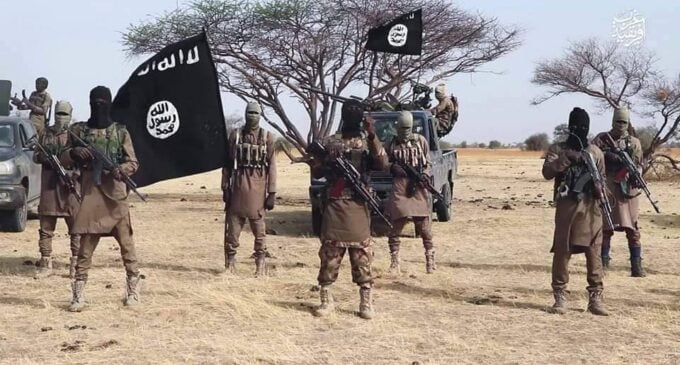
The designation also covers groups such as Boko Haram, the Islamic State West Africa Province, and IPOB, alongside entities like West and East Africa General Trading, Settings Bureau De Change Ltd, and the Lakurawa Sect.
The development comes at a time the government says it has secured convictions in 386 terrorism cases out of 508 prosecuted, even as attacks continue across several states, including Borno, Kebbi, Kwara, and Zamfara.
The names also published on the NiGSAC website include Abdulsamat Ohida, Mohammed Sani, Abdurrahaman Abdurrahaman, Fatima Ishaq, Yusuf Ghazali, Muhammad Sani, Abubakar Muhammad, and Sallamudeen Hassan.
Others are Adamu Ishaq, Hassana Isah, Abdulkareem Musa, Umar Abdullahi, Abdurrahaman Ado, Bashir Yusuf, Ibrahim Alhassan, Muhammad Isah, Salihu Adamu, Surajo Mohammad, Fannami Bukar, Muhammed Musa, Sahabi Ismail, Mohammed Buba, Adamu Hassan, Hassan Mohammed, Usman Abubakar, Kubara Salawu, Rabiu Suleiman, Godstime Iyare, Francis Mmaduabuchi, John Onwumere, Chikwuka Eze, Edwin Chukwuedo, Chiwendu Owoh, Ginika Orji, Awo Uchechukwu, Mercy Ali, Ohagwu Juliana, Eze Okpoto, Nwaobi Chimezie, and Ogumu Kewe.
Other entities named as terrorism sponsors include G.Side General Enterprises, Desert Exchange Ventures Limited, Eagle Square General Trading Co. Ltd, Alfa Exchange BDC, Alin Yar Yaya General Enterprises, K. Are Nigeria Limited, Suhailah Bashir General Enterprises, Igwe Ka Ala Enterprises, Seficuvi Global Company, Jama’atu Wal-Jihad, Ansarul Sudan, Islamic Province, Yan Group, and Yan Group NLBDG.
In 2024, the Federal Government similarly listed nine individuals and six organisations linked to terror financing, raising concerns over enforcement continuity.
Experts Call for Swift Action
While analysts have described the newly released list as a significant step forward, many caution that simply naming suspects without decisive enforcement could reduce the effort to a symbolic gesture.
Security experts and retired senior law enforcement officers who spoke with the media stressed the need for prompt, coordinated, and transparent action in the next phase.
A retired Assistant Inspector-General of Police, Salami Abduraheem, said the credibility of the government’s move would depend not on publication alone, but on concrete outcomes.
“Publishing a list is only the beginning. The real test lies in what follows—arrests, prosecution, and convictions.
“If these individuals continue to operate freely weeks or months after being named, it sends a dangerous signal that the system lacks the capacity or will to act,” he said.
Abduraheem added that past announcements on terror financing networks had not always been matched with sustained legal enforcement, raising concerns about gaps in implementation.
Similarly, a former director in a federal security agency, Abdullahi Adeoye, warned that publicly identified suspects could attempt to evade arrest if action is not immediate.
“Time is critical in cases like this. Once names are released, suspects are alerted. Without swift measures—such as freezing accounts, restricting movement, and making arrests—valuable intelligence may be lost,” he said.
Adeoye further emphasized that effective disruption of such networks requires coordinated efforts among financial regulators, intelligence services, and law enforcement agencies.
Legal, institutional challenges
A security analyst, Musa Aliyu, described the move as long overdue but raised concerns about Nigeria’s capacity to prosecute high-level terror financiers.
“It shouldn’t just be about releasing the list alone. They have to go a long way and ensure that due diligence is done.
“Honestly speaking, the Nigerian legal system is not adequately prepared to prosecute terror sponsors effectively. This is evident in the weaknesses in criminal justice administration,” he said.
Aliyu also expressed concern about the judiciary’s ability to handle terrorism-related cases, urging the National Assembly to strengthen legal frameworks.
“The kind of judiciary we have right now is not wired to diligently prosecute the kind of criminal activities related to terrorism. This is the time for the National Assembly to provide the necessary tools to ensure adequate punishment,” he said.
Aliyu further stressed the need to balance transparency with due process.
“Justice must be seen to be done for victims, those killed, abducted, or forced to pay ransom. Nigerians must be assured that the fight against terrorism is not selective,” he added.
Public trust, accountability
For many Nigerians, the release of the list represents a rare moment of transparency in the fight against terrorism
However, civil society groups say transparency must be matched with accountability.
A security governance expert, Shola Muse, expressed scepticism about the government’s commitment.
“It is not about releasing names. What is the judicial value? What is the executive value at the end of the day? If the government is sincere, it must convince the public that they are ready this time to act decisively. Otherwise, it becomes a media jamboree,” he said.
Muse called for synergy among the three arms of government and security agencies.
“There must be judicial support, executive will, and political backing. Without sincere and coordinated efforts, these measures may not achieve the desired results,” he added.
A security governance expert, Kemi Babatunde, said public confidence had been weakened by past experiences.
“Nigerians have seen lists before. What they want now is action, visible, measurable action. This is not just about security; it is about trust,” she said.
Babatunde emphasised the need for clear and consistent communication on progress.
Public reactions
Following the development, many Nigerians took to social media platforms, including Facebook and X, to demand immediate action from security agencies.
A user, Fyneface Dumnamene, wrote, “Go beyond listing and prosecute them if you have facts.”
Another user, Frank Okpara, urged the government to follow up with investigations and summons.


Happy
0 %

Sad
0 %

Excited
0 %

Sleepy
0 %

Angry
0 %

Surprise
0 %
 0
0
 0
0