
MILITARY PROBE CENTRE PROCESSES 1,450 TERROR SUSPECTS, SENDS 500 FOR PROSECUTION
Read Time:2 Minute, 6 Second
By Aishat Momoh. O.
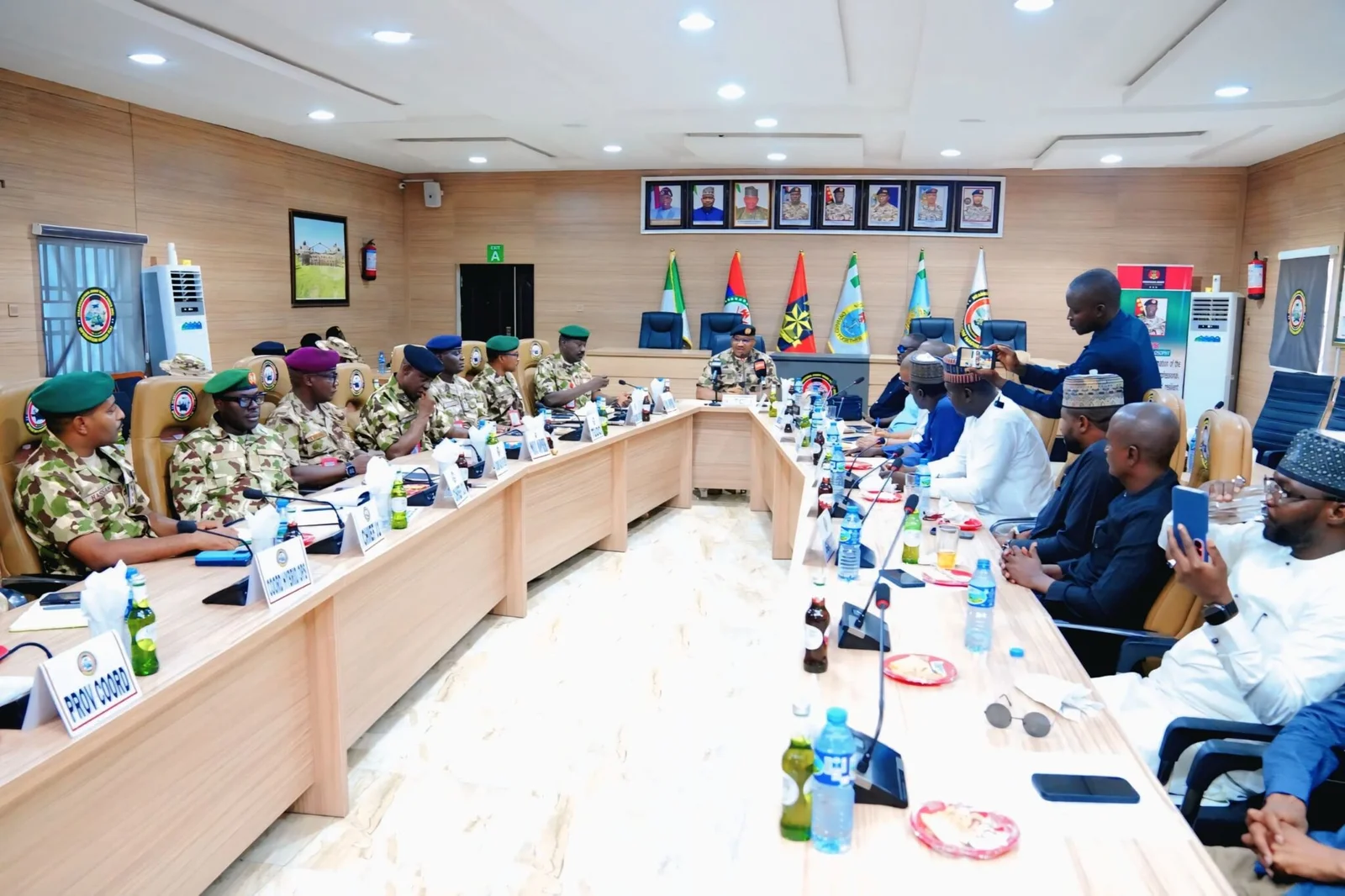
The Joint Investigation Centre at Giwa Barracks Maiduguri has concluded investigations involving 1,450 suspected terrorists, with over 500 already screened and moved for prosecution.
Commander of the centre, Yusuf Audu, disclosed this during a briefing in Maiduguri, noting that the facility remains a key component of Nigeria’s counter-insurgency operations against groups such as Boko Haram and ISWAP.
Represented by Puole Obinwal, the commander explained that the centre serves as a unified interrogation and screening hub for suspects arrested during military operations.
According to him, detainees undergo structured investigation and legal review before being categorised into prosecution, rehabilitation, or reintegration pathways based on findings.
“Recently, the centre moved over 500 suspects for trial, most of whom were convicted,” he said, attributing the outcome to coordinated inter-agency investigations and prosecution processes.
The facility operates as a multi-agency platform involving the Nigerian Army, Defence Intelligence Agency, Nigeria Police Force, Department of State Services, Nigerian Correctional Service, Nigeria Security and Civil Defence Corps, National Drug Law Enforcement Agency, and the Nigeria Immigration Service, alongside legal experts from the Office of the Attorney-General of the Federation.
Audu said the arrangement ensures a holistic approach to terrorism investigations while strengthening the legal integrity of prosecutions.
He added that strict custody procedures are maintained, with detainees documented, assigned case files, and housed in segregated facilities, including provisions for women and children. Juveniles are provided with basic education and care within the centre.
The commander also highlighted welfare measures, including medical services, hygiene maintenance, and structured feeding supported by infrastructure such as a 40,000-litre solar-powered borehole built with support from the International Committee of the Red Cross.
He noted that detainees benefit from psychological and recreational support, as well as family communication through the “Restoration of Family Links” programme facilitated in partnership with international organisations.
Investigations are conducted under the Terrorism Prevention Act with judicial oversight through Federal High Court remand orders, while biometric data of suspects are captured to support national security tracking.
The centre also collaborates with global partners such as the International Organization for Migration, United Nations Office on Drugs and Crime, and UNICEF to enhance operations, infrastructure, and detainee welfare.
Audu said detainees are engaged in vocational programmes including tailoring, farming, poultry, fish farming, and baking, aimed at rehabilitation and reintegration.
He added that the centre’s operations align with global best practices, emphasising that effective counter-terrorism efforts must go hand-in-hand with the protection of human rights.


Happy
0 %

Sad
0 %

Excited
0 %

Sleepy
0 %

Angry
0 %

Surprise
0 %
 0
0
 0
0