
CHINA RULES OUT JOINING NUCLEAR TALKS AFTER NEW START TREATY EXPIRY
Read Time:2 Minute, 33 Second
By Aishat Momoh. O.
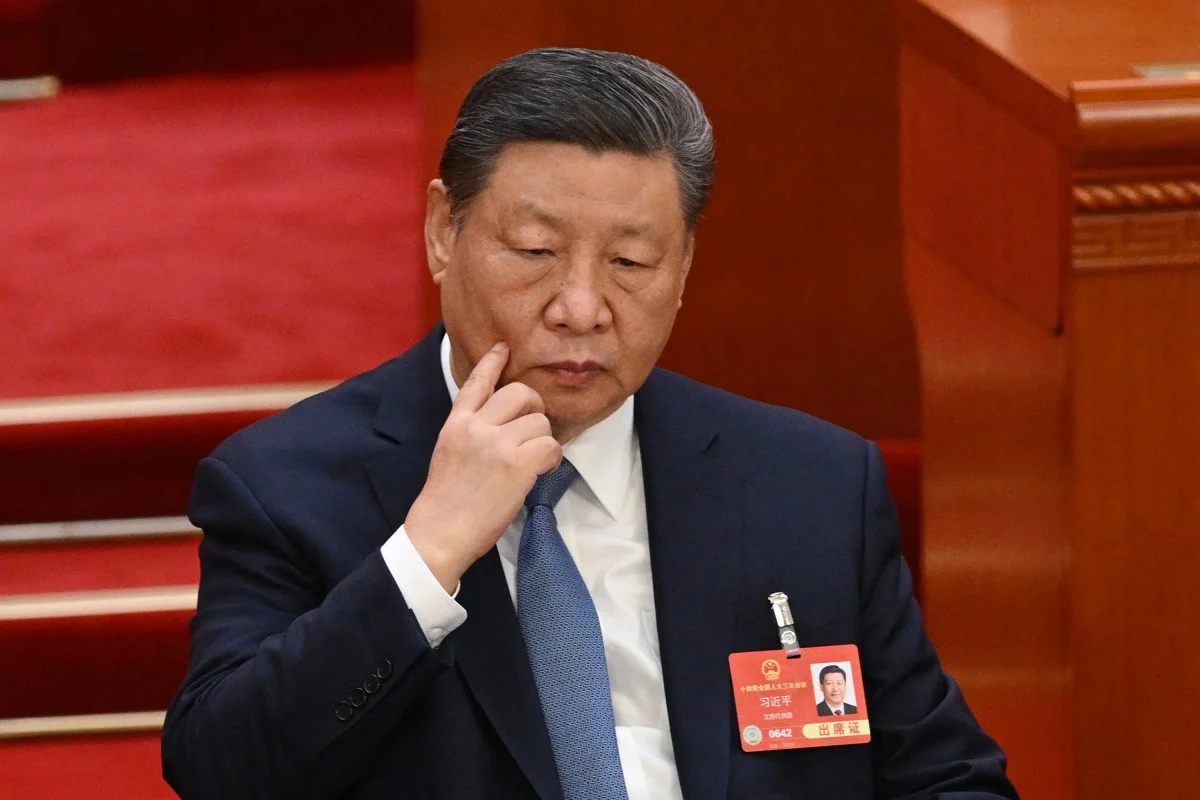
China has said it will not participate in nuclear arms control negotiations “at this stage,” following the expiry of the US–Russia New Strategic Arms Reduction Treaty (New START), a development that has reignited fears of a renewed global arms race.
Beijing’s position was made clear on Thursday amid growing international concern that the lapse of New START — the last remaining nuclear arms control agreement between the United States and Russia — could trigger unchecked expansion of nuclear arsenals by major powers.
Speaking at a regular news briefing, Chinese Foreign Ministry spokesman Lin Jian said China’s nuclear policy remains anchored on safeguarding global strategic stability, but stressed that its nuclear capabilities are not comparable to those of Washington and Moscow.
“China has always maintained that the advancement of arms control and disarmament must adhere to the principles of maintaining global strategic stability,” Lin said. “China’s nuclear capabilities are of a totally different scale from those of the United States and Russia, and will not participate in nuclear disarmament negotiations at this stage.”
The New START treaty formally expired at the turn of the calendar on February 5, after US President Donald Trump declined to follow up on a proposal by Russian President Vladimir Putin to extend the treaty’s warhead limits for an additional year.
The treaty, first signed in 2010, capped each side’s deployed strategic nuclear warheads at 1,550, representing nearly a 30 per cent reduction from limits set under a 2002 agreement. It also restricted delivery systems and permitted mutual on-site inspections, a key confidence-building measure that was suspended during the COVID-19 pandemic and never resumed.
With its expiration, all formal limits on the size of US and Russian nuclear arsenals have now lapsed, ending decades of bilateral arms control that began during the Cold War.
The United States has insisted that any future nuclear arms agreement must include China, arguing that Beijing’s rapidly expanding nuclear forces make it a critical player in global disarmament efforts. However, diplomatic attempts to draw China into trilateral talks have so far yielded no success.
Campaigners and security analysts warn that the collapse of New START could encourage China to accelerate its nuclear build-up. Beijing is estimated to possess about 550 strategic nuclear launchers, a figure that remains significantly below the 800 launchers each permitted to the US and Russia under the now-expired treaty.
Despite this disparity, arms control advocates caution that the erosion of binding agreements between the world’s largest nuclear powers risks undermining global non-proliferation efforts and increasing the likelihood of a destabilising arms race.
The United States and Russia together account for more than 80 per cent of the world’s nuclear warheads, but in recent years, longstanding arms control frameworks have steadily unravelled, with New START now joining a list of defunct agreements.
As geopolitical tensions persist and formal guardrails disappear, experts warn that the absence of new arms control mechanisms could pose long-term risks to international security and strategic stability.


Happy
0 %

Sad
0 %

Excited
0 %

Sleepy
0 %

Angry
0 %

Surprise
0 %
 0
0
 0
0