
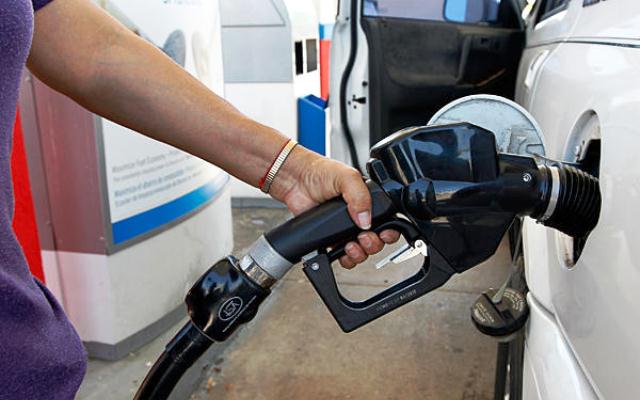
MOTORISTS FACE FRESH QUEUES AT MRS AS PETROL SELLS ABOVE N1,000 PER LITRE
Read Time:3 Minute, 11 Second
By: Fasasi Hammad
Long queues are beginning to appear at MRS filling stations where Premium Motor Spirit (PMS), also known as petrol, is being sold for less than ₦1,000 per litre, as motorists rush to buy the cheaper fuel.
A market survey conducted on Saturday morning showed that private car owners and commercial drivers were already lining up at MRS outlets, particularly along the Ibadan–Lagos Expressway, where petrol is currently priced at ₦937 per litre.
Other filling stations along the same corridor recorded fewer queues compared to the MRS station at Alapere, as most of them have raised pump prices above ₦1,000 per litre.
For instance, Eterna Plc increased its petrol price to ₦1,040 per litre, while North West Capital Oil and Fatgbems adjusted their prices to ₦1,030. Mobil stations were selling slightly lower at about ₦1,025 per litre.
Despite the growing demand, some stations — including those operated by the Nigerian National Petroleum Company (NNPC) Limited — were not dispensing fuel.
The NNPC station at OPIC Estate remained closed as of 7:00 a.m. on Saturday, although it was unclear whether the closure was due to a shortage of products or other reasons.
Similarly, several TotalEnergies stations along the expressway were not selling fuel at the time of filing this report, while a few others had only a small number of motorists waiting.
The situation comes after a sharp rise in global crude oil prices earlier in the week, with prices climbing above the $80-per-barrel mark.
Read More…
NAIRA WEAKENS FOR THE SECOND CONSECUTIVE WEEK AGAINST THE US DOLLAR
Reports also emerged on Tuesday that Dangote Petroleum Refinery had increased its ex-depot price of petrol from ₦774 to ₦874 per litre — a ₦100 increase.
The adjustment followed warnings from economist Paul Alaje, who said petrol prices in Nigeria could climb to about ₦1,000 per litre if the ongoing conflict involving the United States, Israel, and Iran continues to escalate.
Alaje, Chief Economist at SPM Professionals, made the remarks during an appearance on the media, citing rising geopolitical tensions in the Middle East.
According to him, increases in crude oil prices usually lead to higher costs for refined petroleum products such as petrol, diesel, and aviation fuel, which can have significant economic consequences.
He noted that rising oil prices could worsen inflation and increase transportation and energy costs across the country.
Oil prices surged during the week as investors closely monitored developments in the Middle East, where the United States and Israel have intensified strikes on Iran, while Tehran has launched retaliatory attacks.
The conflict has disrupted regional energy flows, particularly around the Strait of Hormuz — a critical shipping route through which about 20 percent of global oil supply passes.
The situation has also raised concerns about a potential global energy crisis that could push inflation higher.
Although market reactions have remained relatively moderate due to expectations that the conflict may be short-lived, analysts warn that prolonged tensions could significantly disrupt supply chains and drive energy prices even higher.
Iran has also launched missile and drone attacks across parts of the Middle East, including Lebanon, Saudi Arabia, Qatar, and Dubai, while threatening actions that could further push global energy prices upward.
Earlier in the week, oil prices jumped nearly 14 percent before easing slightly, while European natural gas prices surged almost 40 percent after Qatar temporarily halted liquefied natural gas production.
Meanwhile, a senior Iranian Revolutionary Guards commander warned that ships attempting to pass through the Strait of Hormuz could be targeted, raising fears of further disruptions to global oil supply.
Crude oil prices rose at least two percent on Tuesday, with analysts warning that higher energy costs could complicate efforts by central banks to control inflation while supporting economic growth.


Happy
0 %

Sad
0 %

Excited
0 %

Sleepy
0 %

Angry
0 %

Surprise
0 %
 0
0
 0
0