
FG MOVES TO OVERHAUL CHILD RIGHTS ACT AMID RISING ABUSE AND CYBER EXPLOITATION
Read Time:3 Minute, 15 Second
By: Balogun Ibrahim
The Federal Government on Wednesday said Nigeria’s Child Rights Act (CRA) of 2003 is increasingly unable to respond to the evolving challenges confronting children, as it began moves to reform the legal framework amid rising cases of abuse, cyber exploitation, and enforcement gaps across the country.
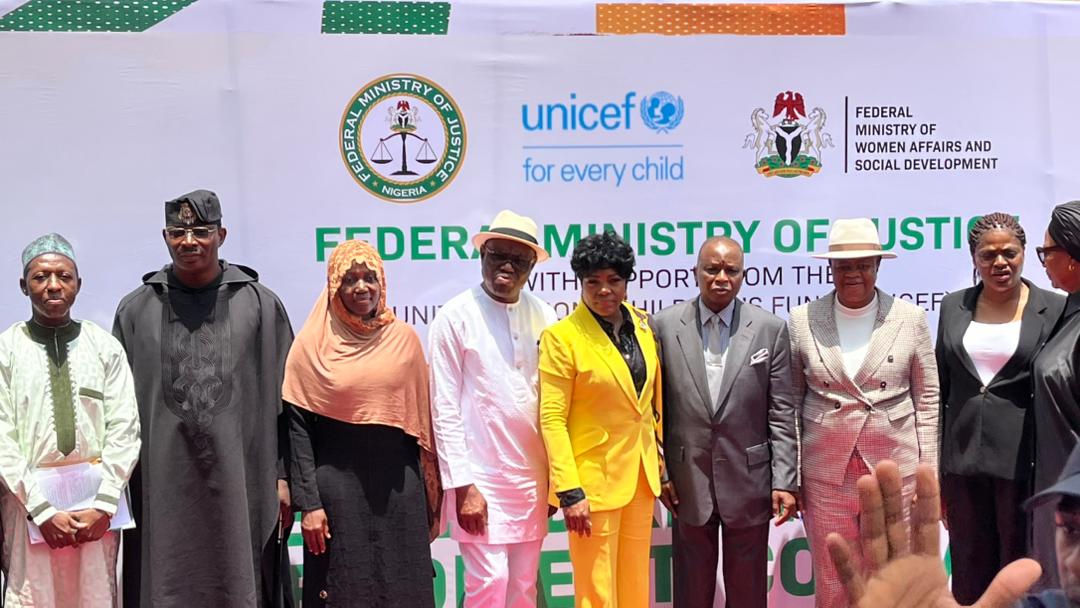
The Attorney-General of the Federation and Minister of Justice, Lateef Fagbemi (SAN), made this known in Abuja during the inauguration of the Committee on the Review of the Child Rights Act. He cautioned that the protection system established over two decades ago no longer reflects current realities affecting Nigerian children.
Fagbemi described the 2003 law as a landmark achievement that domesticated Nigeria’s commitments under international and regional child protection agreements, but noted that societal changes have exposed significant weaknesses requiring urgent and comprehensive reform.
He emphasised that children are central to national development and that meaningful progress cannot be achieved without deliberately safeguarding their welfare, dignity, and future.
According to him, when the Act was enacted, it did not anticipate modern forms of child exploitation now prevalent, including recruitment of minors by terrorist groups, online grooming, sextortion, cyberbullying, cyberstalking, and exposure to pornography networks.
He added that laws must evolve with society, stressing that the review process is not cosmetic but a fundamental reassessment of the existing framework.
Fagbemi explained that the exercise may lead to a repeal and re-enactment of the Act to establish a stronger, more coherent, and more responsive child protection system.
He listed key focus areas for the committee, including strengthening the right to life and dignity, banning harmful practices such as child-witch branding, improving protections for girls against issues like female genital mutilation, reforming adoption procedures to prevent trafficking and commercial exploitation, and enhancing responses to sexual and gender-based violence.
He also called for stronger Family Courts as specialised institutions for child justice, harmonisation of inconsistencies among states on the definition of a child and age of criminal responsibility, and constitutional backing for child protection to ensure nationwide uniformity.
READ MORE…
OSUN: COURT MOVES TO ENFORCE N100.1M JUDGMENT AGAINST POLICE, OTHERS
Fagbemi lamented uneven implementation of the Act across states, saying it has weakened overall child protection outcomes, and urged state governments and legislatures to adopt the proposed reforms for a unified national framework.
He linked the initiative to President Bola Tinubu’s declaration of 2026 as the “Year of Social Development and Families in Nigeria,” describing it as a national call to prioritise child and family welfare.
The review committee is chaired by Justice Eberechi Suzzette Nyesom-Wike of the Court of Appeal, whom Fagbemi described as highly experienced in child justice reform and judicial innovation, citing her previous work in child protection law reform and family court systems.
Co-chairing the committee is the Minister of Women Affairs and Social Development, Hajiya Imaan Sulaiman-Ibrahim, with participation from key stakeholders across government institutions, civil society, and development partners including UNICEF.
Justice Nyesom-Wike, in her remarks, said the review had become necessary due to persistent gaps in the current law that continue to hinder child welfare and access to justice.
She noted that inconsistent enforcement across states has left many children inadequately protected despite existing legal provisions.
She also highlighted constitutional contradictions that, in some instances, contribute to child marriage, as well as discrepancies in age definitions between laws.
She revealed that reported cases of child abuse rose significantly from 3,943 in 2021 to 9,279 in 2024, while conviction rates remain low.
She further disclosed that about 20 million Nigerian children are currently out of school, describing the situation as a major structural challenge to national development.
Justice Nyesom-Wike urged the committee to produce practical and enforceable reforms capable of addressing both legal and institutional deficiencies, stressing that the issue goes beyond legislation to broader systemic failures.


Happy
0 %

Sad
0 %

Excited
0 %

Sleepy
0 %

Angry
0 %

Surprise
0 %
 0
0
 0
0