
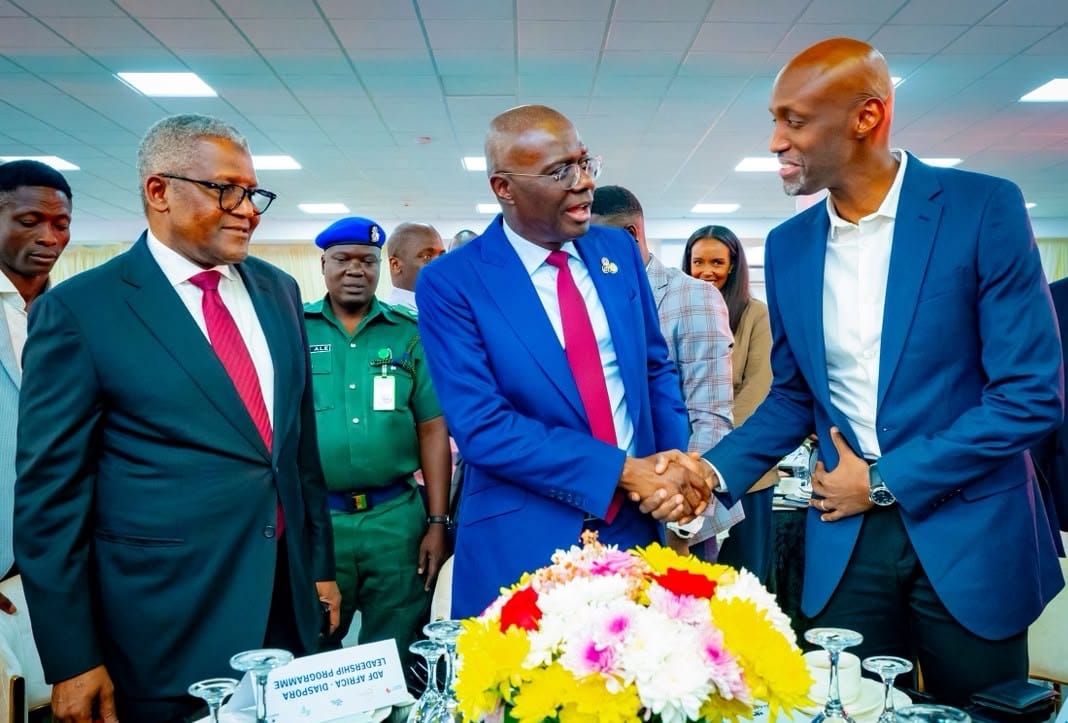
DANGOTE REFINERY IPO GETS AFRICAN, GLOBAL LEADERS’ BACKING
Read Time:5 Minute, 48 Second
By Aishat Momoh. O.
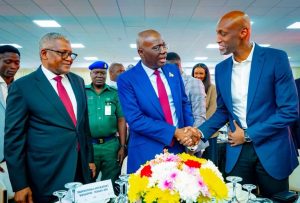
The proposed Initial Public Offering (IPO) of the Dangote Petroleum Refinery and Petrochemicals has received strong backing from African and international leaders, who said opening the industrial giant to wider ownership could usher in a new era of wealth creation, industrialisation and economic sovereignty on the continent.
The leaders spoke on Thursday at the 2026 ADF Africa Diaspora Leadership Programme Young Global Leaders Convening in Lagos, where they described the refinery as evidence of Africa’s capacity to execute projects at global scale.
They said the proposed IPO could enable ordinary Africans, pension funds, institutional investors and members of the diaspora to directly participate in the wealth generated by one of Africa’s largest industrial investments.
President and Chief Executive Officer of Dangote Industries Limited, Aliko Dangote, said the philosophy behind the IPO was to extend the prosperity created by the refinery beyond its promoters and provide ordinary Africans with an opportunity to become shareholders.
“I want drivers, cooks, the woman selling food on the streets of Ghana, Rwanda and South Africa to invest so they can share in this prosperity,” Dangote said during a fireside chat.
“We are doing the IPO to pass this prosperity to Africans.”
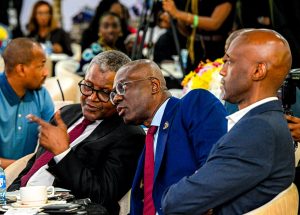
Dangote said his ambition had always extended beyond personal wealth accumulation to building enterprises capable of creating jobs, opportunities and prosperity across Africa.
“I am wealthy, not rich. A wealthy man creates wealth, while a rich man makes money and keeps it for himself,” he said.
“What keeps me going is that we must industrialise Africa. There is no amount of hurdle that will stop us. If you put a brick wall in front of me, I will make a hole and pass through.”
He expressed confidence that the refinery could eventually become Africa’s largest company by size and profitability, drawing comparisons with global corporations such as Amazon, Microsoft, Tesla and Alibaba, which expanded significantly after accessing public capital markets.
“By the grace of God, this refinery will be the largest company in Africa by size and profitability,” Dangote said.
He added that the wider mission of the Dangote Group was to reduce the risks associated with investing in Africa and demonstrate that globally competitive businesses could be successfully built on the continent.
“Our job is to derisk Africa, encourage more investors, create jobs and create more opportunities. That is how we will transform Africa,” he said.
Former United States Assistant Secretary of State for African Affairs and Co-Chair of The Africa Center, Ambassador Jendayi Frazer, said the proposed IPO could connect African industrial production with capital from the continent and its diaspora.
“The refinery connects us all through the proposed IPO that creates broader ownership,” Frazer said.
She said the offering could enable African institutions, pension funds, individual savers and members of the diaspora to own stakes in the continent’s economic growth.
According to Frazer, the refinery had already “changed the equation” for Africa, with implications extending beyond petroleum production to the continent’s geopolitical standing.
“Economic power is not only what a country possesses, it’s what it can create, process, finance, transport and sell. Supply chains, energy systems and capital markets shape sovereignty,” she said.
Frazer said the project demonstrated what could be achieved when African ambition was matched with capital, technical expertise, partnerships and disciplined execution.
“Africa does not need the world’s permission to build,” she said, adding that international partners would find that Africa had already begun building its own capacity.
Lagos State Governor, Babajide Sanwo-Olu, also called for a new model of African industrial ownership in which ordinary citizens, institutional investors and diaspora capital could hold stakes in strategic assets.
“The next frontier of African scale is not another giant. It is a thousand ordinary owners: the teacher in Enugu, the nurse in New Jersey and the pension fund in Nairobi, each holding a piece of the strategic assets of their own continent,” Sanwo-Olu said.
The governor described the refinery as evidence of Africa’s ability to deliver projects once considered beyond its reach.
“Mr Dangote did not build a refinery. He built a country around a refinery, and then he built the refinery,” he said.
Sanwo-Olu noted that the project required the construction of supporting infrastructure, including a jetty and power plant, to overcome limitations that existed when construction began.
He also recalled predictions that the project would never become operational after surviving construction difficulties, the COVID-19 pandemic and severe currency depreciation.
“It runs,” the governor declared. “Africa can build at market-changing scale. Not in theory. Here.”
He, however, challenged governments to provide the infrastructure and institutions needed to ensure future African investors do not have to overcome similar obstacles.
“The true measure of this refinery is not that it stands. It is whether the next one is easier,” he said.
Group Executive Director, Commercial Operations, Dangote Industries Limited, Fatima Aliko Dangote, said Africa must move beyond possessing natural resources and human talent to building the productive capacity and institutions needed to retain the value generated from them.
She said the central question should be what Africa could build, process, finance and own, stressing that development must ultimately translate into tangible improvements in people’s lives.
“This is more than a Dangote story. It is a story about what Africa must build, what Africa must own, and what this generation of leaders must help make possible,” she said.
Fatima Dangote, who is also a Trustee of the Aliko Dangote Foundation, Trustee of The Africa Center in New York and Patron of the Aliko Dangote Young Global Leaders Fellowship, said sustainable development should ultimately be measured by its impact on people.
Meanwhile, Afreximbank, which provided significant financial backing for the refinery, described the project as its African industrialisation mission “made concrete”.
Speaking on behalf of Afreximbank President and Chairman of the Board of Directors, Dr George Elombi, the bank’s Director, Creatives and Diaspora, Intra-African Trade and Export Development Bank, Temwa Roosevelt Gondwe, said the bank underwrote $2.5 billion of the $4 billion syndicated loan supporting the refinery.
He added that Afreximbank subsequently provided a $1 billion working capital facility.
“Unless we produce, we cannot trade. Unless we capture value, we cannot prosper,” Gondwe said, describing the refinery as proof that Africa could move from exporting raw materials to processing its resources and retaining more value on the continent.
The convening also highlighted the Aliko Dangote Foundation’s contribution to Africa’s leadership pipeline.
Over the past 15 years, the YGL Aliko Dangote Fellowship, a collaboration between the Foundation and the World Economic Forum, has supported more than 130 young African leaders to participate in the global Young Global Leaders community.
Among beneficiaries who commended the Foundation for its support were Founder and Chief Executive Officer of I Am The Code, Lady Mariéme Jamme; Chief Executive Officer of African Leadership Academy, Hatim Eltayeb; and Kenyan technologist and open-source advocate, Angela Oduor Lungati.


Happy
0 %

Sad
0 %

Excited
0 %

Sleepy
0 %

Angry
0 %

Surprise
0 %
 0
0
 0
0