
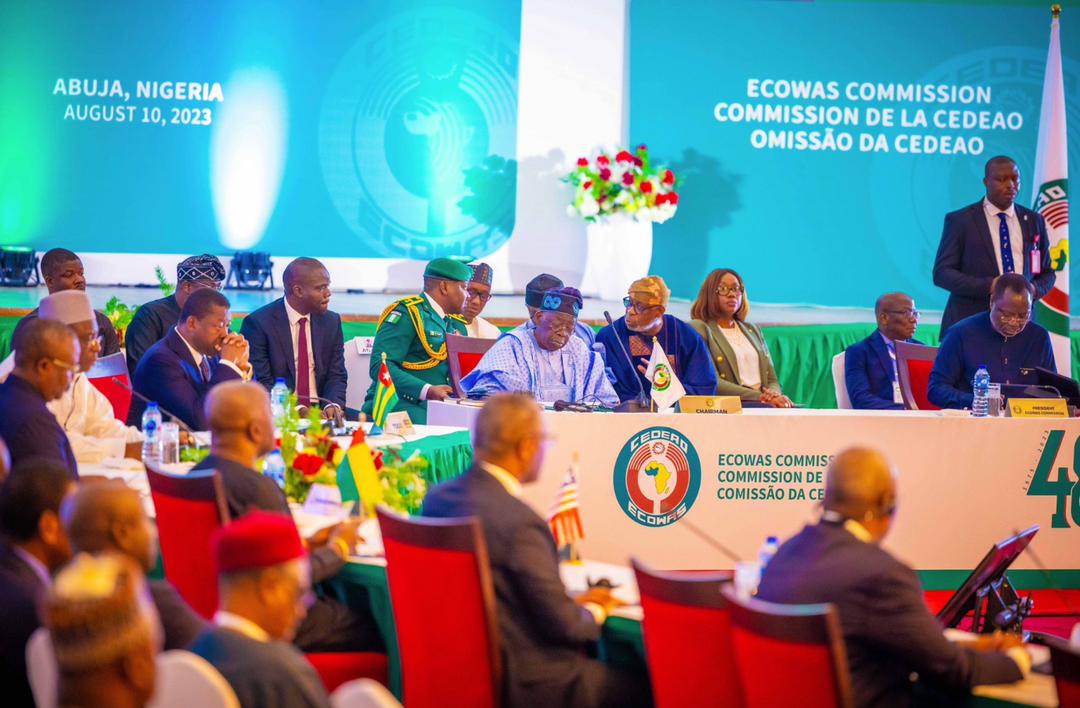
ECOWAS DECLARES STATE OF EMERGENCY IN WEST AFRICA
Read Time:4 Minute, 4 Second
The Economic Community of West African States has declared a state of emergency throughout the region.
The President of the ECOWAS Commission, Omar Touray, announced this on Tuesday during the 55th Session of the Mediation and Security Council at the ministerial level in Abuja.
Touray stated that recent events show the need for serious reflection on the future of democracy in the region and the urgent requirement to strengthen security for the community.
He spoke to ministers, diplomats, and senior officials, giving a clear warning about the political situation in West Africa.
He pointed to several incidents as proof that the security conditions are getting worse quickly.
He noted that ECOWAS member states currently face an average rating of “high risk,” based on country-by-country analyses contained in documents before the ministers.
“Events of the last few weeks have shown the imperative of serious introspection on the future of our democracy and the urgent need to invest in the security of our community.
“As you would have seen in the memoranda before you, the country-by-country analyses of our member states show different risk levels across our community, from high to medium, with an average of high risk, thereby demanding immediate and concerted action.
“The rThe ECOWAS Commission President also drew attention to worsening humanitarian conditions in West Africa, referencing recent UNHCR data. He said that “as of October 2025, approximately 7.6 million individuals are forcibly displaced across the region,” including more than 6.5 million internally displaced persons.isk factors include the continued use of military force, such as in Guinea-Bissau and the Republic of Benin just recently; failure to follow proper transition processes in Guinea, where a military leader is taking over civilian rule; a decrease in fair and inclusive elections across several countries; the growing power of terrorist groups, armed gangs, and criminal organizations; and increasing political pressures affecting how countries in the region work together and stay united,” he said.
Among the most worrying issues, Touray pointed out that “elections have become a major cause of instability in our region.”
He also mentioned recent coup attempts and ongoing talks with the Alliance of Sahel States, highlighting the urgent need for a united regional approach to fight terrorism and cross–border crime.
According to the data, the largest displaced populations are in Nigeria, Burkina Faso, Niger and Mali, while Niger, Mali, Nigeria, Côte d’Ivoire and Togo host the highest numbers of asylum seekers.
Touray stressed, “
We must therefore take decisions and actions that will reverse this trend.”
Despite the challenges, he reaffirmed ECOWAS’s commitment to its citizens.
“Let me assure our community citizens that we will not rest on our oars. We will continue to work harder to promote a peaceful, stable and stronger region for the overall benefit of Community citizens,” he said.
He urged member states to uphold constitutional norms and maintain unity: “Let us all remain committed to preserving regional unity, advancing peace and upholding the Community’s Constitutional Convergence Principles.”
Touray also welcomed new ministerial representatives attending the session for the first time.
“May I extend a warm welcome to the new Ministers of Defence of Nigeria, Rtd. General Christopher Musa, and Foreign Affairs of Cabo Verde, José Luis Livramento, who are joining today for the first time,” he said.
In his remarks, Sierra Leone’s Minister of Foreign Affairs and Chair of the Council of Ministers, Timothy Kabba, called for decisive action to protect democratic governance amid worsening political instability.
Kabba highlighted the fragile state of democracy in West Africa, pointing to the recent political crises in Guinea-Bissau and Benin.
“The recent coup in Guinea-Bissau and the attempted coup in the Benin Republic are sobering reminders of the fragility of our democratic gains,” Kabba said.
He detailed Sierra Leone’s diplomatic efforts, noting that he led a high-level delegation to Guinea-Bissau on December 1, 2025, to engage with military leaders and political stakeholders.
“His Excellency’s engagement helped ease tensions and opened the door for continued dialogue under ECOWAS’s guidance.
“These actions reflect our collective position. ECOWAS cannot and will not accept this development. They undermine everything our community stands for and threaten the peace and security of our citizens,” he said.
Kabba stressed the need for concrete outcomes from the summit.
The talks we are having today need to go beyond just repeating our shared values. They should lead to real actions that bring hope and make our organizations more trustworthy.
He continued, “Our citizens are no longer willing to wait for promises that aren’t kept.
They want us to face these problems with determination, together, and with clear goals.”
The Mediation and Security Council meeting comes before the ECOWAS leaders‘ meeting, where they will discuss the Council’s suggestions.
There is growing pressure to bring peace and stability back to the region.


Happy
0 %

Sad
0 %

Excited
0 %

Sleepy
0 %

Angry
0 %

Surprise
0 %
 0
0
 0
0