
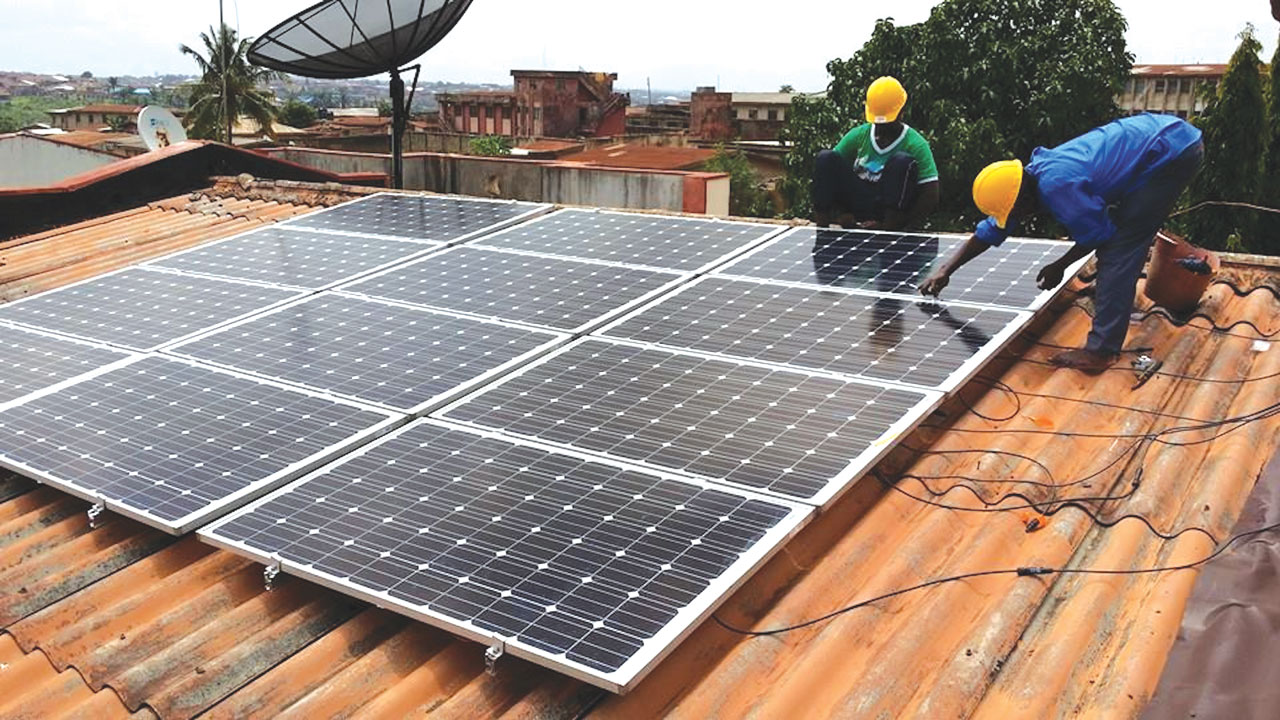
RESIDENTS KICK AGAINST LAGOS GOVERNMENT’S SOLAR TAX PLAN
Read Time:2 Minute, 44 Second
By:Tajudeen Aminat
A viral video circulating on social media recently showed officials from the Lagos State Ministry of Housing confronting a resident over solar panels installed on his property, sparking widespread outrage among residents.
In the footage, members of the ministry’s monitoring and compliance team were seen instructing the homeowner to obtain official approval and pay a fee before continuing with the installation.
In response to the backlash, the Lagos State Government clarified that permits and administrative charges for solar installations apply strictly to residents of its social housing estates, not to private homeowners or tenants across the state.
Public reaction to the incident has been divided. While some residents criticised the government for imposing additional financial burdens on citizens who are trying to supplement unreliable electricity supply, others warned that such regulations could discourage the adoption of renewable energy in a country already struggling with persistent power shortages.
Some critics went further, accusing the government of stifling access to alternative energy sources, while supporters of the policy argued it was being misunderstood.
Reacting via an X post, the Senior Special Assistant on Media to Governor Babajide Sanwo-Olu, Wale Ajetunmobi, said the viral video was based on a misunderstanding of the state’s solar installation guidelines.
He clarified that Lagos does not impose solar-related fees on all residents, stressing that the policy only applies to government-owned social housing estates where the state acts as facility manager.
According to him, any modifications within such estates—including solar panel installations—require administrative approval because they may affect shared infrastructure or building design.
Ajetunmobi added that residents in these estates are required to process approvals through the Ministry of Housing’s physical planning and survey departments, followed by compliance checks and inspections.
He further explained that the officials seen in the video were from the ministry’s monitoring and compliance unit and were responding to an installation carried out without prior approval.
He also noted that tenants in government estates are typically informed of such conditions in their agreements and indemnity documents, which cover responsibilities regarding alterations and shared facilities.
Despite the clarification, public anger has persisted, with many residents arguing that the policy reflects a broader pattern of excessive levies and restrictions in the state.
Some Lagosians believe the regulation could be expanded beyond social housing estates in the future, while others insist it represents another financial burden in a city already struggling with high living costs, unreliable infrastructure, and economic hardship.
Critics argue that citizens who already provide their own electricity, water, and security should not be required to pay additional fees for adopting solar energy, which they see as a basic and natural resource.
A businessman in Amuwo Odofin, Anthony Osewele, condemned the policy, describing it as an attempt to monetise sunlight and calling it unjustifiable.
A lawyer, Marcellus Onah, also argued that Nigerians are turning to solar energy out of necessity due to poor electricity supply, not luxury, adding that additional charges are unfair given the government’s failure to provide stable power.
An estate agent, Rowland Adebayo, further criticised what he described as the increasing burden of taxes and levies in Lagos without corresponding public services, insisting that citizens should not be penalised for seeking alternative energy solutions.


Happy
0 %

Sad
0 %

Excited
0 %

Sleepy
0 %

Angry
0 %

Surprise
0 %
 0
0
 0
0