
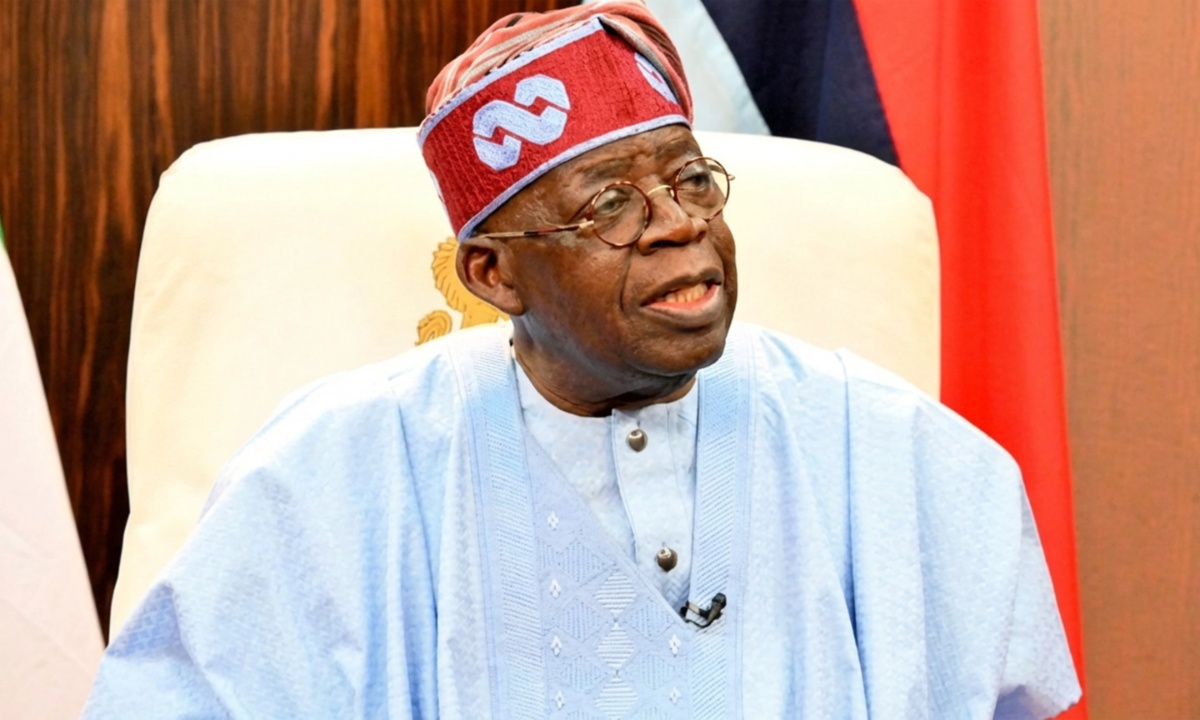
TINUBU ORDERS COREN TO TIGHTEN ENGINEERING REGULATION NATIONWIDE
Read Time:3 Minute, 17 Second

By: Fasasi Hammad
President Bola Tinubu has directed the Council for the Regulation of Engineering in Nigeria (COREN) to strengthen oversight of the engineering profession, enforce compliance with standards and impose appropriate sanctions on practitioners whose actions contribute to infrastructure failures.
The President said Nigeria can no longer tolerate avoidable engineering failures that lead to loss of lives, destruction of property, waste of public resources and declining public confidence in infrastructure. He stressed the need for a regulatory system focused on prevention, accountability and compliance rather than reacting after disasters occur.
Tinubu, represented by the Minister of Works, David Umahi, gave the directive on Tuesday while declaring open the 34th Engineering Assembly of COREN in Abuja.
The event, themed “Advancing Public Safety in Nigeria through Strategic Engineering Regulation, Enforcement and a Tiered Sanction Regime,” brought together policymakers, regulators, engineers, academics and industry stakeholders to discuss ways of improving engineering governance and infrastructure quality in the country.
READ MORE…
DESCHAMPS SAYS FRANCE PLAYERS ‘DEVASTATED’ AFTER WORLD CUP EXIT
In his address, the President described engineering as a critical pillar of national development, noting that the profession goes beyond the construction of roads, bridges and buildings to directly safeguarding human lives.
He stressed that failures in engineering often result in deaths, property damage, financial losses and erosion of public trust, making public safety the foremost responsibility of the profession.
According to Tinubu, COREN plays a vital role in protecting Nigerians from substandard engineering practices and ensuring professional accountability across the sector.
He noted that regulation should be viewed as a protective mechanism rather than a punitive tool, as it safeguards lives, investments, public resources and infrastructure users.
The President further emphasised that effective engineering regulation must cover every stage of infrastructure development—from planning and design to construction, supervision, maintenance and eventual decommissioning.
Reaffirming his administration’s commitment to quality infrastructure under the Renewed Hope Agenda, Tinubu highlighted ongoing Legacy Road Projects across the six geopolitical zones, stating that current road projects are being designed to last between 50 and 100 years.
He said the government is committed to delivering durable infrastructure capable of supporting long-term economic growth and national development.
Tinubu also called for a balanced regulatory framework that combines strong oversight, fair enforcement and proportionate sanctions to encourage excellence while ensuring public safety.
Speaking at the event, Umahi warned engineers against compromising professional standards by allowing contractors to influence technical decisions.
He noted that engineering errors often have irreversible consequences because infrastructure failures can result in fatalities and significant economic losses.
The minister urged COREN to strengthen its disciplinary processes and ensure that only qualified professionals are permitted to practise engineering in Nigeria.
Earlier, COREN President, Prof. Sadiq Abubakar, said the theme of the assembly reflected the council’s responsibility to protect lives through effective regulation and professional standards.
He explained that the council is increasingly focusing on predictive and preventive regulation aimed at identifying risks before infrastructure failures occur.
Abubakar disclosed that COREN has expanded compliance inspections nationwide, strengthened enforcement against unsafe practices, improved digital registration and verification systems, and introduced risk-based engineering intelligence mechanisms.
Despite these gains, he identified quackery, weak enforcement, poor compliance with standards, deteriorating infrastructure and rapid technological changes as major challenges confronting the profession.
Also speaking, President of the Dangote Group, Aliko Dangote, represented by the company’s Chief Economist, Prof. Hassan Mahmoud, said engineering excellence remains crucial to Nigeria’s industrialisation and economic competitiveness.
Drawing lessons from the Dangote Refinery project, he said strict quality control, adherence to standards and sound engineering practices were key to the project’s success.
He advocated a transparent sanction regime that distinguishes between administrative errors, professional negligence and deliberate misconduct, while maintaining strict penalties for repeated violations that threaten public safety.
Stakeholders at the assembly agreed that stronger regulation, improved ethics, expanded digital compliance systems and effective enforcement would be essential to reducing infrastructure failures and promoting sustainable national development.


Happy
0 %

Sad
0 %

Excited
0 %

Sleepy
0 %

Angry
0 %

Surprise
0 %
 0
0
 0
0