
WORLD NEWS: 2,500 VILLAGES EVACUATED AS FOURTH MAJOR STORM IN A MONTH HITS PHILIPPINES
Read Time:3 Minute, 56 Second
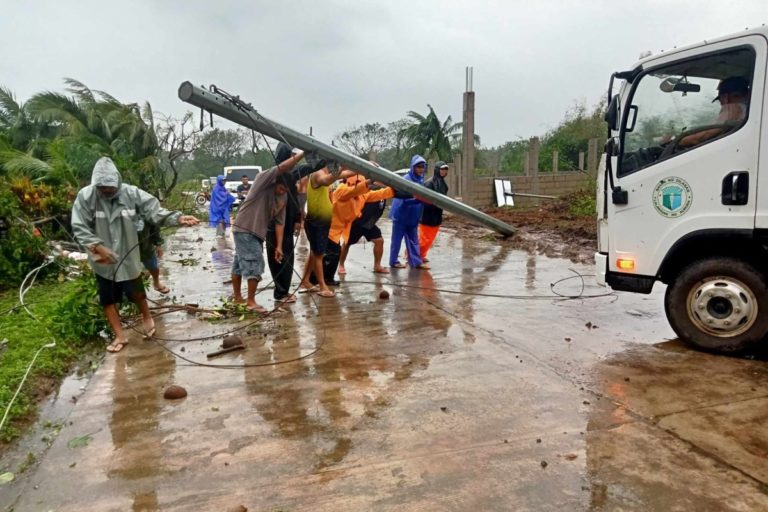
Following the country’s fourth major storm, the Philippine government issued an order on Sunday to evacuate 2,500 towns.
As the Philippines was hit by its fourth typhoon in less than a month, thousands of people sought refuge, ports were closed, and landslides blocked mountain roads, according to AFP.
According to the national weather bureau, Typhoon Toraji made landfall in the morning close to Dilasag town, which is roughly 220 kilometres (140 miles) northeast of the capital.
“We’re getting hit with strong winds and heavy rain. Some trees are being toppled and power has been cut since yesterday,” Merwina Pableo, civil defence chief of Dinalungan town near Dilasag, told AFP
Eleven hours after the typhoon ripped into the rugged interior of the main island of Luzon, regional rescuers told AFP that no casualties had been reported.
In the provinces of Aurora, Isabela, Ifugao, and Mountain Province, they added, at least 8,000 people were relocated from coastal areas and places vulnerable to landslides and floods.
Although the National Disaster Office does not yet have the exact number of evacuees as of Monday, the government ordered the evacuation of 2,500 settlements overall on Sunday.
Before it is expected to depart in the South China Sea late Monday, the typhoon weakened significantly when it struck the mountain ranges of Luzon and was moving towards the provinces of Abra and Ilocos Sur at a speed of 120 kilometres per hour (75 miles per hour), according to the National Weather Service.
Three important routes in the Cordillera mountain range were buried by landslides brought on by intense rain, a civil defence official told AFP.
The coast guard said that 38 crew members and 156 passengers were uninjured when a passenger ferry came aground in choppy waters off the central island of Romblon.
Over a 24-hour period, the northern part of the country was expected to experience high gusts and “intense to torrential” rainfall of more than 200 mm (eight inches), according to the national weather agency.
In the landfall area of Dilasag, school teacher Glenn Balanag, 31, filmed the onslaught of the howling 130 kilometres (80 miles) an hour winds, which violently shook coconut trees around his rural home.
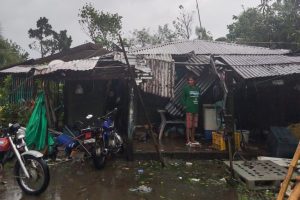
“Big trees are falling and we heard the roofs of some houses were damaged. The rain is continuing and a river nearby is rising,” he told AFP.
There was also a “moderate to high risk of a storm surge” — giant waves up to three metres (10 feet) high on the north coast until Tuesday, it added.
Schools and government offices were shut in areas expected to be hit hardest by the latest typhoon.
Nearly 700 passengers were stranded at ports on or near the typhoon’s path, according to a coast guard tally on Monday, with the weather service warning that “sea travel is risky for all types or tonnage of vessels”.
Aurora provincial disaster response chief Elson Egargue told AFP he pushed out crews to clear roads after Toraji left the province in the early afternoon.
After Toraji, a tropical depression could also potentially strike the region as early as Thursday night, weather forecaster Veronica Torres told AFP.
Tropical Storm Man-yi, currently east of Guam, may also threaten the Philippines next week, she added.
Toraji came on the heels of three cyclones in less than a month that killed 159 people.
On Thursday, Typhoon Yinxing slammed into the country’s north coast, damaging houses and buildings.
A 12-year-old girl was crushed to death in one incident.
Before that, Severe Tropical Storm Trami and Super Typhoon Kong-rey together left 158 people dead, the national disaster agency said, with most of that tally attributed to Trami.
About 20 big storms and typhoons hit the archipelago nation or its surrounding waters each year.
A recent study showed that storms in the Asia-Pacific region are increasingly forming closer to coastlines, intensifying more rapidly and lasting longer over land due to climate change.
AFP


Happy
0 %

Sad
0 %

Excited
0 %

Sleepy
0 %

Angry
0 %

Surprise
0 %
 0
0
 0
0