
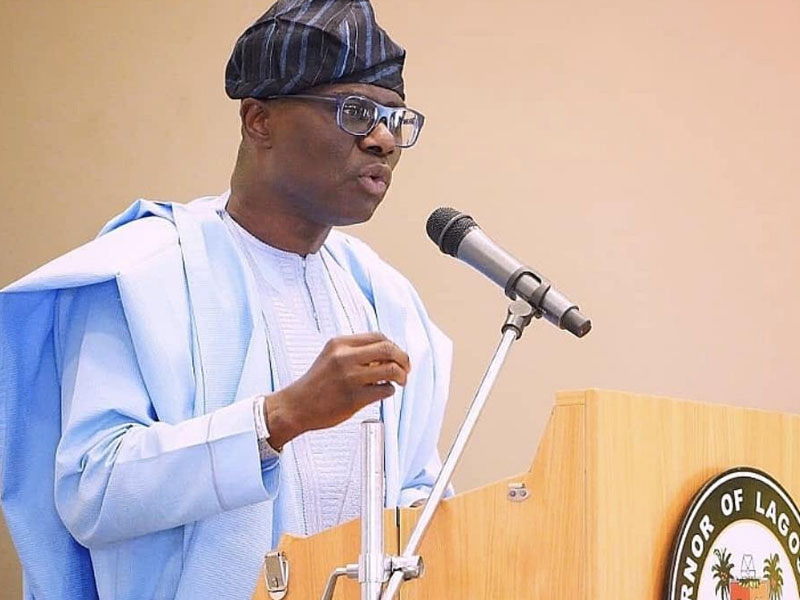
LAGOS GOVT REITERATES COMMITMENT TO PROTECTING ITS COASTLINE
Read Time:1 Minute, 52 Second
Agency report
…Vows to Build Safer, Resilient Infrastructure for Future Generations
The Lagos State Government has reaffirmed its dedication to safeguarding the state’s coastline and advancing a safer, more resilient, environmentally conscious, and sustainable Lagos for future generations.
The commitment was expressed over the weekend by the State Commissioner for the Environment and Water Resources, Mr. Tokunbo Wahab, who represented Lagos at the ongoing United Nations Ocean Conference in Nice, France.
Wahab noted that while Lagos, being a coastal state, is highly vulnerable to climate threats such as rising sea levels, intense rainfall, and extreme heat, the state remains proactive in tackling these challenges.
In his words: “Lagos as a coastal state, faces severe climate risks from rising sea levels, extreme rainfall and excessive heat. But we are not sitting back. We are building resilient infrastructure”.
“So as a state, we must face our realities and those realities are that we must build resilient infrastructure which is key and we must also take ownership of those infrastructures which is very key”.
He added that the state has, in the past two years, invested in its drainage systems through an all-year-round clearing of all primary and secondary drains to reduce the possibilities of flash flooding.
“At the last count, in the past two years, we have, as an administration, done about 76 kilometres of trapezoidal drainage system statewide”
Wahab informed that with over 13,000 tonnes of daily waste generation, Lagos is moving from a linear disposal system of “you pick and dump” to a circular model where waste becomes a resource for energy and recovery.
He stated that the state is also transforming how it manages plastic waste by religiously following a trajectory that has already banned the use of styrofoam food containers and moving on to enforce the ban on single-use plastics from July 1, after an 18-month moratorium on users and producers.
“In the last two years, we have chosen to categorise waste as a resource, so we have transitioned from a pick and dump system to a more sustainable, climate-friendly system where waste is now a resource for wealth, a resource for energy. Where waste is not just seen as a waste anymore”, Wahab stressed.


Happy
0 %

Sad
0 %

Excited
0 %

Sleepy
0 %

Angry
0 %

Surprise
0 %
 0
0
 0
0