
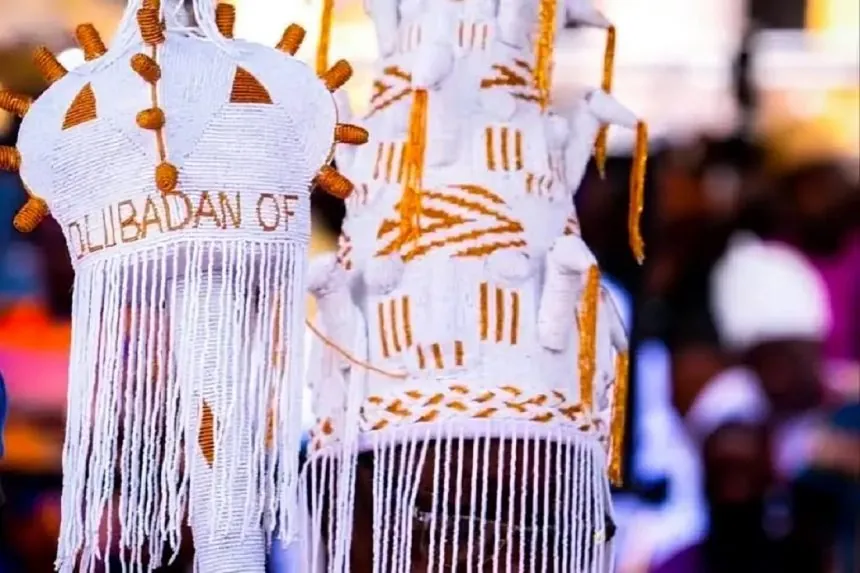
OLUBADAN: 6 ESSENTIAL THINGS TO KNOW ABOUT IBADAN’S UNIQUE OBASHIP SYSTEM
Read Time:3 Minute, 17 Second
By: Sefiu Ajape
Ibadan, the capital of Oyo State in southwestern Nigeria, is a historic Yoruba city founded by warriors.
Unlike many other Yoruba towns, Ibadan operates a distinctive and time-honored traditional monarchy known as the Olubadan system.
Though not entirely alien to Yoruba culture, Ibadan’s kingship system stands out, reinforcing Oyo State’s reputation as a “pace-setter,” especially with recent developments in the succession structure.
Below are six key things to know about the Olubadan system:
1. TWO ASCENSION LADDERS TO THE THRONE
Ibadan’s path to kingship follows two well-established lines:
- The Olubadan Line (Civil)
- The Balogun Line (Military)
Aspiring monarchs begin their journey by being installed as Mogaji, the head of a family compound. From there, they climb through 22 ranks (Civil Line) or 23 ranks (Military Line), beginning from the Jagun title until they reach the top as Olubadan.
Chieftaincy Stages in the Civil Line (Olubadan or Egbe Agba)
- Otun Olubadan
- Osi Olubadan
- Asipa Olubadan
- Ekerin olubadan
- Ekaarun Olubadan
- Abese
- Maye
- Ẹkẹfa
- Agba- Akin
- Aare – Alasa
- Ikọlaba
- Asaju
- Ayingun
- Aare – Agọ
- Laguna
- Oota
- Aare – Egbe – Omo
- Gbonnka
- Aare – Onibon
- Bada
- Ajia
- Jagun
Chieftaincy Stages in the Military Line (Egbe Balogun)
- Balogun
- Otun Balogun
- Osi Balogun
- Asipa Balogun
- Ekerin Balogun
- Ekarun Balogun
- Abese
- Maye
- Ẹkẹfa
- Agba- Akin
- Aare – Alasa
- Ikọlaba
- Asaju
- Ayingun
- Aare – Agọ
- Laguna
- Oota
- Aare – Egbe – Omo
- Gbonnka
- Aare – Onibon
- Bada
- Ajia
- Jagun
2. ROTATIONAL SUCCESSION BETWEEN LINES
Succession to the Olubadan stool alternates between the two lines. For example:
- Oba Saliu Adetunji, the 41st Olubadan (from the Military Line), passed in January 2022.
- He was succeeded by Oba Moshood Lekan Balogun (Civil Line), who reigned until March 2024.
- The current Olubadan, Oba Owólabí Olakulehin, came from the Military Line and recently passed at age 90.
Following this rotation, the next Olubadan is expected from the Civil Line.
3. NO FIXED ROYAL HOUSES
Unlike most Yoruba towns where only certain ruling families can ascend the throne, Ibadan’s system is more inclusive.
Any indigenous Ibadan son can become Olubadan — as long as he starts from Mogaji and rises through the ranks in either of the two lines. There are no exclusive royal houses.
4. RISE OF LESSER OBAS
A recent and controversial shift began under former Governor Abiola Ajimobi, who promoted some High Chiefs and Baales to Oba status to modernize the system.
Governor Seyi Makinde later reversed this move as part of an out-of-court settlement. However, in 2023, he sought legal backing to reinstate the elevation by amending Section 28 of the Oyo State Chieftaincy Law.
As a result, 10 High Chiefs in the Olubadan-in-Council were re-elevated to Oba status in July 2023 — without alteringthe traditional ascension ladder.
Ibadan thus became arguably the first Yoruba city where lesser Obas are promoted into superior Obaship ranks.
5. AGE IS A FACTOR
Unlike other towns now choosing younger monarchs, the Ibadan system typically produces aged kings, due to the long, seniority-based promotion system.
For example:
- Oba Owólabí Olakulehin, who recently passed, was crowned at age 89.
- His successor will emerge based on seniority and vacancy in the chieftaincy line, not youth or popularity.
Also, advancement in either line only happens when a vacancy arises — either by promotion or death.
6. SHORT REIGNS, LONG LEGACIES
Because Olubadans usually ascend the throne at an advanced age, their reigns are often short. A few examples:
- Oba Saliu Adetunji became Olubadan at age 87 (2016) and died at 93 (2022).
- Oba Moshood Lekan Balogun reigned from age 79 (2022) to 81 (2024).
- Oba Olakulehin was crowned at 89 and passed at 90 (2025).
However, Oba Okunola Abaasi Alesinloye of Isale Ijebu had one of the longest reigns in Ibadan’s history — 16 years (1930–1946).
Ibadan’s Obaship system is a fascinating blend of tradition, meritocracy, and resilience, setting it apart from other Yoruba monarchies.
It remains a symbol of structured leadership, patience, and legacy in Yoruba land.


Happy
100 %

Sad
0 %

Excited
0 %

Sleepy
0 %

Angry
0 %

Surprise
0 %
 1
1
 0
0