
FUEL SWITCHES CUT OFF BEFORE AIR INDIA CRASH THAT KILLED 260 — REPORT
Read Time:3 Minute, 14 Second
Agency report
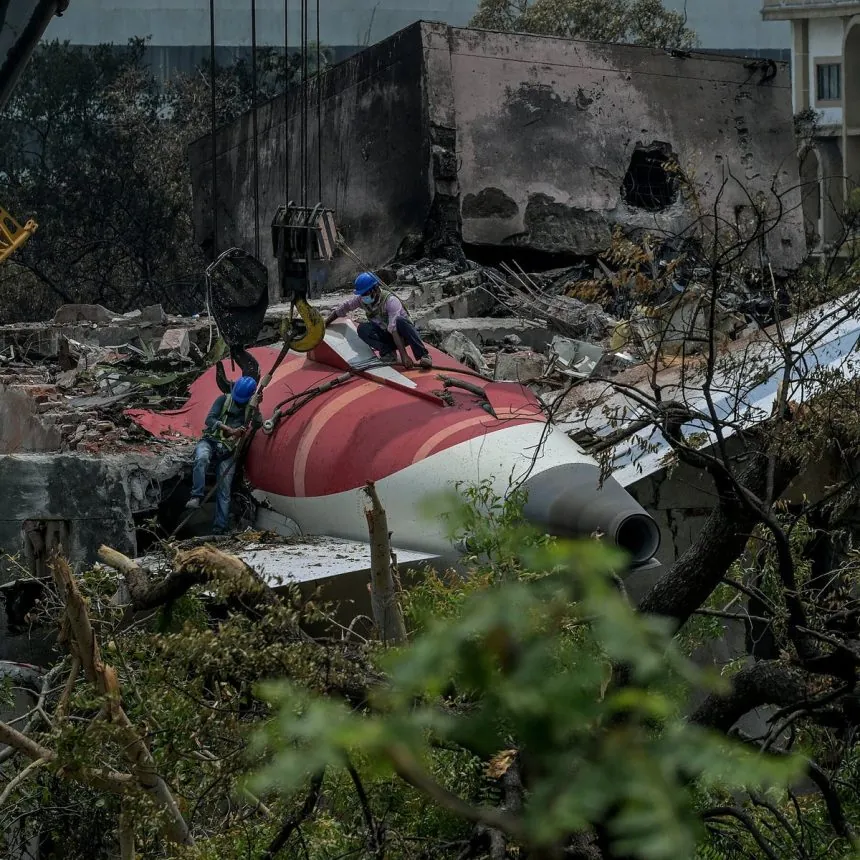
A fuel supply cut to both engines caused last month’s Air India crash that killed 260 people, according to a preliminary investigation report.
The London-bound Boeing 787 Dreamliner had barely taken off from Ahmedabad Airport before it crashed, killing everyone on board except one survivor.
India’s Aircraft Accident Investigation Bureau revealed that the fuel control switches in the cockpit had been flipped, cutting off fuel to both engines.
The report, based on data recovered from the aircraft’s black box recorders, included 49 hours of flight data and two hours of cockpit audio.
According to the findings, the aircraft reached an airspeed of 180 knots when the fuel cutoff switches for both engines were moved from ‘RUN’ to ‘CUTOFF’ — just one second apart.
“In the cockpit voice recording, one of the pilots is heard asking the other why he cut off. The other pilot responded that he did not do so,” the report read.
Shortly after, the switches were reversed back to where they should have been, and the engines were in the process of powering back up when the crash happened.
On the 787, the fuel cutoff switches are between the two pilots’ seats, immediately behind the plane’s throttle levers. They are protected on the sides by a metal bar and have a locking mechanism designed to prevent accidental cutoff.
“When fuel control switches are moved from CUTOFF to RUN while the aircraft is in flight, each engine’s full authority dual engine control automatically manages a relight and thrust recovery sequence of ignition and fuel introduction,” the report stated.
Seconds after the engines attempted to relight, one pilot called out, “MAYDAY MAYDAY MAYDAY.” The controller called out for the plane’s callsign, but didn’t get a response and watched the plane crash in the distance.
The captain of the flight was a 56-year-old who had flown more than 15,000 hours in his career. The first officer was a 32-year-old man with over 3,400 flying hours.


Happy
0 %

Sad
0 %

Excited
0 %

Sleepy
0 %

Angry
0 %

Surprise
0 %
 0
0
 0
0