
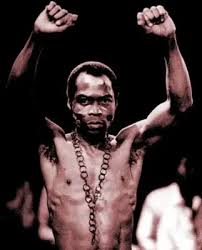
FELA BECOMES FIRST AFRICAN TO WIN GRAMMY’S LIFETIME ACHIEVEMENT AWARD
Read Time:2 Minute, 1 Second
BY JENN NOMAMIUKOR
Fela Anikulapo Kuti, a famous creator of Afrobeat music, is getting a big international honor more than 30 years after he passed away.
The BBC shared the news on Friday that the Recording Academy will give Fela a Lifetime Achievement Award at the Grammy Awards, even though he is no longer alive.
This makes him the first African person to be given this special award.
The award is to show how much Fela has influenced music and culture around the world, according to the BBC.
Fela’s son, Seun Kuti, who also makes Afrobeat music, talked about the recognition.
He said, “Fela has always been close to the hearts of people. Now the Grammys have recognized that, and it’s a big win. It’s bringing a balanced view to Fela’s story.“
A former manager and long-time associate of the late singer, Rikki Stein, said the honour was long overdue.
“Africa hasn’t in the past rated very highly in their interests. I think that’s changing quite a bit of late,” Stein said.
The BBC noted that the recognition comes amid rising global interest in African music, driven largely by the international success of Afrobeats, a genre rooted in Fela’s work.
In 2024, the Grammys added a new category called Best African Performance. Nigerian singer Burna Boy was nominated this year in the Best Global Music Album category.
Fela received the Lifetime Achievement Award, which puts him in the same group as other famous music legends around the world.
Previous winners include Bing Crosby, and this year’s honorees also include Carlos Santana, Chaka Khan, and Paul Simon.
Fela’s family members, friends, and associates are expected to be at the ceremony to receive the award on his behalf.
Seun Kuti, Fela’s son, said, “The global human tapestry needs this, not just because it’s my father.”
The BBC said Fela was more than just a musician.
They called him a cultural thinker, a political activist, and the creator of Afrobeat.
He worked with drummer Tony Allen to create the genre by mixing West African rhythms with jazz, funk, and highlife.
Their music was known for long, free–flowing improvisations and lyrics that talked about politics.
Throughout his career, which lasted until his death in 1997, Fela made over 50 albums.
He was also a strong critic of power, often challenging Nigerian military governments through his music and activism.


Happy
0 %

Sad
0 %

Excited
0 %

Sleepy
0 %

Angry
0 %

Surprise
0 %
 0
0
 0
0