
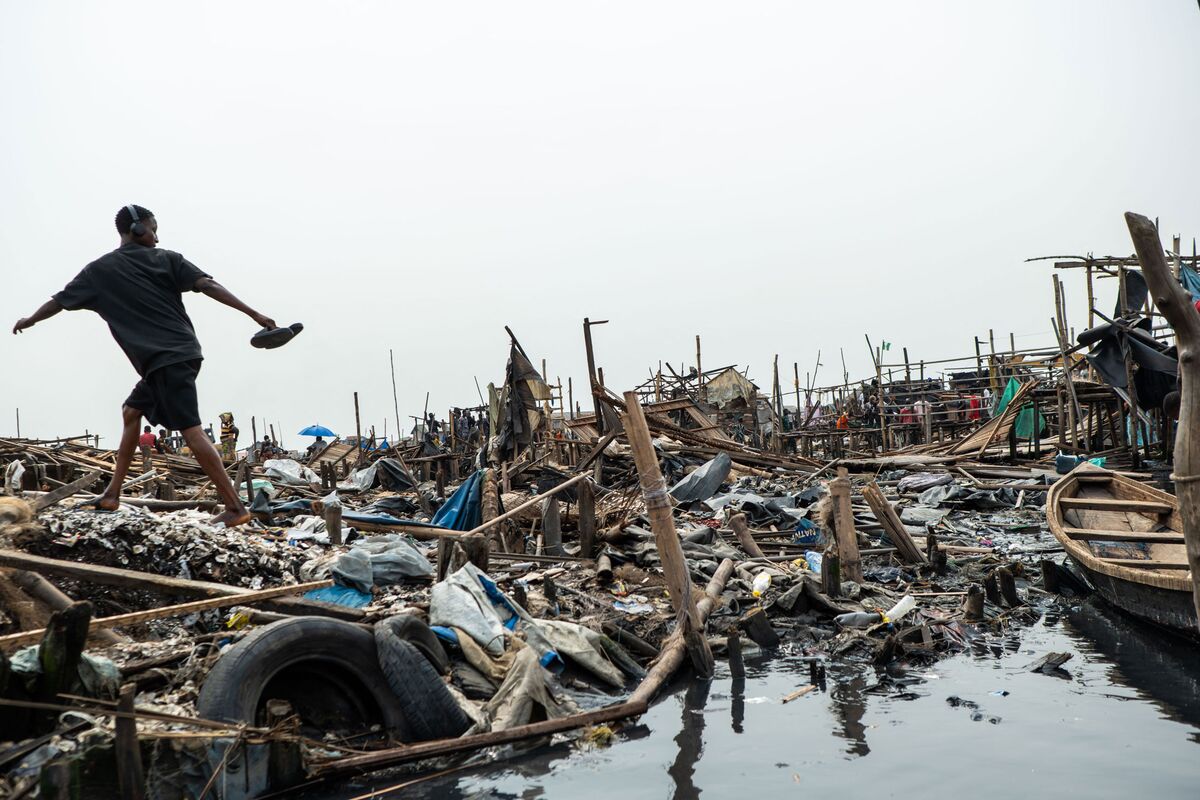
LAGOS GOVT REAFFIRMS COMMITMENT TO URBAN RENEWAL, PUBLIC SAFETY IN MAKOKO
Read Time:2 Minute, 50 Second
By: Sefiu Ajape
The Lagos State Government has reiterated that actions in Makoko are aimed at “protect[ing] lives, uphold[ing] the rule of law, and advance[ing] comprehensive urban renewal initiatives” to improve living conditions for residents.
Addressing concerns on an AIT programme, the Lagos State Commissioner for Information & Strategy, Mr. Gbenga Omotoso, clarified that the intervention is “not a conflict between the rich and the poor, but a necessary step toward ensuring safety, legality, and humane living standards for all Lagosians.”
Omotoso confirmed that the government has been engaging the United Nations (UN) on Makoko’s future. The UN “has expressed interest in the renewal strategy” and is willing to support the initiative, particularly in areas under high-tension power lines deemed “unsafe and unsuitable for habitation.”
The commissioner explained that the government has committed counterpart funding to the renewal plan and held multiple meetings with international partners “to ensure a sustainable and humane redevelopment process.”
“This is about urban renewal. It is about better living conditions for our people. Government cannot and will not allow residents to remain in environments that pose imminent danger to their lives,” he said, adding that no one should reside under high-tension electricity wires due to “severe health and safety risks.”
Omotoso noted that experts warn of “potential long-term health hazards, including cancer risks,” and the possibility of catastrophic consequences should the power lines collapse, given the proximity to the Lagoon and the Third Mainland Bridge.
He stressed that constructing under high-tension wires and within restricted zones “violates established physical planning and environmental laws.” Lagos has “clear regulations governing setbacks from waterways and infrastructure corridors” to protect lives and ensure orderly development.
“Compensating or legitimising illegal structures erected in clearly restricted zones would undermine the rule of law and set a dangerous precedent. A city must be governed by laws,” Omotoso stated.
Recalling previous relocations, including the resettlement of timber operators from Makoko to Agbowa in Ikosi, he emphasized that current interventions “specifically concern emergency safety risks posed by high-tension installations.”
READ MORE…
LAWMA WARNS AGAINST ATTACKS ON ENFORCEMENT OFFICERS, VOWS ‘FULL WEIGHT OF LAW’ AGAINST VIOLENCE
The Commissioner added that engagement with residents has spanned “approximately five years” and included consistent dialogue with community representatives and stakeholders.
“We are not abandoning anyone. But first, we must save lives. Livelihood is important, but life itself is paramount,” Omotoso said.
On protests arising from the exercise, he affirmed that citizens “have a constitutional right to protest, and this government will not suppress free speech,” while stressing that protests must remain peaceful and not block roads or prevent access to essential services.
“Where one person’s rights end, another’s begin. Citizens have the right to protest, but others equally have the right to free movement and access to essential services,” he stated.
Omotoso maintained that the Makoko intervention is a matter of “legality, safety, and humane urban planning – not social or economic exclusion,” with the goal to “transform vulnerable settlements into safer, properly planned communities that reflect the standards of a modern megacity.”
“This is not about displacement for the benefit of the wealthy. It is about what is right, what is legal, and what is safe for human habitation,” he concluded, assuring that the government will pursue orderly urban development with “responsibility, dialogue, and respect for human dignity.”


Happy
0 %

Sad
0 %

Excited
0 %

Sleepy
0 %

Angry
0 %

Surprise
0 %
 0
0
 0
0