
JUST IN: OJULARI REVEALS NNPC RAN REFINERIES AT HEAVY LOSSES
Read Time:2 Minute, 48 Second
By: Fasasi Hammad
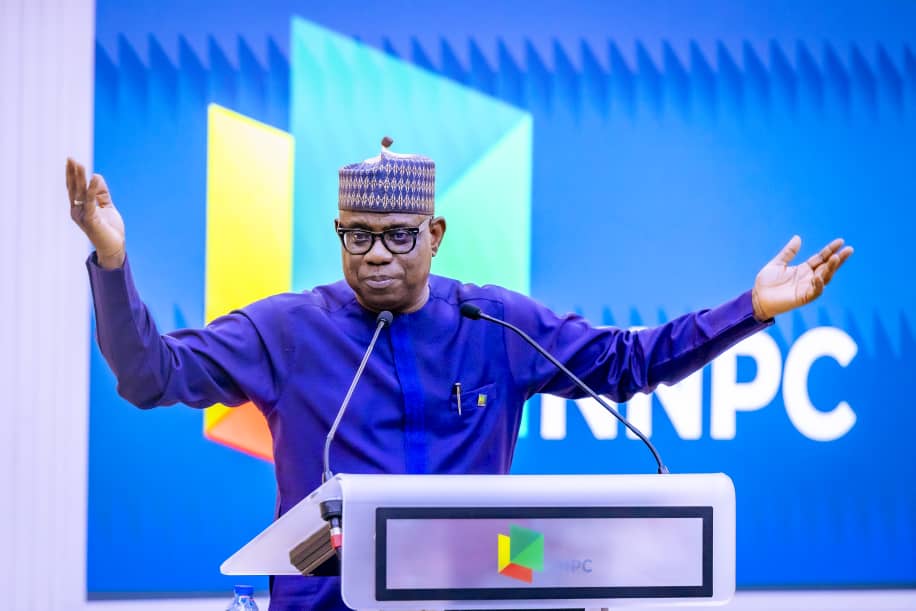
The Group Chief Executive Officer of the Nigerian National Petroleum Company Limited (NNPC), Bayo Ojulari, has revealed that Nigeria’s state-owned refineries were operating at what he described as a “monumental loss,” leading his management team to suspend operations to avert further erosion of value.
Ojulari made the disclosure on Wednesday in Abuja during a fireside chat titled “Securing Nigeria’s Energy Future” at the Nigeria International Energy Summit 2026, where he spoke candidly about the commercial and operational challenges facing NNPC’s refining assets.
He acknowledged that public frustration over the refineries was understandable, given the enormous sums invested over the years and the high expectations surrounding their performance.
According to him, Nigerians were justifiably angry as significant funds had been committed to the refineries, placing the company under intense pressure to deliver results.
Ojulari admitted that refining was not his primary area of expertise when he assumed office, having spent most of his career in the upstream sector, but said the responsibility of leadership required him to quickly get up to speed.
He explained that a detailed assessment of refinery operations by his management team quickly exposed the depth of the financial challenges.
READ MORE :
Ojulari said it became evident that the refineries were running at heavy losses, with resources being wasted despite ongoing operations. He noted that NNPC was supplying crude oil to the refineries monthly, yet capacity utilisation remained between 50 and 55 per cent, leading to significant value losses.
He added that while substantial amounts were being spent on operations and contractors, the overall outcome showed persistent value leakage, with no clear pathway to recovery.
Ojulari said the lack of a credible turnaround plan was particularly concerning, stressing that while losses can occur during investment phases, there must be a clear prospect of recovery, which was absent in this case.
As a result, he said his administration’s first major decision was to halt refinery operations in order to stop further losses and carry out a rapid reassessment of the facilities.
He disclosed that part of the value erosion was linked to the quality of products being refined, citing the Port Harcourt Refinery, where the crude processed yielded mid-grade products whose combined value fell short of the input costs.
Ojulari acknowledged that shutting down the refineries was a politically sensitive decision, noting that NNPC had long faced pressure to keep them operational to maintain fuel supply.
However, he said his professional training and experience, which emphasised commercial viability and profitability, made it difficult to justify continued losses.
Nigeria’s four state-owned refineries — the two Port Harcourt plants, Warri and Kaduna — have for decades operated well below installed capacity despite multiple turnaround maintenance programmes costing billions of dollars.
At various times, the refineries have functioned at minimal capacity or been completely shut down, leaving Africa’s largest oil producer heavily dependent on imported fuel.
Between 2015 and 2023, successive governments approved several rehabilitation contracts, yet domestic refining output remained largely insignificant, increasing public scrutiny of NNPC’s efficiency.
Ojulari’s remarks represent one of the clearest acknowledgements by an NNPC chief executive that continued refinery operations under existing conditions were economically unsustainable, reflecting a broader shift toward commercial discipline under the Petroleum Industry Act.


Happy
0 %

Sad
0 %

Excited
0 %

Sleepy
0 %

Angry
0 %

Surprise
0 %
 0
0
 0
0