
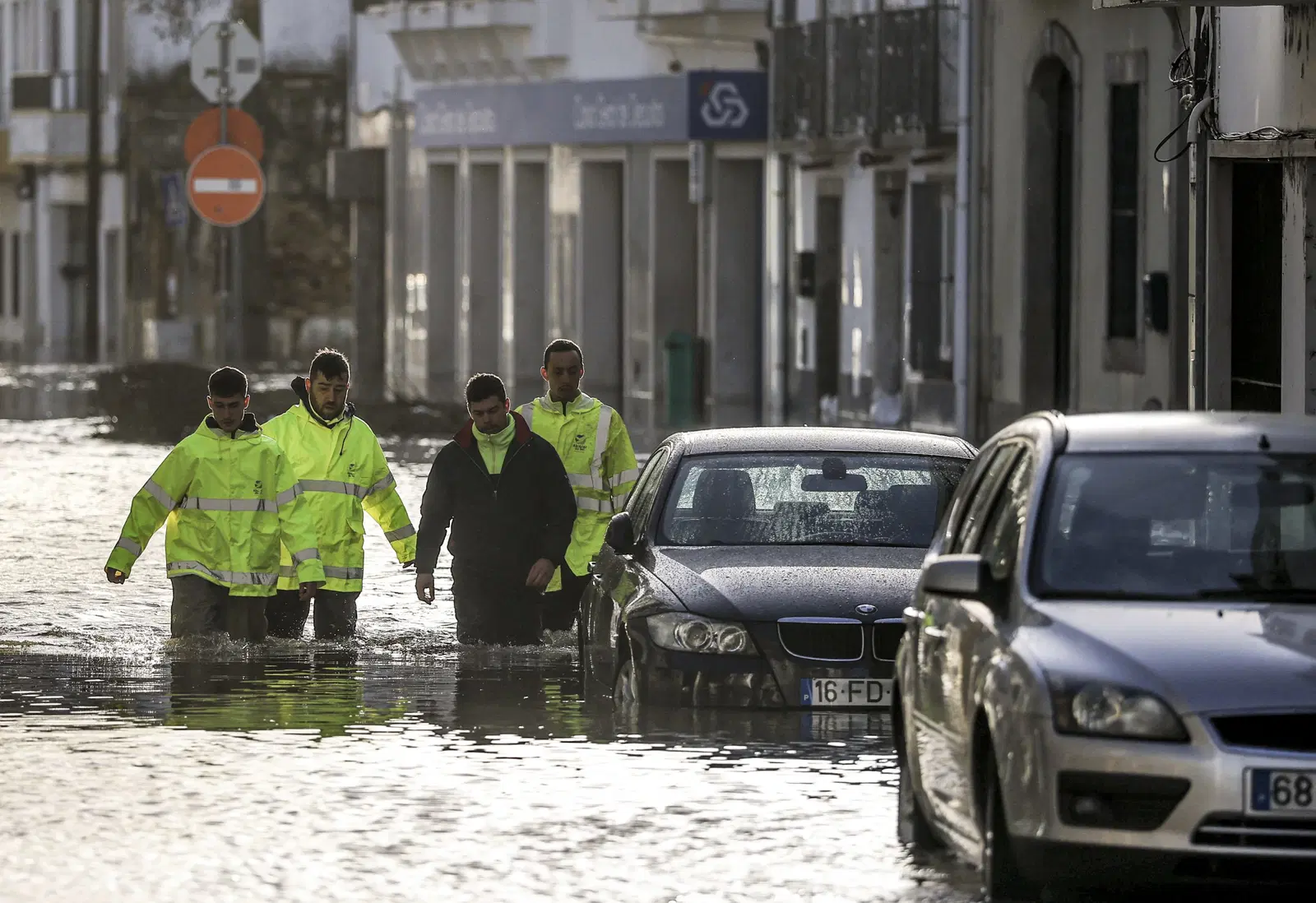
FRESH STORM BATTERS SPAIN AND PORTUGAL, RESCUERS SEARCH FOR MISSING WOMAN AS FLOOD ALERTS RISE
Read Time:2 Minute, 19 Second
Agency Report

Rescue teams in Spain on Thursday intensified efforts to locate a woman missing after being swept away by floodwaters, as a fresh storm battered the Iberian Peninsula, triggering severe flooding in parts of Spain and Portugal.
The latest storm, Leonardo, is the seventh to hit the region this year and has already claimed at least one life in Portugal. Authorities warned that the impact could worsen as months’ worth of rainfall fell within hours across several areas.
In southern Spain, Storm Leonardo dumped more than 40 centimetres (15 inches) of rain in parts of Andalusia on Wednesday — an amount equivalent to several months of rainfall. The deluge forced the evacuation of thousands of residents and brought road and rail transport to a standstill.
Spain’s Civil Guard confirmed that a woman is missing after reportedly falling into the Turvilla River in Sayalonga municipality. Search and rescue operations were ongoing as swollen rivers and damaged infrastructure complicated efforts.
Meanwhile, Portuguese authorities issued their highest flood alert along the Tagus River in the Santarem region, warning of what officials described as the most severe flood threat in nearly 30 years. Residents living close to the river were evacuated as water levels continued to rise.
Portugal is still recovering from storms last week that killed five people, injured hundreds and left tens of thousands without electricity. On Wednesday, the Sado River overflowed its banks in Alcácer do Sal, south of Lisbon, submerging the town centre. Fire brigade divers rescued at least 89 people using inflatable boats, according to the Civil Protection authority.
A man in his 60s died in southeastern Portugal after being swept away by strong currents while attempting to drive through a flooded area, officials confirmed.
Train services were suspended across northern and central Portugal, while authorities in Lisbon shut parks, tunnels and several river transport routes due to flood risks and falling trees.
Spain’s national weather agency, AEMET, later lowered its warning level for Andalusia, noting that rainfall would be “less intense.” Schools reopened in most areas, although classes remained suspended in severely affected communities where roads and railways were still out of service.
Portugal’s weather agency, IPMA, reported that January 2026 was the country’s second-wettest January since 2000, highlighting the growing intensity of recent weather patterns.
Scientists have repeatedly warned that climate change is increasing the frequency and severity of extreme weather events, including floods and storms, across southern Europe.
Speaking from the hard-hit village of Jimera de Líbar, construction worker Mohamed Amar Mohamed expressed concern over the worsening conditions.
“It’s unheard of, with a little uncertainty, but whether we like it or not, Mother Nature has to find her place,” he said. “All we can do is try to adapt and hope for the best.”


Happy
0 %

Sad
0 %

Excited
0 %

Sleepy
0 %

Angry
0 %

Surprise
0 %
 0
0
 0
0