
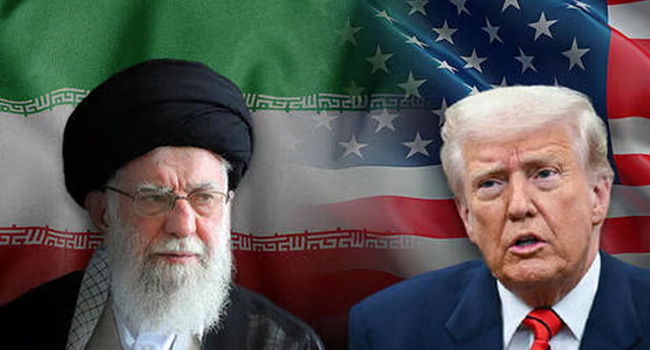
US, IRAN HOLD HIGH-STAKES TALKS IN SWITZERLAND TO AVERT CONFLICT
Read Time:2 Minute, 20 Second
Agency Report
Iran and the United States held critical talks in Switzerland on Thursday in what officials described as a last-ditch effort to prevent a potential military confrontation amid the largest American military buildup in the Middle East in decades.
The Oman-mediated discussions come after repeated warnings from Donald Trump, who last week gave Tehran 15 days to reach a deal or face possible strikes. While Iran insists the negotiations are limited to its nuclear programme, Washington is also pushing for restrictions on Tehran’s missile development and support for regional militant groups.
The delegations met at the Omani ambassador’s residence under tight security. According to Tehran’s foreign ministry, a morning session was held before a scheduled pause, with talks resuming later in the afternoon. Oman’s Foreign Minister, Badr Albusaidi, said both sides showed “unprecedented openness to new and creative ideas and solutions.”
The head of the UN’s nuclear watchdog, Rafael Grossi, reportedly joined the discussions. Meanwhile, Iran’s President Masoud Pezeshkian reiterated that the Islamic Republic was “not at all” seeking a nuclear weapon.
As diplomacy unfolds, Washington has reinforced its military presence in the region. The USS Gerald R. Ford, the world’s largest aircraft carrier, departed a naval base in Crete this week. The US now has more than a dozen warships deployed, including the USS Abraham Lincoln, nine destroyers and three additional combat ships. It is rare for two US aircraft carriers to operate simultaneously in the region.
In his State of the Union address, Trump accused Iran of pursuing “sinister nuclear ambitions” and claimed it was developing missiles capable of threatening Europe and eventually the United States. Tehran dismissed the allegations as “big lies,” maintaining its nuclear programme is strictly for civilian purposes.
According to Iranian disclosures, its missiles have a maximum range of 2,000 kilometres, though the US Congressional Research Service estimates they could reach up to 3,000 kilometres—still far short of the US mainland.
US Secretary of State Marco Rubio insisted Iran must negotiate on its missile programme, calling its refusal “a big, big problem,” though he stressed the president seeks a diplomatic solution. Vice President JD Vance also warned Tehran to take US threats seriously.
Iran’s Foreign Minister Abbas Araghchi, leading Tehran’s delegation, described the talks as “a historic opportunity,” saying a deal was “within reach.” The US delegation includes envoy Steve Witkoff and Jared Kushner.
The current negotiations follow earlier rounds in Oman and Geneva. A previous diplomatic effort collapsed last year after Israel launched surprise strikes on Iran, triggering a 12-day conflict that briefly drew in Washington.
Amid renewed tensions, opinions among Iranians appear divided. Some residents fear economic hardship and instability if war breaks out, while others see diplomacy as the only viable path forward.
AFP


Happy
0 %

Sad
0 %

Excited
0 %

Sleepy
0 %

Angry
0 %

Surprise
0 %
 0
0
 0
0