
TRUMP CONFIRMS SECOND AIRMAN RESCUE AS IRAN LAUNCHES FRESH ATTACKS
Read Time:2 Minute, 11 Second
By: Fasasi Hammad
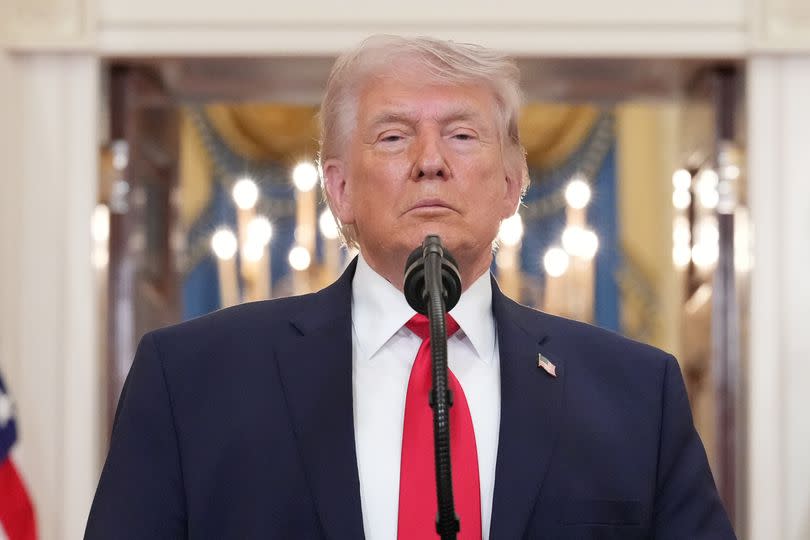
President Donald Trump announced on Sunday that US forces had successfully rescued a second airman downed in Iran, describing the mission as “one of the most daring search and rescue operations in U.S. history.”
The development came as Iran launched missile and drone attacks on Israel and Kuwait early Sunday, just a day after Trump warned Tehran it had 48 hours to reach an agreement or face severe consequences.
In a post on Truth Social, Trump said the rescued serviceman had been stranded behind enemy lines in Iran’s mountainous terrain and was being pursued by hostile forces. He added that the airman sustained injuries but is expected to recover.
READ MORE…
Trump noted that the operation followed an earlier successful rescue of another pilot, which had been kept undisclosed at the time to avoid compromising the second mission.
Meanwhile, the ongoing conflict has intensified across the Middle East, disrupting global markets. Iran continues to exert control over the Strait of Hormuz — a crucial route for oil and gas shipments — while targeting economic sites in Gulf countries it links to US and Israeli actions.
On Saturday, a strike on a petrochemical facility in southwestern Iran reportedly killed five people, according to local authorities.
Reiterating his earlier ultimatum, Trump warned that time was running out for Iran to comply, threatening serious repercussions within 48 hours. Iran’s military leadership dismissed the warning, calling it reckless and vowing a strong response.
Air defence systems in Israel and Kuwait were activated in response to fresh Iranian attacks, while the United Arab Emirates and Bahrain also reported missile-related incidents affecting key infrastructure.
Tensions further escalated after a strike near Iran’s Bushehr nuclear facility killed a security guard, prompting Russia — which has ties to the plant — to evacuate personnel and condemn the attack. Iran also warned that continued strikes on the facility could trigger radioactive fallout affecting Gulf nations.
The International Atomic Energy Agency confirmed no rise in radiation levels but expressed concern over repeated strikes near the site. Former IAEA chief Mohamed El-Baradei urged Gulf countries to act swiftly to prevent further escalation.
As hostilities persist, both sides have increasingly targeted economic and industrial assets, raising fears of broader disruption to global energy supplies. Iran has continued retaliatory strikes on Israel and US allies, while Israel has also intensified operations against Hezbollah targets in Lebanon.
Amid the escalating violence, protests have emerged in Tel Aviv, with hundreds calling for an end to the war and the start of peace negotiations.


Happy
0 %

Sad
0 %

Excited
0 %

Sleepy
0 %

Angry
0 %

Surprise
100 %
 2
2
 0
0