
47.1 MILLION NIGERIANS NO LONGER NEED TREATMENT FOR ELEPHANTIASIS, RIVER BLINDNESS – FG
Read Time:2 Minute, 34 Second
By Aishat Momoh. O.
The Federal Government has announced that 47.1 million Nigerians no longer require treatment for Lymphatic Filariasis (elephantiasis) and Onchocerciasis (river blindness), following the successful implementation of large-scale disease assessment programmes across the country.
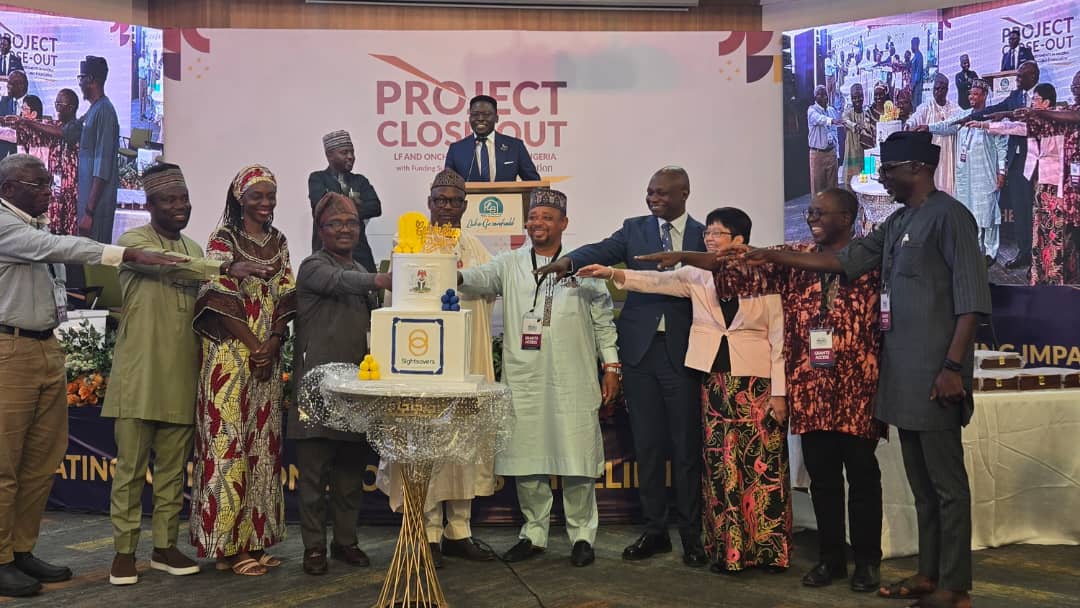
The Minister of State for Health and Social Welfare, Dr. Iziaq Salako, disclosed this on Thursday in Abuja at the close-out ceremony of the BLON project, an initiative that delivered Nigeria’s largest-ever assessments for the two neglected tropical diseases across 13 states.
According to Salako, Nigeria exceeded its disease-control targets and conducted significantly more assessments than initially planned, marking a major milestone in the country’s elimination roadmap.
“Nigeria has been able to deliver beyond the targets, as 31.1 million people no longer require treatment for Lymphatic Filariasis and 16 million people no longer need treatment for Onchocerciasis, against the 27 million people initially targeted,” the minister said.
He explained that the BLON project, launched in 2022 and concluded in September 2025, was originally designed as a 17-month intervention but was extended at no additional cost to ensure long-term impact. The project was funded with $4.9 million support from the Gates Foundation to address critical gaps in Nigeria’s disease elimination efforts.
Salako said the project recorded 46 Pre-Transmission Assessment Surveys (Pre-TAS), 116 Transmission Assessment Surveys (TAS 1 and 3), and one breeding site assessment, translating to 148 per cent achievement of Lymphatic Filariasis assessments and 150 per cent of Onchocerciasis assessments.
Beyond disease control, the minister noted that the initiative significantly strengthened Nigeria’s health system. Four laboratories — UniOsun, TCC Lab, the Nigerian Institute of Medical Research (NIMR) Lab, and Ahmadu Bello University (A.B.U.) Lab — received capacity building and facility upgrades, achieving ISO 15189 accreditation. The project also trained 65 laboratory technicians, over 300 field workers and data officers, and supported the development of sample retention, disposal and transportation policies.
Speaking at the event, the Country Director of Sightsavers Nigeria, Prof. Joy Shuaibu, described the project’s impact as transformative, noting that millions of Nigerians would no longer need preventive medication.
“The remarkable achievement of this programme is that over 31 million Nigerians will no longer need to take medication to prevent blindness. This goes beyond reducing healthcare costs; it empowers individuals and communities to live more productive and fulfilled lives,” she said.
Shuaibu added that Sightsavers and its partners are seeking additional funding to extend and scale up the initiative nationwide.
Also speaking, the National Coordinator for Neglected Tropical Diseases at the Federal Ministry of Health and Social Welfare, Fatai Oyediran, said the project strengthened laboratory systems, data management and disease assessment capacity across the country.
“Four of our laboratories now meet international ISO 15189 standards. The project improved laboratory practices, developed sample retention and disposal policies, and focused on training health workers, particularly in rural areas,” Oyediran said.
He appealed for continued support from development partners, especially the Gates Foundation, to expand the programme and conduct further assessments needed to sustain Nigeria’s progress toward eliminating neglected tropical diseases.


Happy
0 %

Sad
0 %

Excited
0 %

Sleepy
0 %

Angry
0 %

Surprise
0 %
 0
0
 0
0