
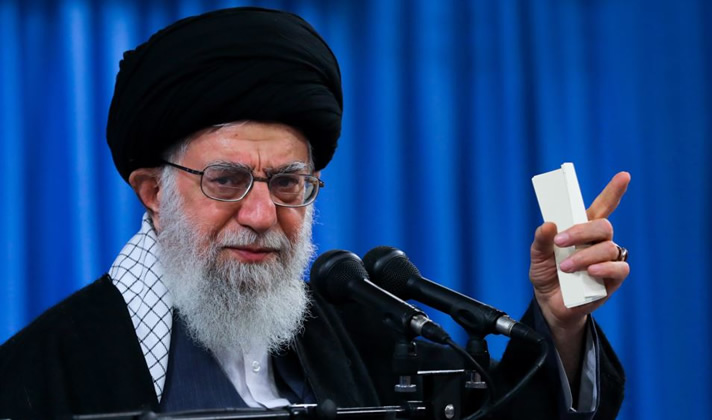
ASSASSINATION FEAR: IRAN’S LEADER, KHAMENEI NAMES THREE POTENTIAL SUCCESSORS, EXCLUDES SON
Read Time:2 Minute, 23 Second
Agency report
Iran’s Supreme Leader, Ayatollah Ali Khamenei, has reportedly named three potential successors in the event of his death amid Israel’s ongoing military offensive — a move that underscores the heightened sense of urgency within the country’s leadership.
An investigative report by The New York Times on Saturday revealed that the 86-year-old leader, now said to be operating from a secure underground bunker, privately selected three senior clerics to take over should he be killed during the conflict.
The report, citing “senior Iranian officials,” said Khamenei’s decision follows a series of high-profile assassinations carried out by Israeli forces.
Notably absent from the list is Khamenei’s powerful son, Mojtaba, who has long been speculated as a likely successor.
This marks a dramatic shift from years of speculation that a dynastic handover was being engineered behind the scenes, Jerusalem Post also reports on Saturday.
“Khamenei has nominated three clerics as potential successors while hiding in a bunker… Mojtaba is not among them,” reported The New York Times, citing confidential Iranian sources close to the leadership.
Meanwhile, The Jerusalem Post corroborated the report, noting that the Supreme Leader has also “selected replacements down his military chain of command” in anticipation of further Israeli strikes that could decimate his inner circle.
Succession Crisis in Real Time
Under normal conditions, Iran’s Supreme Leader is chosen by the Assembly of Experts — an 88-member clerical body.
But Khamenei’s reported actions suggest he is attempting to shape that outcome in advance, potentially bypassing traditional structures to preserve his ideological legacy and prevent internal fractures.
Analysts say the selection of three clerics, rather than one, reflects both a lack of consensus within Iran’s ruling elite and the urgency of contingency planning as the threat level escalates.
While names have not been officially released, the report indicates the candidates are figures trusted by Khamenei and aligned with the regime’s hardline core.
Implications Beyond Iran
The move has immediate geopolitical consequences. With the region on edge following Israeli strikes on senior Iranian and Hezbollah commanders, the specter of regime instability could further inflame the Middle East.
It also raises questions about the viability of Iran’s leadership structure should Khamenei be incapacitated.
“Khamenei’s action signals a regime that sees the risk of decapitation as real,” said a senior regional intelligence official quoted in The New York Times. “It is succession planning not in theory — but under fire.”
What Happens Next
The Assembly of Experts could still exercise formal authority, but if Khamenei’s influence continues beyond the grave — through his private picks — Iran’s post-Khamenei era may be shaped more by survivalism than clerical consensus.
For now, the message from Tehran is clear: the Islamic Republic is bracing for a leadership transition in the shadow of war, multiple media agencies report.


Happy
0 %

Sad
0 %

Excited
0 %

Sleepy
0 %

Angry
0 %

Surprise
0 %
 0
0
 0
0