
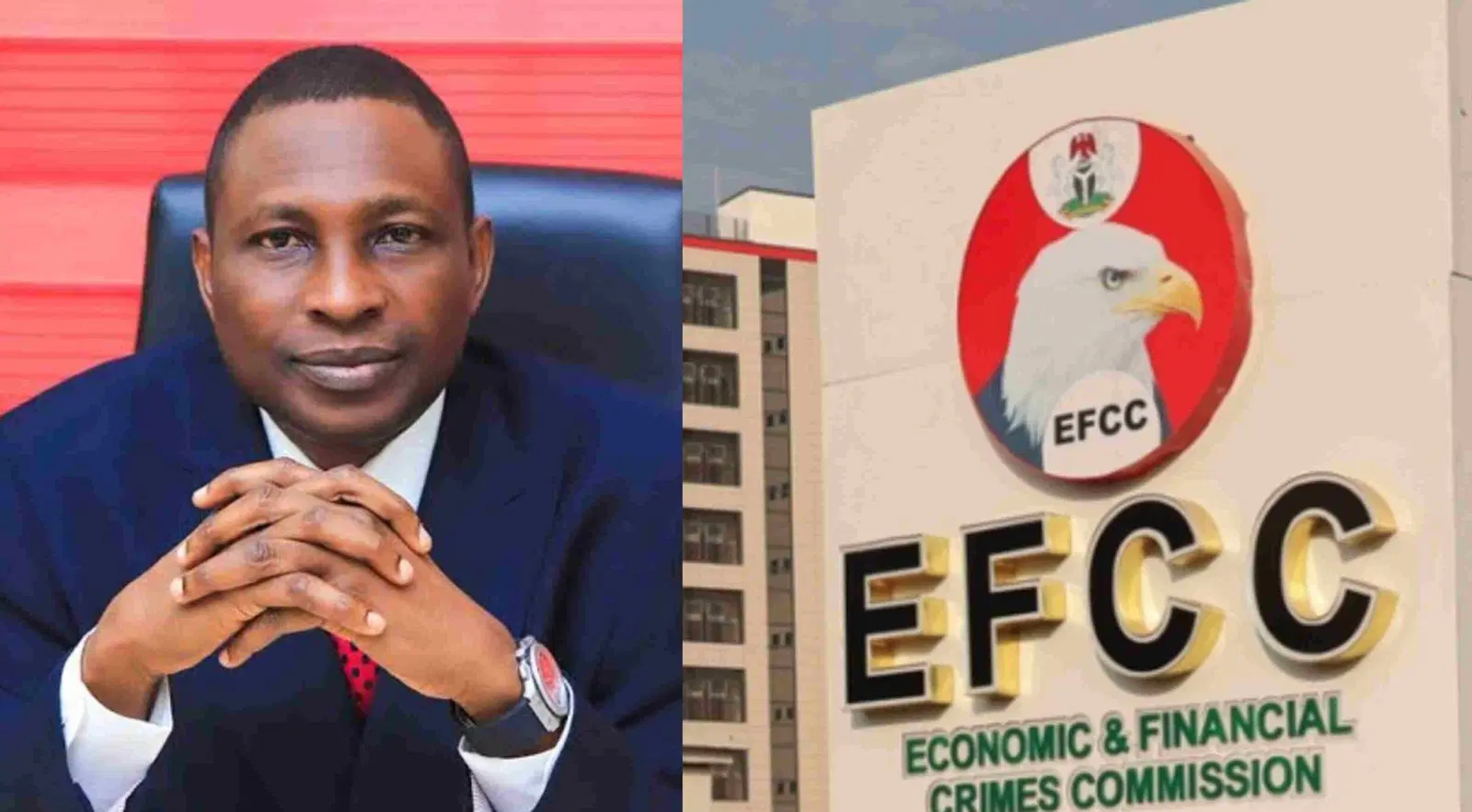
SPRAYING NAIRA IS A CRIME, NOT CULTURE – EFCC CHAIRMAN WARNS NIGERIANS
Read Time:2 Minute, 25 Second
By Aishat Momoh. O.
The Executive Chairman of the Economic and Financial Crimes Commission (EFCC), Mr. Ola Olukoyede, has declared that spraying, mutilating, or stamping on naira notes at social events is not a cultural expression but a criminal act punishable under Nigerian law.
Speaking during a stakeholders’ sensitisation programme held Friday at the Colonades Hotel in Ikoyi, Lagos, Olukoyede described the naira as a symbol of Nigeria’s sovereignty and expressed serious concern over its persistent abuse, particularly during celebrations and public gatherings.
“Spraying the naira is not part of our culture. Nobody who works hard to earn money will go out and start throwing their hard-earned salary in the air,” Olukoyede said. “There is nothing cultural about destroying our national currency.”
The EFCC boss revealed that, in collaboration with the Central Bank of Nigeria (CBN), a Task Force on Dollarization and Naira Abuse has been established, and enforcement efforts are ongoing against both unlicensed forex dealers and those who deface or mishandle the naira.
Addressing critics who argue the Commission should focus more on high-profile economic crimes, Olukoyede insisted: “An offence is an offence. Ignorance of the law is never an excuse.”
He confirmed that some celebrities already facing prosecution for naira abuse can testify to the consequences of flouting currency regulations.
Highlighting the Commission’s broader anti-corruption work, the EFCC chairman said more than ₦100 billion in recovered funds have been reinvested into key national programmes, including the Nigerian Education Loan Fund (NELFund) and the CrediCorp consumer credit scheme.
“These are not just headlines. They are real interventions funded by money recovered from corrupt individuals and organisations,” he noted.
He also cited the recovery of funds from the Niger Delta Development Commission (NDDC), which enabled the construction of a skill acquisition centre and liaison office in Bayelsa State. In Kaduna, a property seized from a former civil servant now houses the Federal University of Applied Sciences, Kachia.
The EFCC has also successfully collaborated with foreign governments in repatriating stolen funds and compensating fraud victims in the United States, Spain, and Canada.
Olukoyede raised concerns about foreign criminal syndicates operating in Nigeria, disclosing that sting operations in Lagos and Abuja had resulted in the arrest of 792 suspects linked to international fraud rings. Over 150 individuals, mostly Chinese nationals, have already been prosecuted.
He also confirmed that under his leadership, four former governors and three former ministers are currently facing trial for various corruption-related offences.
In a move to institutionalize fraud prevention, Olukoyede announced the creation of a Department of Fraud Risk Assessment and Control (FRAC) within the EFCC. The Commission has also launched EFCC Radio 97.3FM and maintains regular sensitisation campaigns on radio, television, and social media platforms.
“This fight is not for EFCC alone. It is a collective responsibility. We must all lend our voices to restore the dignity and integrity of the naira,” he urged.


Happy
0 %

Sad
0 %

Excited
0 %

Sleepy
0 %

Angry
0 %

Surprise
0 %
 0
0
 0
0