
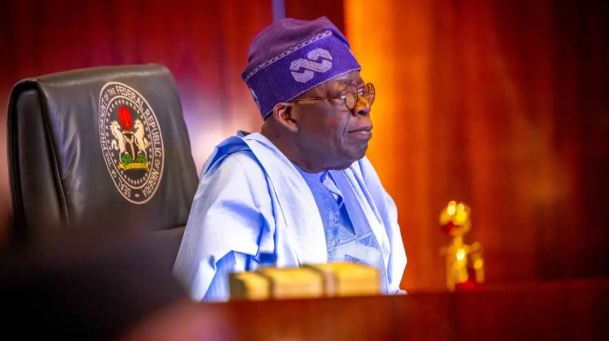
UPDATED: TINUBU SIGNS AMENDED ELECTORAL ACT 2026 INTO LAW
Read Time:2 Minute, 12 Second
President Bola Tinubu has officially made the Electoral Act 2026 (Amendment) into law.
He signed the bill on Wednesday, a few days after the Independent National Electoral Commission shared the schedule for the 2027 general elections.
The signing took place at the Presidential Villa, Abuja, around 5:00 pm with principal officers of the National Assembly in attendance.
Speaking shortly after signing the bill into law, Tinubu commended the national assembly for what he described as “solid brainstorming discussions” aimed at strengthening national development and safeguarding democratic stability.
“The essence of democracy is to have very solid brainstorming discussions committed to national development and nation building, the stability of the nation,” he said.
The president noted that beyond the historical significance of the legislation, the priority is ensuring that the electoral process is managed in a way that prevents confusion or disenfranchisement.
“What is crucial is the fact that you manage the process to the extent there will be no confusion, no disenfranchisement of Nigerians; and we are all going to see democracy flourish,” he said.
Tinubu noted that confidence in the system must be rebuilt, arguing that no electoral framework, however technologically advanced, can function without human integrity.
“No matter how good a system is, it’s managed by the people, promoted by the people, and result is finalised by the people,” he said.
“For final results, you are not going to be talking to the computer. You are going to be talking to human beings who announce the results.”
Addressing debates around real-time electronic transmission of results, the president urged a realistic assessment of Nigeria’s technological capacity, particularly broadband infrastructure.
“When you look at the crux of various agreements, maybe Nigeria should question our broadband capability. How technically are we today? How technically will we be tomorrow?” Tinubu asked.
He emphasised that the voting process itself remains fundamentally manual, adding that voters will continue to appear in person at polling units, receive ballot papers, thumbprint their preferred candidates and cast their votes without interference.
Ballots, he added, are sorted and counted manually, with only the arithmetic results entered into official forms.
“Essentially, the transmission of that manual result is what we’re looking at, and we need to avoid glitches,” he said, warning against unnecessary interference in an era of heightened digital scrutiny.
Expressing optimism about the country’s democratic future, Tinubu said Nigeria would continue to nurture its democracy toward achieving prosperity and stability.
“Nigeria will be there. We will flourish. We will continue to nurture this democracy for the fulfilment of our dream for prosperity and stability of our country,” he added.


Happy
0 %

Sad
0 %

Excited
0 %

Sleepy
0 %

Angry
0 %

Surprise
0 %
 0
0
 0
0