
NAPTIP, BRITISH HIGH COMMISSION WARN NIGERIANS AGAINST FRAUD-RELATED TRAFFICKING
Read Time:1 Minute, 55 Second
By Aishat Momoh. O.
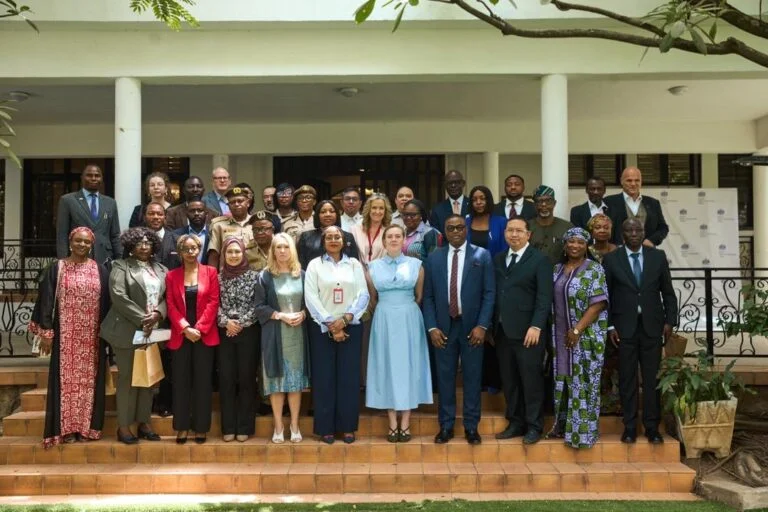
The National Agency for the Prohibition of Trafficking in Persons, in collaboration with the British High Commission, has cautioned Nigerians about deceptive overseas job offers used to traffic victims into scam operations abroad.
The warning was issued on Monday in Abuja during a survivor-focused event themed: “Confronting the Global Scam Centre Crisis: Perspectives of Nigerian Survivors.”
According to NAPTIP and its partners, traffickers lure unsuspecting Nigerians with promises of high-paying jobs but transport them to countries including Myanmar, Laos, Cambodia, and Thailand, where they are forced to participate in online scams and cyber-fraud schemes. Officials urged the public to be wary of social media recruitment, upfront payment requests, or travel on tourist visas for employment, emphasizing that legitimate employers do not operate in this manner.
The event followed a recent NAPTIP-coordinated rescue of 23 Nigerian victims in Thailand, conducted with the Ministry of Foreign Affairs, the Nigerian Embassy in Bangkok, and British NGO EDEN. Rescued victims were assisted at the Thai–Myanmar border and provided welfare support at Bangkok’s Immigration Detention Centre.
British Deputy High Commissioner in Abuja, Gill Lever, highlighted the global scale of the scam-centre problem, noting that criminal networks defraud victims of over $64 billion annually, with British citizens losing an estimated €11.4 billion in 2024. She affirmed the UK’s support for trauma-informed care and safe repatriation of Nigerian survivors.
Mrs. Kehinde Akomolafe, Director of Public Enlightenment at NAPTIP, described survivors as victims, not criminals, and warned that trafficking extends beyond factories and brothels to online operations. Survivors shared harrowing accounts of being held in guarded compounds, forced to work up to 18 hours daily, subjected to physical abuse, and denied food, with some witnessing deaths among fellow captives.
A United Nations Office of the High Commissioner for Human Rights (OHCHR) report, A Wicked Problem (2026), estimates that 120,000 people are currently forced to work in scam centres in Myanmar, with over 300,000 affected across Southeast Asia. Victims originate from at least 66 countries, and 74 per cent of them were promised high-paying jobs before being trafficked between 2020 and 2025.
Participants at the event called for stronger international cooperation, increased public awareness, and reforms in public narratives to protect survivors and hold traffickers accountable.


Happy
0 %

Sad
0 %

Excited
0 %

Sleepy
0 %

Angry
0 %

Surprise
0 %
 0
0
 0
0