
TRANSFORMING VARSITIES TO BOOST NATIONAL ECONOMIC GROWTH
Read Time:3 Minute, 7 Second
By: Fasasi Hammad
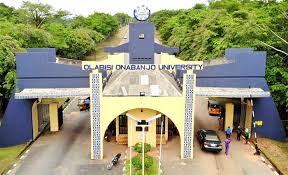
At a time when national attention is increasingly focused on transforming education in Nigeria to meet present and future demands, the recent 35th convocation lecture at Olabisi Onabanjo University put the issue firmly in the spotlight.
Titled “Repositioning Nigerian Universities as Innovation Hubs for Entrepreneurship and National Development,” the lecture was delivered by Dr. Bosun Tijani, who examined the critical role universities must play as engines of growth. He stressed that national development depends more on the practical application of expertise than on formal qualifications or certificates alone, highlighting the importance of knowledge and skills acquired from relevant institutions.
READ MORE:
Tijani emphasized that universities exist to serve society, strengthen host communities, and drive national progress. He said:
“The core contributions a university can make are excellent teaching, relevant research, and knowledge applied to real-world problems, with scholarship that directly fosters development.”
He also noted that OOU enjoys a strategic advantage due to Ogun State’s unique economic and educational strengths. As a leading state in internally generated revenue, an industrial hub, and a recognized centre for education with over 45 tertiary institutions, the state positions OOU at the intersection of knowledge, industry, agriculture, and markets.
Tijani urged Nigerian universities to translate academic excellence into economic value and convert human capital into national productivity. He encouraged them to operate as “living laboratories,” where classrooms serve as practical environments for learning and innovation.
“Across Nigeria, we have invested heavily in education, with over 270 tertiary institutions, and the country must feel their impact,” he said, challenging graduates to deploy their skills with the intent of accelerating economic growth. He stressed that the relevance of universities lies not only in the quality of their graduates but also in the productivity of the workforce.
“Nigeria’s current challenge is not ambition, but productivity. True economic prosperity will emerge when farmers, engineers, teachers, entrepreneurs, and public servants raise the standards of their work,” he added.
OOU’s Visitor, Governor Dapo Abiodun, represented by his Deputy Noimot Salako-Oyedele, praised the university for producing competent, innovative, and future-ready graduates while upholding discipline, innovation, and service. He commended the Pro-Chancellor, Professor Toyin Ashiru, the Vice-Chancellor, Professor Ayodeji Olayinka Johnson Agboola, and the Governing Council for maintaining the university’s high standards.
Abiodun highlighted the state’s investment in education, noting that N275.4 billion — 17% of Ogun State’s ¦1.7 trillion 2026 budget — has been allocated to expand access to quality education and reduce inequality. He congratulated graduates, urging them to continue learning, questioning, and serving as university ambassadors. To reward academic excellence, he donated ¦500,000 to each of the 13 best graduating students and ¦2 million to the overall best graduate, Master Ajayi David of the Faculty of Engineering.
Vice-Chancellor Agboola also praised Abiodun for prioritizing education as a driver of transformative development. He reported that 5,808 undergraduates were convoked, including 147 First-Class graduates (a 25.22% increase from the previous session), while 373 postgraduate students received diplomas, master’s, and PhD degrees. Notable achievements include outstanding results from the Faculty of Law and support from the French Embassy to establish a €15,000 Digital Resource Centre for French language teaching.
Agboola further noted the university’s recent upgrade of internet connectivity from 300mbps Radio Wave Link to 1,500mbps Fibre-optic service, reflecting a commitment to improving digital infrastructure for better access and visibility.
Founded just over 40 years ago, OOU currently ranks 16th nationally among 321 Nigerian universities for academic visibility, research output, and web presence, and is regarded as the second-best state-owned institution in the country.


Happy
0 %

Sad
0 %

Excited
0 %

Sleepy
0 %

Angry
0 %

Surprise
0 %
 0
0
 0
0