
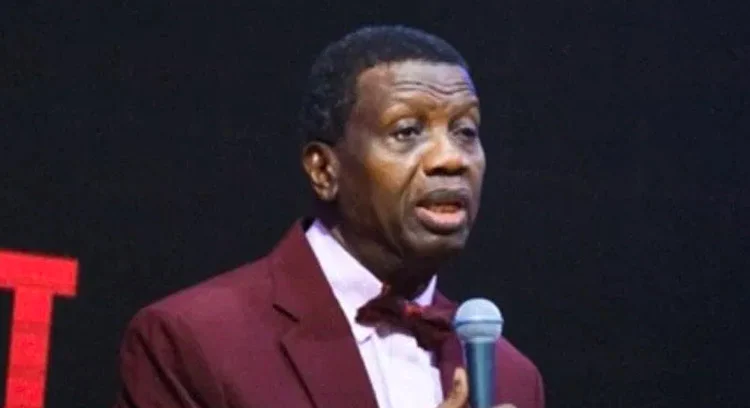
ADEBOYE’S COMMENTS ON INSECURITY MISREPRESENTED, SAYS RCCG CONTINENTAL OVERSEER
Read Time:2 Minute, 9 Second
By Aishat Momoh. O.
The Continental Overseer of the Redeemed Christian Church of God, Continent 3, Pastor Johnson Odesola, has defended comments made by the church’s General Overseer, Pastor Enoch Adeboye, insisting they were misinterpreted and unfairly portrayed as a defence of President Bola Tinubu over Nigeria’s worsening insecurity.
In a statement titled, “Pastor Adeboye Deserves Fair Hearing, Not Unfair Criticism,” Odesola said many of the criticisms directed at the cleric were based on short social media clips rather than his full remarks delivered at the US-Nigeria Faith Heroes Award Gala in Washington, D.C.
According to Odesola, Adeboye did not deny the country’s security challenges but acknowledged that terrorism, banditry and kidnapping had spread beyond northern Nigeria into several parts of the South.
He explained that the General Overseer’s statement that Nigerians should not expect the President to “wear khaki and go and fight” was intended to clarify the constitutional responsibilities of the Commander-in-Chief rather than excuse any shortcomings of the Federal Government.
“He did not defend failure. He simply reminded Nigerians that political leaders provide direction while military professionals execute operations,” Odesola stated.
He added that Adeboye’s comments were, in fact, a call for greater accountability from those charged with securing the country.
“Far from defending incompetence, Pastor Adeboye challenged those responsible for national security to produce results. Even more significant was his emphasis on confronting those who sponsor terrorism.
“This is perhaps the strongest part of his intervention. Terrorists do not operate in isolation. They require money, weapons, logistics, intelligence and political protection. Every insurgent group survives because powerful individuals somewhere are financing its operations,” he said.
Responding to critics who questioned why Adeboye should comment on national security, Odesola argued that religious leaders have historically provided moral guidance during periods of national crisis.
He cited biblical examples of spiritual leaders who advised rulers and confronted injustice, maintaining that Adeboye had consistently prayed for Nigeria and offered counsel to successive administrations, regardless of political affiliation.
While acknowledging that Nigerians have the right to disagree with the cleric’s views, Odesola urged critics to avoid distorting his remarks.
He stressed that Nigeria’s security crisis should not be viewed through a partisan lens but should inspire collective responsibility among government officials, security agencies, the judiciary, traditional rulers, religious leaders and citizens.
According to him, rather than focusing on criticism of Adeboye, Nigerians should pay attention to what he described as the core message of the cleric’s intervention—the need for decisive leadership, greater accountability, national unity and sustained efforts to dismantle terrorism and the networks financing it.


Happy
0 %

Sad
0 %

Excited
0 %

Sleepy
0 %

Angry
0 %

Surprise
0 %
 0
0
 0
0