
DANGOTE REFINERY TO BEGIN DIRECT FUEL DISTRIBUTION AUGUST 15 AS 25 MARKETERS JOIN SCHEME
Read Time:2 Minute, 42 Second
By Aishat Momoh. O.
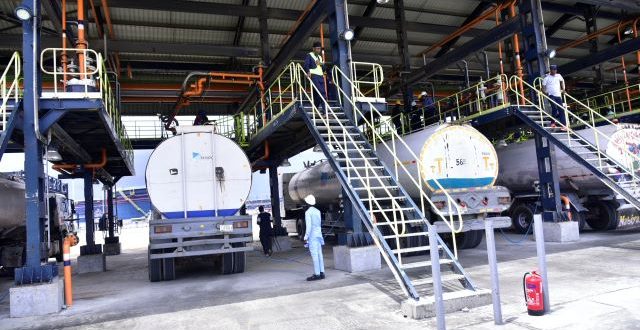
Less than 30 days to the planned rollout of 4,000 Compressed Natural Gas (CNG) trucks, the Dangote Refinery and Petrochemical Limited is set to commence direct fuel distribution to petroleum marketers and strategic industries across Nigeria from August 15, 2025.
Investigations confirmed that at least 25 petroleum marketers have signed up with the refinery for the new logistics arrangement, up from an initial three. The move signals growing alignment between oil marketers and Africa’s largest refinery amid changing dynamics in Nigeria’s downstream sector.
A top Dangote Group executive confirmed the surge in partnerships, noting that the company is finalising plans to distribute refined products including Premium Motor Spirit (PMS) and diesel nationwide via its 4,000-truck fleet.
“Yes, more marketers are registering ahead of the launch. We started with three, and now we have 25 strategic partners,” the executive said.
The refinery’s plan to bypass traditional depots and deliver directly to end users, including retailers, telecom companies, aviation players, and manufacturers, is already causing anxiety among independent tanker drivers and fuel logistics operators, who fear massive job losses.
The National Publicity Secretary of the Independent Petroleum Marketers Association of Nigeria (IPMAN), Chinedu Ukadike, said the group had no choice but to align with Dangote, given current realities.
“Dangote has become the only supplier of petroleum products in Nigeria and West Africa. Marketers are applying to benefit from the free distribution scheme,” he stated, adding that high product prices have made retail operations increasingly unprofitable.
Ukadike, however, warned against market monopoly, urging other refineries especially government-owned ones to scale up operations to balance competition.
Meanwhile, concern is mounting within the tanker drivers’ union. Leaders fear that the free delivery system could render many trucks and their operators redundant. While some of the drivers may be absorbed into the Dangote fleet, uncertainty looms.
The National President of the National Association of Road Transport Owners (NARTO), Yusuf Othman, confirmed ongoing consultations with stakeholders over the development but declined to comment further.
Suppliers of petroleum products have also raised alarm that they could be edged out if the refinery begins supplying directly to bulk consumers. The Natural Oil and Gas Suppliers Association of Nigeria (NOGASA) has scheduled a National Executive Council meeting for July 31 in Abuja to assess the impact on its members.
In a cautionary stance, the Petroleum Products Retail Outlets Owners Association of Nigeria (PETROAN) warned against viewing Dangote’s offer as a long-term solution.
Its president, Billy-Gillis Harry, likened the distribution initiative to past monopolies in cement, sugar, and flour sectors that eventually resulted in higher consumer prices.
“We must not be deceived by Greek gifts,” he said. “Temporary relief could eventually give way to a monopoly-driven hike, just as we’ve seen with cement.”
Since its January 2024 debut, the 650,000-barrel-per-day Dangote Refinery has steadily ramped up production. It began with diesel and aviation fuel, before adding PMS in September 2024. By February 2025, it reached 85% of installed capacity, with plans to attain full output soon.
As the refinery prepares to disrupt fuel distribution nationwide, stakeholders are closely watching how the move will reshape Nigeria’s petroleum logistics and pricing landscape.


Happy
0 %

Sad
0 %

Excited
0 %

Sleepy
0 %

Angry
0 %

Surprise
0 %
 0
0
 0
0