
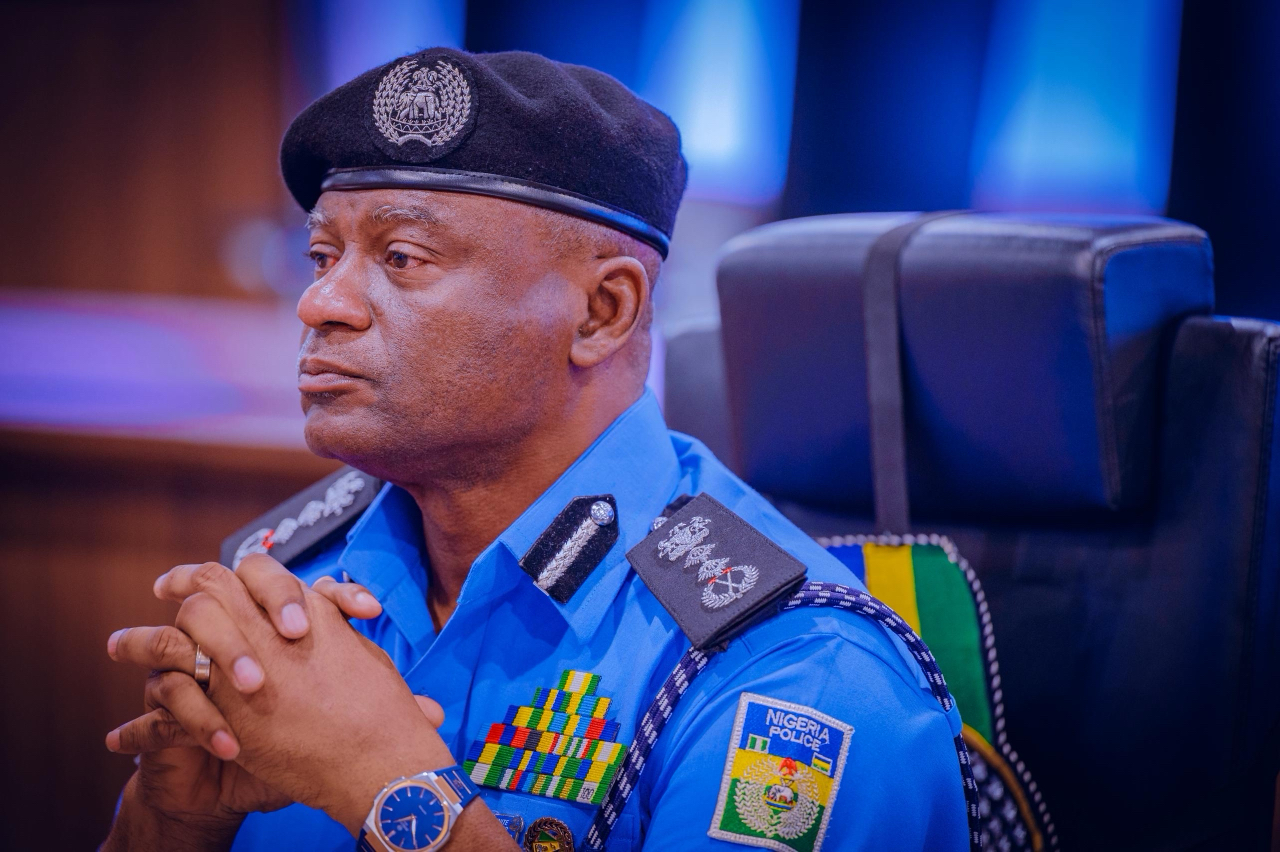
IGP DISU ASSURES NIGERIANS OF IMPROVED POLICE SECURITY FOR 2027 ELECTIONS
Read Time:4 Minute, 27 Second
By: Fasasi Hammad
The Inspector-General of Police, Olatunji Disu, has assured Nigerians that the police are preparing for the 2027 general elections, promising enhanced intelligence gathering, strategic deployment and surveillance to prevent violence and electoral disruptions.
The assurance comes amid concerns raised by the Inter-Party Advisory Council Chairman, Yusuf Dantalle, over alleged political interference, electoral violence, corruption and restrictions on opposition parties ahead of the polls.
Both men spoke on Tuesday in Abuja at the dissemination of the Ekiti and Osun governorship election observation reports and a dialogue on priority electoral reforms.
The event was organised by the European Union Support to Democratic Governance in Nigeria in collaboration with The Kukah Centre, The Albino Foundation Africa, Yiaga Africa, the International Press Centre and the Centre for Media and Society.
Disu, who was represented by Deputy Inspector-General of Police Isyaku Mohammed, said the police were drawing lessons from the 2026 Osun governorship election to strengthen security preparations for the 2027 general elections. Mohammed coordinated security operations during the Osun poll.
The IGP added that police officers were undergoing training to improve their capacity to manage election-related security challenges.
He said the successful conduct of the Osun election resulted from extensive preparations, clear operational plans and cooperation among security agencies and other stakeholders.
“The success of the Osun governorship election wasn’t just by chance. A lot of work was put into it, not just by the police or the people, but also by stakeholders. And one of the things that made it easy for us was the ability to have clear plans. We knew what the situation was,” he said.
According to Disu, one of the major lessons from the Osun election was the need to strengthen patrols and intelligence gathering to identify potential threats and deploy personnel where necessary.
He noted that the 2027 general elections would present different security challenges across states, requiring tailored strategies to address local conditions.
“By and large, we are ready. We are now training our men to be able to manage election security. So far, we are on top of the situation, and we are getting ready. I hope and pray that the 2027 election will go well, just like the Osun poll,” he added.
However, Dantalle warned that electoral violence, alleged political interference and restrictions on opposition parties could undermine the credibility of the 2027 elections if not addressed.
The IPAC chairman accused some political actors of manipulating the electoral process for personal interests. He also criticised what he described as the failure to implement recommendations submitted by political parties and the Independent National Electoral Commission to the National Assembly during the review of the Electoral Act and the Constitution.
Dantalle cited an alleged incident in Osun in which a serving senator reportedly threatened to mobilise supporters against members of another political party, questioning why no prosecution had followed.
“We are all witnesses to how a sitting senator in Osun came out to threaten and ordered his supporters to attack another party’s members. But nothing happened to him. In fact, nobody has been prosecuted. Why?” he asked.
The Allied Peoples Movement national chairman also raised concerns over the cost of erecting campaign billboards, alleging that opposition candidates faced excessive charges that restricted their visibility and undermined fair political competition.
He argued that the situation was particularly evident in the Federal Capital Territory, where, according to him, billboards featuring the sitting President were more visible than those of other political candidates.
“Even here in the FCT, you can only see the photographs and billboards of the sitting president. You can’t see that of any other candidate. That is because some outrageous amount of money has been imposed on other candidates for them to mount one. Is that a democracy? So, an election is a process. It’s not an event,” he said.
Dantalle also questioned the ability of the police to operate independently amid political pressure, citing concerns about the appointment and promotion of senior officers.
He urged police personnel to resist undue influence and remain faithful to their professional responsibilities and oath of office.
“My message to you is that today you are in the police force. Tomorrow, you will become a civilian like me. And you might also want to run for a political elective office,” he said.
He added that officers should consider their responsibilities as Nigerian citizens and ensure their actions remained consistent with the oath they had sworn to uphold.
Earlier, the Executive Director of the Centre for Media and Society, Dr Akin Akingbulu, called for stronger electoral safeguards, increased transparency and broader participation ahead of the 2027 elections.
Akingbulu said the Ekiti and Osun governorship elections offered important lessons for improving electoral credibility, including the need for accurate results, protection of ballot secrecy, freedom of voter choice and the safety of journalists and election observers.
He disclosed that more than 1,400 accredited citizen observers monitored the elections across Ekiti State’s 16 local government areas and Osun State’s 30 local government areas.
Akingbulu explained that the observation report was designed to identify gaps and recommend improvements rather than merely criticise the electoral process.
He stressed that lessons from the two governorship elections should guide reforms aimed at strengthening democratic institutions and improving the credibility of Nigeria’s 2027 general elections.


Happy
0 %

Sad
0 %

Excited
0 %

Sleepy
0 %

Angry
0 %

Surprise
0 %
 0
0
 0
0