
JUST IN: NIGERIAN BANKS RESUME INT’L TRANSACTIONS ON NAIRA CARDS AFTER YEARS OF SUSPENSION
Read Time:3 Minute, 37 Second
By: Sefiu Ajape
In a major relief for millions of Nigerians, commercial banks across the country have announced the resumption of international transactions on their naira debit cards.
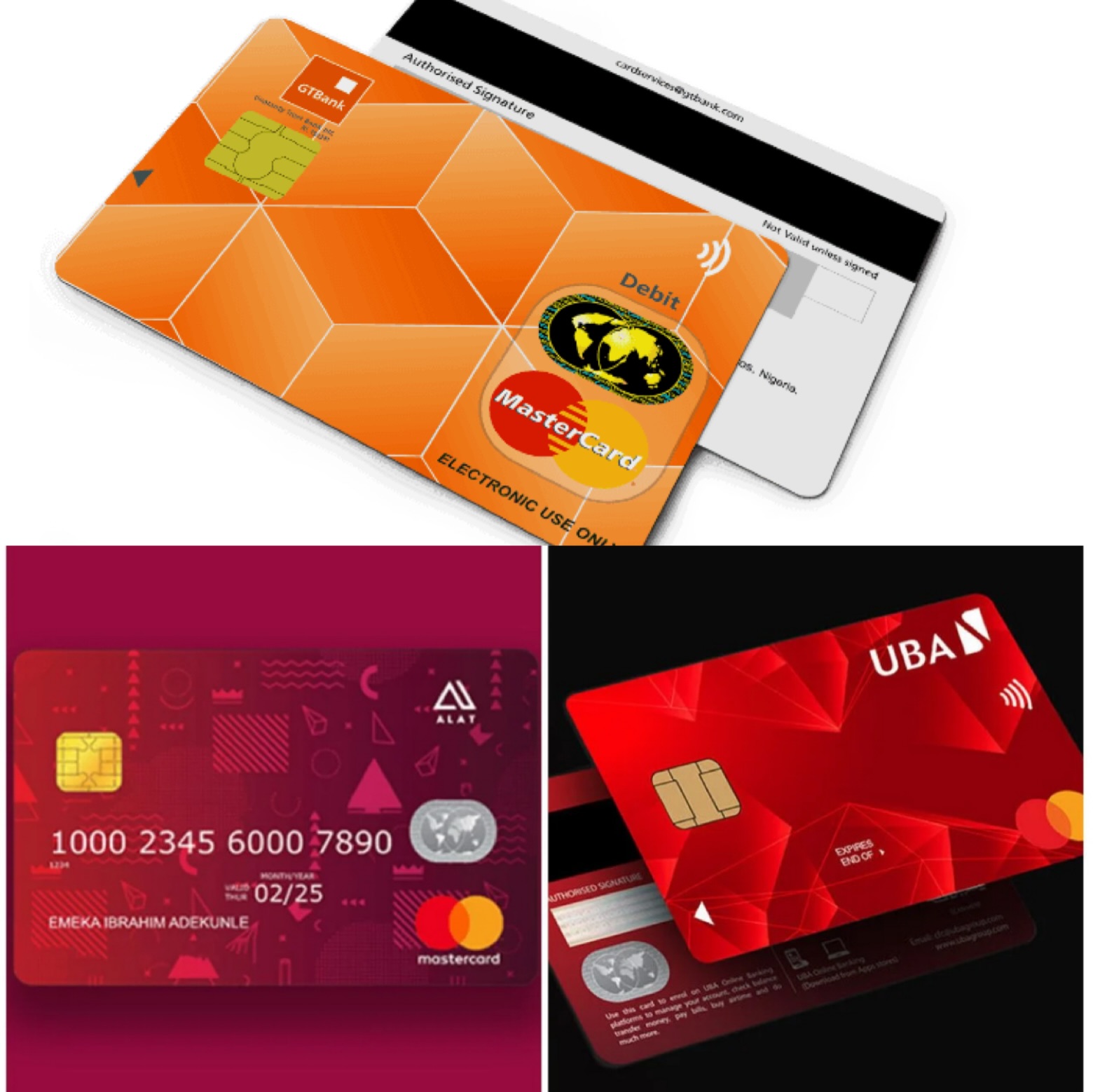
In separate messages to customers, United Bank for Africa (UBA), Wema Bank, and Guaranty Trust Bank (GTBank)confirmed that users can now carry out international transactions using their naira cards.
The development marks a significant shift nearly three years after most banks suspended international payments on naira cards due to forex challenges.
In a recent notice, UBA said the decision reflects its commitment to delivering seamless and improved banking services to its customers.
“In line with our continued commitment to providing you with seamless and enhanced banking experiences, we are pleased to inform you that all UBA Premium Naira Cards, including Gold, Platinum, and World variants are now enabled for international transactions,” the statement reads.
“This means you can now use your Premium Naira Card for everyday payments, online shopping, POS, and ATM transactions across the world, with more ease and flexibility.
“If you haven’t used your card recently, now’s a great time to rediscover the convenience and prestige that comes with being a UBA premium cardholder.”
Also announcing the development in a recent statement, Wema Bank said customers can now “pay in dollars” with their naira cards.
“Your Wema Naira Mastercard just went global! Now you can pay in dollars on all your favourite international platforms; Amazon, eBay, AliExpress? Netflix, Spotify, YouTube,” the bank said.
Similarly, Guaranty Trust Bank (GTBank) in a notice sent to customers announced the resumption of the service.
It added that customers now have $1,000 quarterly international spending limit on its naira cards.
GTBank said: “We are pleased to inform you that you now have a quarterly limit of $1,000 on your GTBank Naira Card to pay for all your favourite things anywhere in the world.”
According to the bank, the $1,000 limit covers all international spending, including online payments, point-of-sale (POS) transactions abroad, and ATM withdrawals.
It added that ATM Withdrawals abroad are limited to $500 quarterly, while online and POS transactions are pegged at $1,000 quarterly.
According to financial experts, the development signals increasing confidence in Nigeria’s foreign exchange reforms and reflects easing pressure on the Central Bank’s FX reserves.
Why Banks Are Resuming Operations
Ayokunle Olubunmi, head of financial institutions ratings at Agusto & Co, said the improved liquidity in the foreign exchange (FX) market supported banks’ decision to reactivate their naira cards for global transactions.
“The moderating premium on the parallel market transactions and the reduced arbitrage opportunities is also responsible for the decision,” he said.
Also speaking with Hotjist, Charles Sanni, the chief executive officer (CEO) of Cowry Treasurers, said the spread or margin between official and parallel market rates, which have thinned out, may have influenced the decision by the banks.
He said the interest rate is very high in Nigeria, hence minimising borrowing money to speculate on foreign exchange.
“The naira has also continued to appreciate against the other major currencies of the world. More so, there has been increased diaspora remittances based on the new policy of the Central Bank of Nigeria (CBN) on opening of accounts for non-residents, particularly Nigerians in diaspora,” he said.
Sanni also pointed to the restored confidence in FX management by the federal government and the CBN, following the ease of transferring funds and capital repatriation.
The CEO added that there has been an improved credit rating of Nigeria, clearance of the FX backlogs, “new trading platform, increase in oil prices from geopolitical conflicts, and banks capitalisation”.
Between July 2022 and January 2023, several other banks also temporarily suspended international transactions on ATMs and POS channels.
The change was triggered by the chronic FX scarcity, which posed a serious threat to the survival of key sectors of the economy.
In July, Standard Chartered Bank suspended international transactions on its naira visa debit card.
First Bank of Nigeria (FBN), on September 21, 2022, said it will suspend international transactions on its naira Mastercard.
Three months later, Guaranty Trust Bank (GTBank) stopped global payments on its naira Mastercard, with Zenith Bank joining the fray on January 9, 2023.
Flutterwave, Eversend, and other financial technology platforms also took similar steps, suspending their virtual card services for international transactions.


Happy
0 %

Sad
0 %

Excited
100 %

Sleepy
0 %

Angry
0 %

Surprise
0 %
 0
0
 0
0