
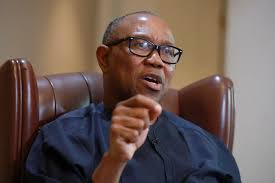
PETER OBI: POLITICAL AMBITIONS PERSIST WHILE NIGERIANS BATTLE SEVERE POVERTY
Read Time:1 Minute, 46 Second
By: Fasasi Hammad
Former Labour Party presidential candidate Peter Obi has raised alarm over the worsening poverty situation in Nigeria, warning that political jockeying is overshadowing the urgent needs of the nation.
In a post on his verified X account, Obi highlighted that while politicians scramble for positions and control of party structures, the country faces a harsh reality. According to World Bank data, the number of Nigerians living in poverty surged from 81 million in 2019 to approximately 139 million in 2025. Between 2023 and 2024 alone, the figure jumped from 115 million to 129 million, an increase of 14 million people. Projections for 2026 suggest that 141 million Nigerians—62% of the population—will be living in poverty.
Obi cited the Nigeria Economic Outlook 2026 report, titled “Turning Macroeconomic Stability into Sustainable Growth,” noting that weak real income growth and persistently high living costs will continue to exacerbate the crisis. He warned that most Nigerians will not see income growth sufficient to offset escalating costs, with low-income households particularly vulnerable as food accounts for up to 70% of their spending.
“The rising tide of poverty is eroding purchasing power, weakening demand, and placing immense pressure on micro, small, and medium-sized enterprises. Without robust job creation, productivity growth, and effective social protection programs, public finances, human capital, and economic recovery are at risk,” Obi wrote.
He contrasted Nigeria’s trajectory with nations like India and Indonesia, which significantly reduced poverty over the past two decades through sustained investments in education, health, and social protection. In contrast, Nigeria’s poverty rate has climbed from about 40% in 2000 to 62% today.
Obi concluded with a stark warning: “Can we continue to tolerate that a child born in Nigeria today faces one of the highest risks of being born into poverty anywhere in the world? The fact that 141 million Nigerians live in poverty is not merely a national failure—it is a direct threat to our future. Structural reforms in macroeconomic stability, agriculture, food supply, logistics, education, health, productivity, and large-scale job creation are no longer optional; they are imperative.”


Happy
0 %

Sad
0 %

Excited
0 %

Sleepy
0 %

Angry
0 %

Surprise
0 %
 0
0
 0
0