
COURT ADMITS DIGITAL FORENSIC EVIDENCE AS DSS CLOSES CASE IN OWO CHURCH ATTACK TRIAL
Read Time:2 Minute, 45 Second
By Aishat Momoh. O.
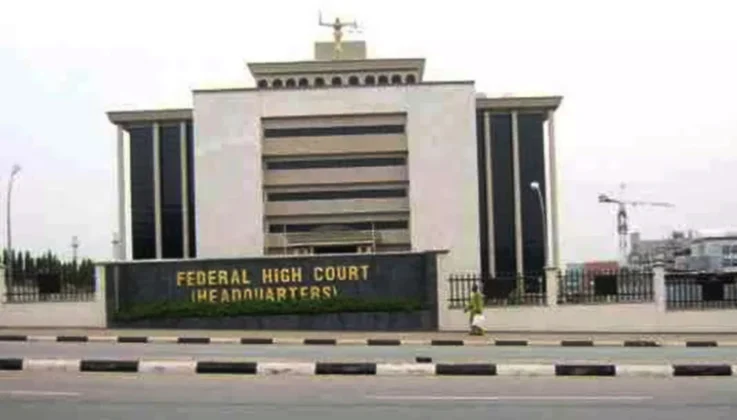
The Federal High Court in Abuja on Thursday formally admitted key digital forensic evidence and the statement of the fifth defendant in the ongoing trial over the June 5, 2022 attack on St. Francis Xavier Catholic Church, Owo, as the Department of State Services (DSS) closed its prosecution case.
Presiding over the case, Justice Emeka Nwite admitted the fifth defendant’s statement dated November 9, 2022, as Exhibit S, alongside a digital forensic report marked Exhibit T and a black Tecno mobile phone as Exhibit U.
The five defendants are facing terrorism charges for the attack that killed about 40 worshippers and injured several others during Sunday Mass in Owo, Ondo State.
During proceedings, DSS investigator SSJ testified that he personally recorded statements of the first to fourth defendants on August 18, 2022, as they indicated limited proficiency in English. Each statement-taking session lasted approximately 10 hours, with defendants interviewed individually. SSJ confirmed that the fifth defendant’s statement was recorded by another investigator but admitted into evidence without objection.
Under cross-examination, defence counsel suggested that other statements were taken at DSS offices in Ondo and Lokoja, but Justice Nwite sustained the prosecution’s objection, citing Section 232 of the Evidence Act, which requires prior written statements for contradiction to be shown to the witness.
SSJ also explained that delays in arraignment were under the DSS Director-General’s discretion, emphasizing his role was limited to investigation and recording statements, not custody management.
The prosecution’s final witness, SSK, a senior DSS operative and digital forensic lead with 29 years of experience, provided critical technical evidence. He holds master’s degrees in forensic science and information technology and specialises in converting raw data into “forensic actionable intelligence that meets international standards for judicial admissibility.”
SSK explained that following the attack, DSS used geospatial network filtering and cell tower triangulation to trace thousands of mobile devices in the Owo, Elegbeka, and Ifon areas.
The first defendant’s phone was identified as belonging to Idris Abdulmalik Omeiza using its International Mobile Equipment Identity (IMEI) number, described as a unique digital fingerprint.
Analysis revealed bidirectional communication among three defendants between March 1 and July 30, 2022.
On June 5, 2022, at 7:23 a.m., the first defendant’s phone was triangulated within 35 kilometres of the church, a distance coverable in 30–40 minutes by car.
Despite attempts to enforce a no-phone-call rule, the device remained active, acting as a “silent witness” to the defendant’s movements before and after the attack.”
The digital forensic report and the Tecno phone were admitted into evidence without objection, marking a pivotal moment in the trial.
During cross-examination, defence counsel questioned the witness’s credentials, but SSK clarified that his appointment is gazetted and much of his training was sponsored by the DSS.
Next Steps
Following the testimony of the forensic expert, the prosecution formally closed its case. Defence counsel subsequently requested an Ebira language interpreter for the Kogi State defendants.
Justice Nwite adjourned the matter until March 4 and 5, 2026, for the defence to open its case.
The case remains one of Nigeria’s most closely watched terrorism trials, with digital forensic evidence playing a central role in linking the defendants to the Owo church attack.


Happy
0 %

Sad
0 %

Excited
0 %

Sleepy
0 %

Angry
0 %

Surprise
0 %
 0
0
 0
0