
FAGBEMI SAYS PROJECTED REVENUE FROM OPL 245 WILL SUPPORT ECONOMIC PLANNING, DEBT SUSTAINABILITY
Read Time:2 Minute, 34 Second
BY JENN NOMAMIUKOR
Lateef Fagbemi, the attorney–general of the federation and minister of justice, said that settling the disagreement about oil prospecting licence (OPL) 245 will help boost Nigeria’s economy and make the country‘s finances stronger.
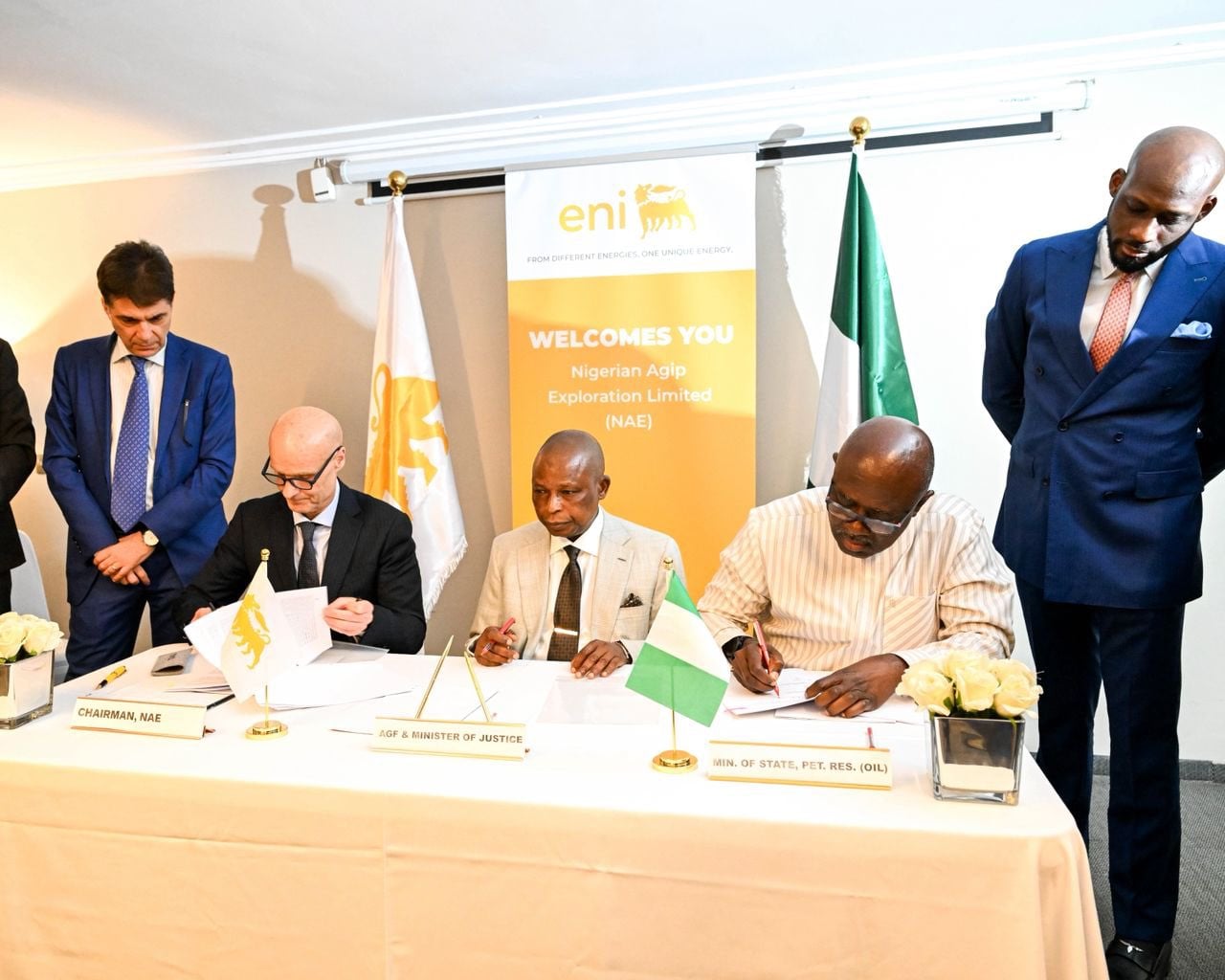
A statement from Bayo Onanuga, the president‘s special adviser on information and strategy, said Fagbemi made this comment after a legal agreement was signed in Abuja to end the dispute.
On March 5, the presidency shared the news that a settlement agreement between the federal government, Eni, and Nigerian Agip Exploration Limited (NAEL) has been successfully completed.
The attorney-general said President Bola Tinubu’s visionary leadership enabled the breakthrough.
He also described the development as a milestone in repositioning Nigeria’s economic landscape.
“The agreement marks a turning point for Nigeria’s oil and gas sector after more than two decades of legal battles and international arbitration,” he said.
“The clear vision and deep commitment of President Tinubu provided the political will required to bring closure to this protracted dispute. The agreement demonstrates Nigeria’s commitment to transparency, accountability, and the rule of law,” he said.
The minister said the settlement, which will culminate in a ‘consent arbitral award,’ not only resolves a complex international dispute, but also restores Nigeria’s credibility as a responsible partner in global business.
A consent arbitral award is a final, binding decision issued by an arbitrator that formally records a settlement agreement reached between parties during arbitration.
Fagbemi said the agreement will result in several strategic economic benefits, such as the removal of legal and fiscal uncertainties that previously hindered the development of the oil block.
“This development will pave the way for large-scale investments, stimulate job creation, and reinforce Nigeria’s position as a leading energy producer in Africa,” he said.
The attorney-general added that projected revenues from the asset could now be included in the country’s medium-term fiscal framework, thereby supporting budget stability, long-term economic planning, and debt sustainability.
Also, Fagbemi said resolving the dispute through negotiated settlement rather than prolonged arbitration underscores Nigeria’s commitment to alternative dispute resolution and enhances the country’s credibility in international commercial and arbitration circles.
“This settlement sends a clear signal to the global community that Nigeria is open for business and committed to fairness and respect for contractual obligations,” he added.
Fagbemi commended the ministry of petroleum resources, the Nigerian Upstream Petroleum Regulatory Commission, the Nigerian National Petroleum Company (NNPC) Limited, the Economic and Financial Crimes Commission (EFCC), and international partners such as Eni and Shell for their contribution to the resolution.
The minister said the resolution represents national interest over narrow considerations, and triumph of dialogue over conflict.
“With this agreement, Nigeria can now move forward with confidence, making sure that the development of OPL 245 becomes a source of prosperity for the country and future generations,” Fagbemi said.
On Saturday, Bayo Ojulari, group chief executive officer (GCEO) of the NNPC, said the settlement will help start the Zabazaba–Etan project, which will allow the production of 150,000 barrels per day (bpd).


Happy
0 %

Sad
0 %

Excited
0 %

Sleepy
0 %

Angry
0 %

Surprise
0 %
 0
0
 0
0