
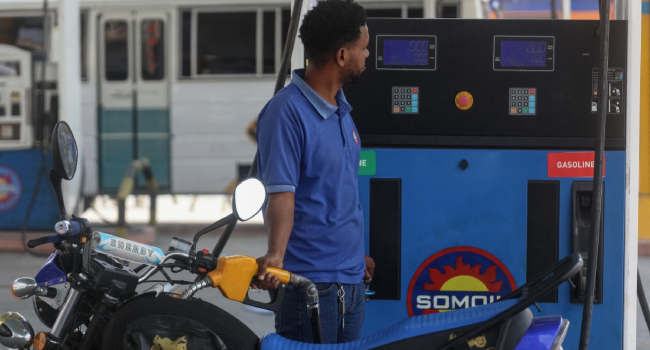
SOUTH KOREA IMPOSES FUEL PRICE CAP AMID MIDDLE EAST TENSIONS
Read Time:1 Minute, 29 Second
Agency Report
South Korea on Thursday announced that a fuel price cap will take effect from midnight in a bid to ease pressure on the country’s energy supply during the ongoing tensions involving Iran.
The Asian nation, heavily dependent on energy imports, particularly shipments passing through the Strait of Hormuz, said it is also exploring alternative supply routes to secure its energy needs.
The measure marks the first time since 1997 that such a policy has been introduced in Asia’s fourth-largest economy.
In a statement, the country’s energy ministry said the decision was aimed at stabilising rising domestic fuel prices linked to the situation in the Middle East.
“The government has decided to introduce institutional measures aimed at curbing the recent surge in domestic oil prices triggered by the situation in the Middle East,” the ministry said.
According to the ministry, the price ceiling will apply to supply prices charged by refiners to distributors and gas stations, rather than the retail prices paid by consumers at filling stations.
The government set the initial maximum price at 1,724 won (about $1.70) per litre for regular gasoline and 1,713 won per litre for automotive diesel.
Officials noted that the capped prices are lower than the average fuel prices submitted by refiners on Wednesday.
The price cap will remain in effect for two weeks, after which authorities will review and adjust the ceiling based on both domestic and global oil market conditions.
Last week, Seoul also announced a deal to import around four million barrels of crude oil from the United Arab Emirates to strengthen its supply.
The government added that the country currently holds strategic oil reserves sufficient for about seven months of consumption, providing a buffer against potential supply disruptions.


Happy
0 %

Sad
0 %

Excited
0 %

Sleepy
0 %

Angry
0 %

Surprise
0 %
 0
0
 0
0