
POLAND PRESIDENT VETOES EU DEFENCE LOAN PLAN, SPARKS POLITICAL ROW
Read Time:2 Minute, 39 Second
Agency Report
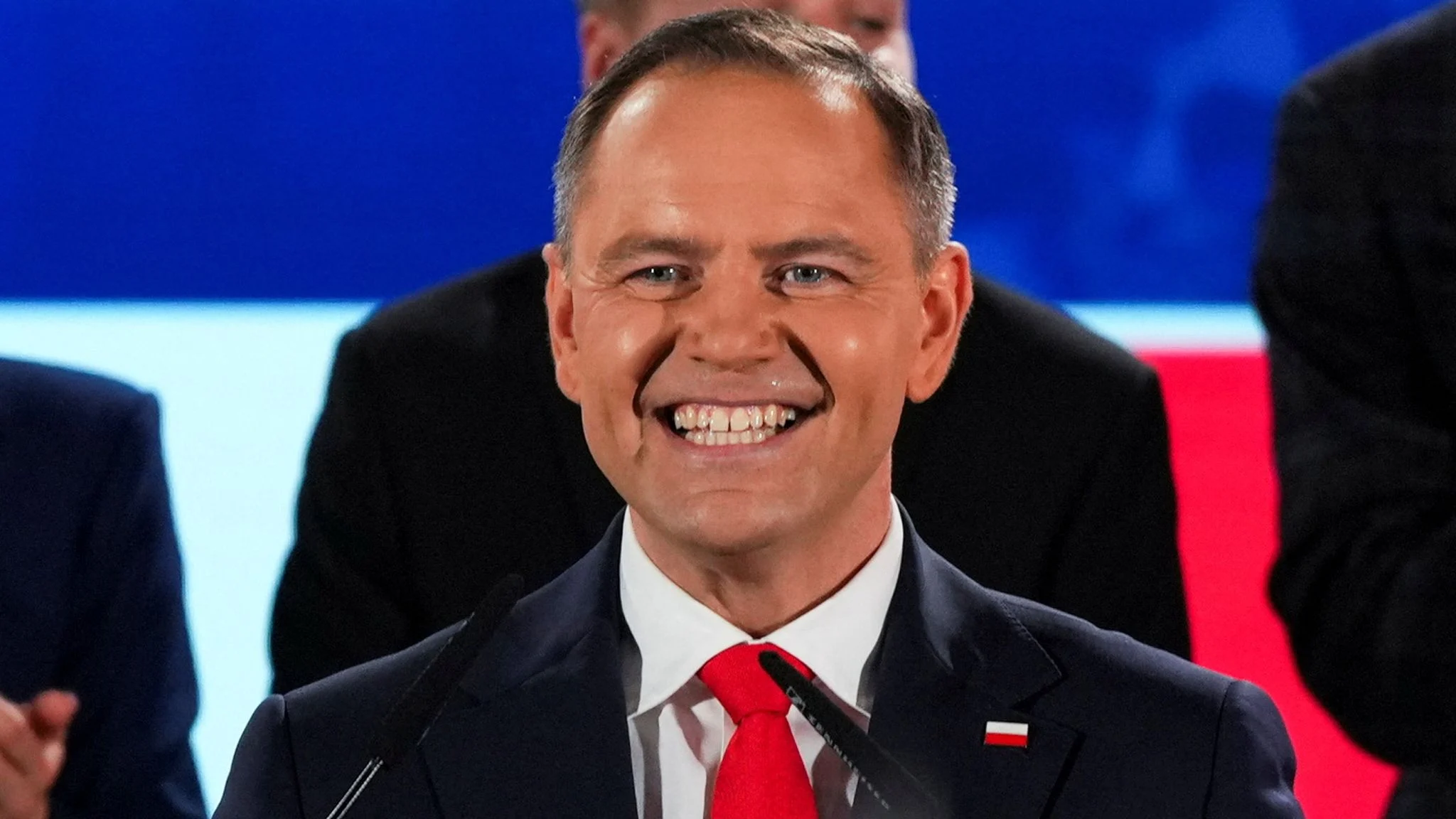
Poland’s dispute over European Union defence funding escalated on Thursday after President Karol Nawrocki vetoed a multi-billion-euro security loan programme already approved by parliament.
Lawmakers in Poland last month backed the Security Action for Europe (SAFE) scheme, which would provide nearly €44 billion in loans to strengthen defence capabilities.
The funds were expected to support investments in air and missile defence systems, anti-drone technology and other military equipment, as the war in neighbouring Ukraine continues.
However, Nawrocki, whose relationship with Prime Minister Donald Tusk has been strained, blocked the plan in a televised address.
“I have decided not to sign the law that would allow Poland to take out the so-called SAFE loan. I will never sign a law that undermines our sovereignty, our independence, as well as our economic and military security,” the president said.
Tusk, a strong supporter of the EU-backed defence funding, strongly criticised the veto, with his office describing the decision as “an act of national treason.”
“The president has missed the chance to behave like a patriot. A disgrace!” Tusk wrote on the X platform.
The prime minister had earlier warned that if the president vetoed the measure, the government would pursue a “Plan B” to access the European funds regardless.
Following the veto, Tusk announced an extraordinary cabinet meeting scheduled for Friday morning to discuss the government’s next steps.
As the war in Ukraine continues and with Russia and Belarus bordering the country, Poland has significantly increased its defence spending to 4.8 per cent of its GDP, one of the highest levels among members of the NATO.
Despite the security concerns, Nawrocki argued that accepting the SAFE loan would allow European Union institutions to exert excessive influence over how Poland allocates defence funds.
He also warned that the arrangement could burden the country with debt “for generations.”
As an alternative, the president proposed a counter-project called “SAFE 0%,” which would rely on funds from Poland’s central bank to finance defence spending without loans or interest payments.
However, critics have questioned the feasibility of the plan.
Political analyst Jaroslaw Kuisz suggested the veto could also be politically motivated, arguing that Nawrocki may want to prevent Tusk from benefiting from the economic boost associated with the funding ahead of the 2027 general election.
Another analyst, Wojciech Przybylski of the Visegrad Insight think tank, said the president’s move could be aimed at weakening the government and preparing for a potential change of power.
The nationalist opposition party Law and Justice (PiS), led by Jaroslaw Kaczynski, has also opposed the agreement, arguing that it would bind Poland to European defence policies and reduce cooperation with American arms manufacturers.
Despite the political dispute, public opinion appears divided. A poll by the Centre for Public Opinion Research found that 52 per cent of Poles support the SAFE plan, while 35 per cent oppose it.
Nawrocki, who governs in uneasy cohabitation with Tusk’s centrist coalition, has been criticised by opponents for frequently blocking government legislation.
Responding to the president’s proposal, Tusk dismissed the alternative funding plan, saying it creates bureaucracy rather than providing real financing for defence projects.


Happy
0 %

Sad
0 %

Excited
0 %

Sleepy
0 %

Angry
0 %

Surprise
0 %
 0
0
 0
0