
BREAKING: TINUBU RESOLVES 20-YEAR DISPUTE OVER LAGOS AIRPORT TERMINAL CONCESSION
Read Time:7 Minute, 9 Second
By: Muftau Fatimo
The Federal Executive Council (FEC) on Thursday approved the terms of a comprehensive settlement agreement between the Federal Government and Bi-Courtney Aviation Services Limited.
As part of the resolution, Bi-Courtney agreed to waive a N132 billion judgment debt, including accrued interest dating back to 2009, alongside other concessions reached by both parties.
The Minister of Aviation and Aerospace Development, Festus Keyamo, SAN, disclosed the details after the FEC meeting held at the State House, Abuja.
He explained that the agreement involved mutual concessions and was aimed at finally resolving the long-standing dispute, thereby unlocking the full commercial potential of the privately operated terminal, which has been embroiled in litigation since its establishment.
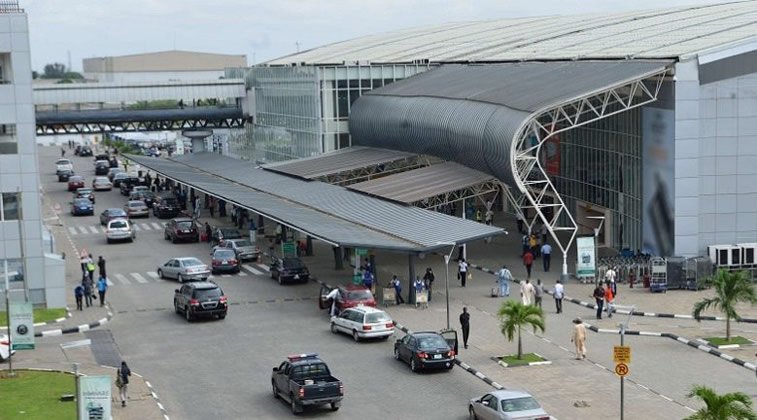
Thursday’s agreement ends a two-decade legal and commercial standoff over the operations of the Murtala Muhammed Airport Terminal Two in Lagos, one of the most protracted and consequential disputes in Nigeria’s aviation history.
“I can happily tell you that this government has resolved that issue once and for all. Council today approved the terms of the agreement we reached with Babalakin to settle all the vexed issues surrounding that airport.
“For the purpose of transparency, may I just mention a couple of the things we agreed upon, because this is going to be public knowledge, and we intend to be very transparent about this,” Keyamo told State House correspondents, adding that a formal signing ceremony would be held in Lagos with all stakeholders present, where the remaining technical details would be publicly disclosed.
The origins of the dispute stretch back to 2003, when the Federal Government awarded Bi-Courtney, the infrastructure vehicle of lawyer and entrepreneur Dr Wale Babalakin, SAN, a Design-Build-Operate-Transfer concession to construct and manage a new terminal at the Lagos airport, after the old domestic terminal had been gutted by fire.
The concession produced MMA2, which opened in 2007 as the first airport terminal in Africa built entirely with private funds and without government support.
However, the concession almost immediately became entangled in disputes over its scope and duration.
Bi-Courtney subsequently claimed the Federal Government owed it N132bn from a court judgment, arising from the government’s alleged reneging on the agreement, specifically its failure to hand over the General Aviation Terminal, which Babalakin argued was included in the original concession.
The Supreme Court eventually ruled in Bi-Courtney’s favour, ordering the FG to hand over the local airport and pay the N132bn judgment debt with interest from 2009.
There were also disputes over the exclusivity clause of the concession, which gave Bi-Courtney the right to be the sole operator of a private airport within a specified radius of Lagos.
Keyamo said the settlement disposed of all three principal bones of contention.
The Minister of Aviation and Aerospace Development, Festus Keyamo, SAN, explained that the Supreme Court had previously ruled that the Federal Government should transfer the local airport terminal to Bi-Courtney Aviation Services Limited and pay the company N132 billion plus interest accruing from 2009.
According to him, the matter was ultimately resolved through negotiation, as the judgment debt was waived by Wale Babalakin, who owns Bi-Courtney.
“I told him: nobody is going to pay you that. He wrote it off. Babalakin wrote off the N132bn outright,” Keyamo said.
The minister further revealed that the original concession agreement contained an exclusivity clause preventing any other private entity from developing an airport within a specified radius of Lagos. He noted that this provision had for years stalled the proposed Lekki Airport project initiated by the Lagos State Government.
He explained that the clause was reviewed during negotiations on grounds of public interest and security considerations.
“One of the things that stalled the Lekki airport from being built over the years was that Bi-Courtney insisted it would be a breach of its agreement for any other private airport to operate within the area,” he said.
“We told him it was not appropriate, even for security reasons, to have total control over domestic aviation in Lagos. He agreed, and the exclusivity clause was removed,” Keyamo added.
Keyamo also disclosed that Bi-Courtney agreed to fully return MMA1 to the Federal Government.
“I told him: hand it back. We cannot leave the entire local aviation operations in Lagos, which is our economic hub, in private hands alone. Government must retain some level of control. He agreed with us,” he stated.
In return, the FG made three concessions of its own, the minister revealed.
First, it returned the uncompleted five-star hotel and conference centre opposite MM2, whose concession had been revoked by a previous administration to Bi-Courtney, with a 24-month deadline for completion and an agreement that the FG retains a shared stake in its operations.
“We gave it back to him to complete and run on a shared basis with the Federal Government. It’s not even exclusive. We are still going to benefit,” Keyamo said, adding, “He has 24 months under the new agreement to complete that hotel and conference centre. We will not tolerate any delay again.”
Second, the FG agreed to relocate domestic regional flights to MM2, to boost traffic and revenue for the concessionaire.
According to him, “Over the years, they had approval to run regional flights from that airport. We are now moving regional flights, as much as he can accommodate, to that airport.”
He added that where the apron at MM2 proved insufficient to accommodate the additional aircraft, the FG would fund its expansion.
“Instead of giving him that airport, we agreed to expand his apron at MM2 so that he can have more spaces to park his planes and run regional flights from there,” he said.
As part of the agreements, the FG will now begin earning its share of revenues from MM2 operations immediately, ending the previous arrangement in which the concessionaire had not been paying the government its due under the concession for years.
“With this agreement, immediately after today, the federal government will now begin to earn its own share from the operations of MM2. At the end of the day, it was a very good deal for everybody. Give and take, give and take. He profited, and we profited,” Keyamo said.
The minister attributed the breakthrough in part to his personal relationship with Babalakin, both being members of the “Inner Bar” as Senior Advocates of Nigeria, but argued that the concessions were negotiated firmly.
“We sat down in the spirit of brotherhood. We understood some of these judgments and how they could play out, and the effect they would have.
“But we actually made him make all of those concessions. We thank him for his patriotism,” he said.
On the origins of the problematic agreement, Keyamo explained that, “Some of these agreements were signed under outrageous terms. When I came, and I saw them, I wondered how certain persons in government sat down and signed this agreement. But government is a continuum. We were stuck with these agreements and had to find a way out.”
He revealed that a full public signing ceremony, at which all parties and the Managing Director of the Federal Airports Authority of Nigeria will be present, is to be held in Lagos.
The Council also approved a second memorandum for the establishment of the Nigerian Aircraft Leasing Company.
Minister of Aviation and Aerospace Development, Festus Keyamo, SAN, explained that the company will operate as a special purpose vehicle (SPV), fully financed and managed by private sector investors, while the Federal Government will retain an equity stake and provide sovereign guarantee support.
He said the initiative is intended to address a long-standing structural challenge in Nigeria’s aviation sector, particularly the difficulty faced by domestic airlines in accessing aircraft through stable, long-term leasing arrangements without sovereign backing.
According to him, this gap has forced local operators to depend on short-term wet leases, leaving them exposed to frequent aircraft repossessions, as well as disruptions such as flight delays and cancellations.
“Nigeria is about the only country in Africa where the aviation industry is wholly run by the private sector. There is no national carrier owned by government,” Keyamo said.
“So what should government do? Our role is to create the right policy environment to ensure the industry thrives,” he added.
The minister further disclosed that several investors, including some of Africa’s leading financial institutions—whose names were withheld pending official announcement—have already shown strong interest in the project since the concept was introduced over three months ago.


Happy
0 %

Sad
0 %

Excited
0 %

Sleepy
0 %

Angry
0 %

Surprise
0 %
 0
0
 0
0