
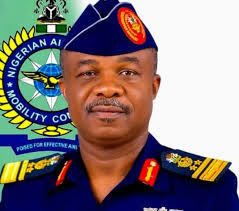
AIRFORCE PLEDGES SWIFT ACTION FOR STUDENT SAFETY IN NIGERIA
Read Time:2 Minute, 49 Second
HOTJIST NEWS
The head of the Air Force, Air Marshal Sunday Aneke, has told Nigerians that the country will quickly and effectively deal with any dangers facing students nationwide.
On Tuesday, during a visit to the Tertiary Education Trust Fund office in Abuja, Aneke said that keeping students safe at universities is very important, even though it’s hard to manage because Nigeria is big and has difficult landscapes.
He said, “Security matters are not something we usually talk about openly, but to give you some idea, Nigeria is a very large country with tough terrain.
But children need to go to school.”
Aneke also mentioned the importance of having fast reaction teams, especially in distant parts of the country.
“The challenge is always the elapsed time between when an event occurs and when help arrives. But luckily, the Air Force has speed and reach.
“We are working with the appropriate authorities to put measures in place so that if a difficult situation arises, just w
“While Nigerians sleep, many of my officers and men are putting their lives on the line, flying in the middle of the night and responding to emergencies.
“I want to implore Nigerians to be a little patient, because a lot of people are sacrificing a lot,” he added.
Aneke’s remarks came as the Executive Secretary of TETFund, Sonny Echono, outlined measures being taken to enhance campus safety across universities and colleges.
ith the push of a button, the nearest Air Force unit can be activated,” he said.
The Air Chief appealed for public patience and recognition of the sacrifices made by security personnel.
“First is addressing the basic issues of security, such as fencing, illuminating our campuses, ensuring that every corner of our campuses is visible, and equipping security personnel with walkie-talkies and communication facilities.
“But more importantly, from a fundamental perspective, we are currently designing a security master plan,” Echono said.
He explained that the fund was working with the Office of the National Security Adviser and other security agencies to extend the Safe Schools Initiative to tertiary institutions.
“Only last December, we invited all the heads of institutions and heads of security around our campuses to brainstorm and come up with ways to prevent incidents and respond in the event of one. How do we prepare our students and staff in such situations?” Echono said.
The head of TETFund mentioned that security areas have been set up in each institution to help organize resources from the Army, Navy, Civil Defence, Police, and the Air Force.
He also said that the TETFund Board of Trustees created a special program called “security infrastructure.”
Every year they provide funding for it, and this year is the first time they have set aside money specifically to support security agencies.
In recent years, Nigeria has had increasing worries about safety in its schools.
There have been reports of kidnappings, attacks, and other dangers that have stopped learning and made students and teachers feel scared.
The government has tried to deal with these problems through projects like the Safe Schools Programme, which started with primary and secondary schools but is now being expanded to include universities and colleges.
Universities and colleges are getting more attention because they have big campuses and many different kinds of students, which makes it harder to keep track of things and respond to emergencies.


Happy
0 %

Sad
0 %

Excited
0 %

Sleepy
0 %

Angry
0 %

Surprise
0 %
 0
0
 0
0