
LASEPA HOSTS 2026 INTER-TERTARIARY INSTITUTIONS’ ENVIRONMENTAL SUMMIT 2.0 PRELIMINARY DEBATE COMPETITION
Read Time:3 Minute, 9 Second
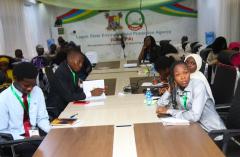
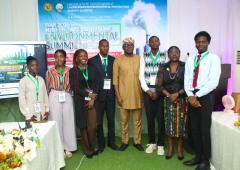
The Lagos State Environmental Protection Agency (LASEPA) on Wednesday organised the Preliminary Debate Competition of the 2026 Inter-Tertiary Institutions Environmental Summit 2.0 at the LASEPA Conference Room, Secretariat, Alausa, Ikeja.
The event, which forms part of activities leading to the Grand Finale scheduled for June 9, 2026, at the Adeyemi-Bero Auditorium, Secretariat, Alausa, Ikeja, brought together outstanding students from tertiary institutions across Lagos State to debate the theme, “Combating Transboundary Pollution in Lagos State: A City-Level Intervention or National Effort?”
The competition offers students a platform to examine environmental challenges and propose practical, policy-driven solutions to transboundary pollution.
Following an intense and intellectually stimulating debate session, six students emerged as finalists for the grand finale. They are Yakub Abdullahi Eniola of the University of Lagos, Igbinosa Delight Nosa, Fajana Olamide Mary of Lagos State University (LASU), Daniel Oluwatise Akinkuowo, Aderinto Esther Oluwatobiloba and Ndukaire Onyinyechi
Earlier in his welcome address, the General Manager of LASEPA, Dr. Babatunde Ajayi emphasised the importance of environmental advocacy and the need to educate young adults, particularly university students, whom he described as future leaders, teachers, parents, and policymakers capable of influencing societal attitudes towards environmental sustainability.
He noted that the summit was designed to inspire long-term behavioural and cultural change by empowering young people with knowledge and encouraging active participation in environmental governance.
Dr. Ajayi explained that the focus of the debate was transboundary pollution, which includes air, water, and land pollution that crosses geographical and administrative boundaries, impacting ecosystems and human communities beyond its source. Using examples from Lagos State and neighbouring states and countries, he highlighted how waterborne contaminants and air pollutants can spread across borders, causing environmental degradation and public health concerns.
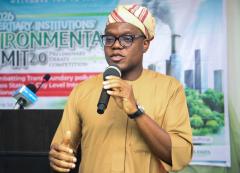
According to him, environmental challenges of this nature cannot be effectively addressed through isolated efforts. He stressed the importance of coordinated responses among governments, institutions, industries, and communities while calling for stronger collaboration across jurisdictions to tackle pollution and protect public health.
The Director of Partnerships, Grants Management and Innovation at LASEPA, Mrs. Olabisi Shonibare stated that the Inter-Tertiary Institutions Environmental Sustainability Summit 2.0 had attracted remarkable participation from students across Lagos State.
She disclosed that following an extension of the submission period to three weeks, approximately 300 entries were received. After the initial screening process, 46 entries were disqualified, leaving 212 essays which were assessed by a panel of university lecturers and environmental experts. The top 20 essays were subsequently shortlisted, while the 10 highest-ranking participants advanced to the preliminary debate stage, from which six finalists have now been selected for the grand finale.
Mrs. Shonibare noted that the competition was established to encourage students to develop practical solutions to environmental sustainability challenges while strengthening youth involvement in environmental policymaking.
She added that the initiative aligns with LASEPA’s commitment to fostering innovation, public engagement, and environmental responsibility among future generations.
The Lead Judge, Dr. Tokunbo Otiloloju, formally opened the debate by highlighting the central issue under discussion: determining whether responsibility for addressing transboundary pollution should primarily rest with city authorities, state governments, or national institutions.
He described the topic as a governance challenge requiring participants to critically assess the most effective level of authority for managing environmental issues that transcend political and administrative boundaries.
Dr. Otiloloju encouraged contestants to focus on the substance of their arguments, support their positions with credible evidence, and communicate their ideas with confidence and precision. Assuring participants of fairness and transparency throughout the process, he reiterated the judging panel’s commitment to impartiality and excellence.
The six best finalists have qualified for the final stage of the competition, scheduled for Adeyemi-Bero Auditorium on Tuesday, June 9, 2026.


Happy
0 %

Sad
0 %

Excited
0 %

Sleepy
0 %

Angry
0 %

Surprise
0 %
 0
0
 0
0