
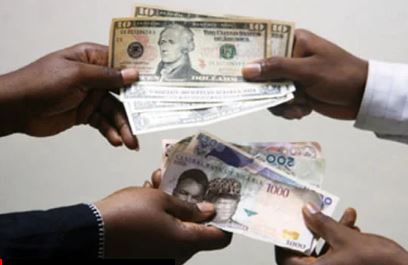
NAIRA FALLS TO ₦1,385 PER USD AMID MIDDLE EAST TENSIONS
Read Time:2 Minute, 22 Second

By: Muftau Fatimo
The naira has come under renewed pressure in the foreign exchange market, dropping to N1,385 per US dollar as escalating tensions in the Middle East ripple through global financial systems.
Previously showing signs of stability at N1,360, the local currency has weakened by approximately 0.3 percent over the past two weeks.
Although Nigeria’s status as a major crude exporter has offered some insulation against global market shocks, the domestic economy is beginning to feel the impact of heightened volatility in the energy sector.
The decline in the exchange rate coincides with a sharp rise in local energy costs.
Although Nigeria’s inflation eased slightly to 15.06 percent in February, the outbreak of conflict in the Middle East has driven domestic gasoline prices up by over 30 percent.
Market analysts at ForexTime Limited warned on Tuesday that rising transportation and energy costs could spill over into broader consumer prices, potentially eroding the recent gains achieved by the Central Bank of Nigeria.
“As these tensions intensify, growing concerns over inflationary pressures may prompt central banks to reconsider their 2026 strategies,” said Matthew Anthony, Senior Market Analyst for Africa.
The global backdrop remains grim, with Brent crude rallying above $103 a barrel on Tuesday.
Fears of supply shocks have intensified following attacks on energy infrastructure in the Middle East and ongoing concerns regarding ship traffic through the critical Strait of Hormuz.
In an effort to stabilise prices, the International Energy Agency announced its largest-ever oil release of 400 million barrels, while the United States issued a second temporary waiver for Russian oil purchases.
Despite these measures, oil prices remain stubbornly high, with “oil bulls” keeping them in triple digits.
The market turbulence is not confined to Nigeria. On Tuesday, the Reserve Bank of Australia raised interest rates for the second consecutive meeting, raising concerns that a similar trend could spread globally.
Investors are now closely watching the Federal Reserve, European Central Bank, and Bank of England, all of which are in focus this week.
Expectations for a Federal Reserve rate cut have largely dissipated, with traders now anticipating only a single potential cut for all of 2026.
“Ultimately, this has driven oil prices into extreme volatility… Iran’s attacks on energy infrastructure across the Middle East have heightened concerns over potential supply shocks,” Anthony added.
For Nigeria, the immediate focus remains on the Central Bank’s policy direction. The sudden surge in gasoline prices and the naira’s depreciation could compel the apex bank to reconsider plans to lower interest rates, shifting instead to a defensive approach against conflict-driven inflation.
“The brief tech rally in the previous session was merely a minor respite, with equities largely on the back foot amid persistent caution,” the report noted, highlighting a week of challenging decisions ahead for Nigerian policymakers.


Happy
0 %

Sad
0 %

Excited
0 %

Sleepy
0 %

Angry
0 %

Surprise
0 %
 0
0
 0
0