
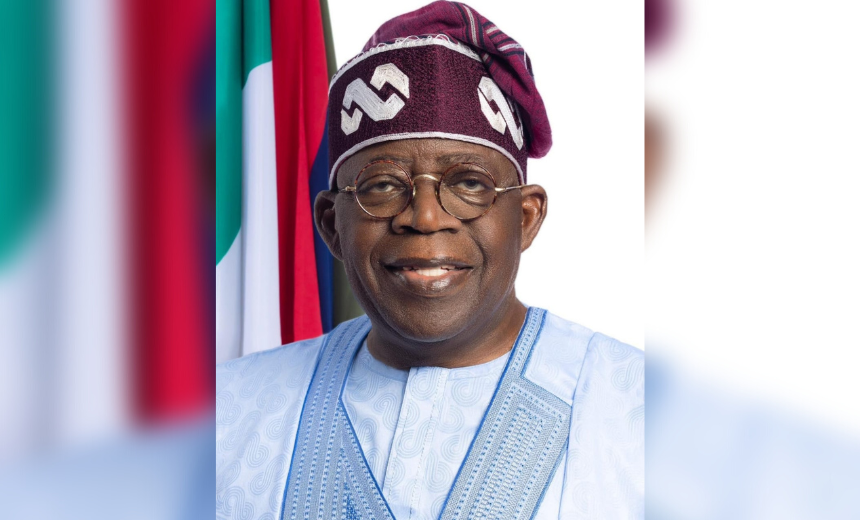
TINUBU’S REFORMS HAVE STABILISED THE ECONOMY, BUT WELFARE GAINS REMAIN LIMITED — CPPE
Read Time:3 Minute, 48 Second
By: Muftau Fatimo
The Centre for the Promotion of Private Enterprise (CPPE) has stated that the first three years of President Bola Ahmed Tinubu’s administration were largely devoted to stabilising the economy after inheriting major fiscal, monetary and foreign exchange challenges.
However, the organisation noted that while the reforms have improved macroeconomic stability, their benefits have yet to translate into significant welfare improvements for the broader population.
In an assessment of the administration’s economic performance, the Chief Executive Officer of the CPPE, Dr Muda Yusuf, said the government assumed office amid acute foreign exchange illiquidity, multiple exchange rates, declining investor confidence, and weakened external reserves
According to him, fiscal conditions were also strained by entrenched Ways and Means financing and a fuel subsidy regime that had become a major source of fiscal leakages and economic distortions.
Yusuf identified fuel subsidy removal and exchange rate unification as the two major reforms underpinning the administration’s economic stabilisation agenda.
He said the subsidy removal reduced pressure on public finances and created the basis for a more sustainable downstream petroleum sector, while exchange rate unification improved price discovery in the foreign exchange market and reduced arbitrage opportunities.
However, he noted that both reforms came with significant adjustment costs. “The immediate consequence of the reforms was a significant inflationary shock. Energy prices surged, transportation and logistics costs escalated, production expenses increased sharply, and the depreciation of the naira amplified imported inflation pressures,” Yusuf said.
According to him, the reforms contributed to declining real incomes, worsening poverty conditions, and a cost-of-living crisis. Despite the challenges, Yusuf said there was evidence of macroeconomic recovery.
He stated that external reserves had improved significantly, gross reserves were approaching $50bn, the balance of trade remained in surplus, investor confidence had strengthened, and exchange rate volatility had moderated since 2025.
The CPPE chief added that the economy recorded 11 consecutive months of disinflation from early 2025 through February 2026 before inflationary pressures resurfaced following the Iran–U.S.–Israel conflict in March 2026.
He also pointed to gains in the capital market, noting that the Nigerian Exchange All-Share Index rose from about 55,700 points in 2023 to more than 254,000 points in 2026, while market capitalisation increased from about N30tn to over N160tn.
Yusuf said the discontinuation of Ways and Means financing had improved monetary discipline and macroeconomic stability, while the emergence of domestic refining capacity led by the Dangote Refinery had strengthened foreign exchange conservation and energy security.
An economy that produces more of what it consumes is inherently more resilient than one that depends excessively on imports,” he said.
Despite the gains, Yusuf identified several unresolved challenges, including elevated inflation, weak purchasing power, and fragile consumer confidence.
“The challenge before the administration is no longer merely one of economic stabilisation; it is the imperative of converting reform gains into jobs, higher incomes, lower poverty and a better quality of life for Nigerians,” he said.
He also identified insecurity as a major threat to economic recovery, citing its impact on agriculture, food production, rural livelihoods, and investment. “No economy can achieve food security when farmers face persistent threats to their lives and livelihoods,” Yusuf stated.
The CPPE chief further highlighted high energy costs, logistics bottlenecks, policy inconsistency, weak infrastructure, and elevated interest rates as constraints limiting industrial competitiveness and job creation.
On fiscal sustainability, Yusuf noted that public debt rose to N159.3tn as of December 2025, driven partly by naira depreciation and the securitisation of N23tn in legacy Ways and Means liabilities.
According to him, debt sustainability and fiscal space remain important policy concerns, although ongoing tax reforms could strengthen government revenue and improve fiscal capacity. Yusuf also stressed the importance of governance, transparency, and accountability in sustaining public support for economic reforms.
“The long-term sustainability of economic reforms rests on the principle of shared sacrifice. Public confidence is strengthened when citizens perceive that the costs of adjustment are borne not only by households and businesses, but also by the political and governing elite,” he said.
Looking ahead, Yusuf said the next stage of the reform programme should prioritise translating macroeconomic stability into broad-based and inclusive economic growth through increased investment, higher productivity, improved energy and food security, enhanced industrial competitiveness, and effective poverty reduction measures.
He stressed that the true measure of the reforms would not be limited to improvements in foreign reserves, exchange rate stability, or stock market performance, but rather their impact on employment, incomes, living standards, and the overall wellbeing of ordinary Nigerians.


Happy
0 %

Sad
0 %

Excited
0 %

Sleepy
0 %

Angry
0 %

Surprise
0 %
 0
0
 0
0